 Bellingham
 Deck Replacement in Columbia: Built for What This Neighborhood's Weather Actually Does
Columbia is a close-in Bellingham neighborhood, and like most of the city it sits under the same marine weather pattern that comes off Bellingham Bay and the Salish Sea: damp air that doesn't let up for months at a time, rain that blows in sideways as often as it falls straight down, and shaded corners of a yard that stay wet and mossy long after the rest of the block has dried out. A deck out here isn't just furniture in the backyard. It's an exterior structure exposed to the same punishing cycle of wetting and drying that wears down siding and roofing, except a deck takes it lying flat, which is worse. Flat horizontal surfaces hold water instead of shedding it, and that's exactly the geometry a Whatcom County winter is designed to exploit.
We replace decks across Bellingham, and Columbia's older housing stock and mature tree canopy give it its own version of the same climate problem. Big leaf maples and evergreens overhang a lot of Columbia's lots, which means more debris landing on deck boards, more shade holding moisture in place, and more moss finding a foothold on ledger boards and stair stringers that never quite dry between storms. If your deck is showing soft spots, ledger rot, rusted-through fasteners, or boards that stay slick with moss well into what should be a dry stretch, that's not cosmetic. That's the deck telling you it's losing the fight with the climate it's built into.
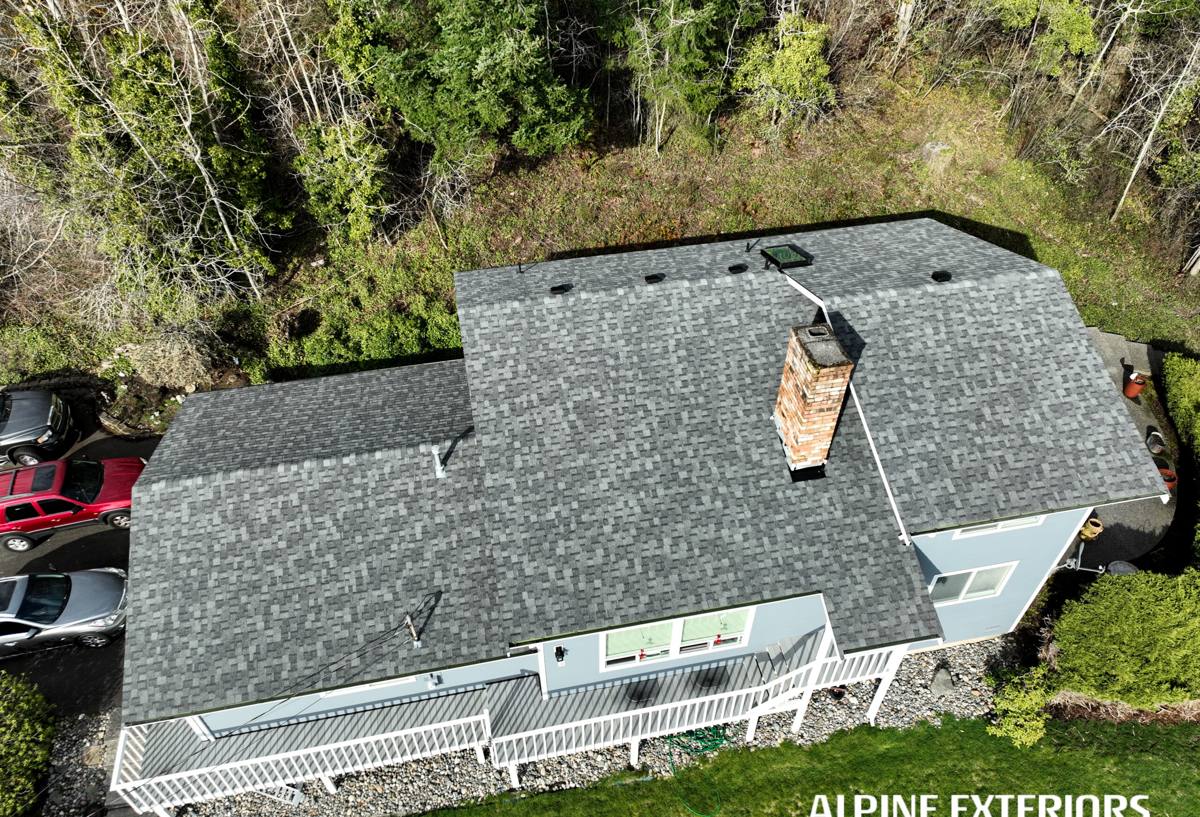
What Columbia's Climate Does to a Deck Over Time
Driving Rain and End-Grain Exposure
Wind-driven rain doesn't just fall on a deck, it gets pushed into every gap, joint, and end cut. End grain is the most absorbent part of any piece of wood, and every deck has dozens of exposed end cuts at board ends, stair treads, and framing joints. When those aren't sealed and kept clear of standing water, they wick moisture straight into the board, and that's usually where rot starts first, not in the middle of a plank where most people are looking.
Moss and Prolonged Dampness
Bellingham's moss season runs long, and a deck with any shade cover holds onto that moisture far longer than a wall does. Moss isn't just an eyesore. It holds water against the wood surface, blocks airflow, and keeps boards from ever fully drying between rain events, which accelerates decay underneath a surface that might still look intact from a few feet away.
The Structure You Can't See
The parts of a deck that fail first are usually the parts nobody looks at: the ledger board bolted to the house, the joist hangers, the post bases sitting near or in the soil, and the flashing (or lack of it) where the deck ties into the house wall. A deck can have perfectly good-looking decking boards on top of a ledger connection that's been quietly rotting for years. That's the failure mode that actually matters for safety, and it's the one a surface-level board swap does nothing to fix.
Repair, Resurface, or Full Replacement?
Not every deck problem calls for a full tear-out, but a lot of decks we look at in Columbia have gone past the point where a patch job makes sense. Here's how we think about it:
| Situation | Likely Fix | Why |
|---|---|---|
| A few soft or cracked boards, structure is sound | Board-level repair | Framing and ledger are still solid, no need to disturb them |
| Surface is worn or faded but structurally fine | Resurface with new decking | Keeps the existing frame, refreshes the wearing surface |
| Ledger, joists, or posts show rot or rust | Full replacement | Structural members are the load path; patching around them isn't safe |
| Deck is undersized, poorly flashed, or code-noncompliant | Full replacement | Rebuilding correctly solves the drainage and attachment problems, not just the symptoms |
| Deck is 20+ years old with mixed wear | Case-by-case inspection | Age alone isn't the deciding factor; condition of the frame is |
We'll always tell you honestly which category your deck falls into. There's no reason to sell a full replacement to a homeowner who really just needs a resurface, and there's no reason to patch a deck whose framing has already failed underneath.
What a Correct Deck Replacement Involves
Tear-Out and Inspection
We remove the old decking and expose the framing, ledger connection, and posts so we can actually see what's underneath instead of guessing. This is often where we find the real story: a ledger with no flashing, joist hangers that were never properly nailed, or post bases sitting directly in wet soil with no separation.
Ledger Attachment and Flashing
The ledger board, where the deck bolts into the house, is the single most important connection on the whole structure and one of the most common places we find water damage. A correct rebuild means proper structural fasteners (not just deck screws), through-bolts or approved lag connections sized to the load, and flashing that actually sheds water away from the house rather than trapping it against the rim joist. In a climate that sees as much driving rain as Bellingham, skipping or shortcutting this step is the single biggest predictor of a deck failing early.
Framing and Structural Fasteners
We use joist hangers, structural screws, and hardware rated for exterior exposure, not general-purpose fasteners that will corrode under the same marine air that's already hard on siding fasteners. Post bases get set on proper footings with standoff hardware so the post itself isn't sitting in standing water or direct soil contact.
Decking Material
Whether we're installing composite decking or a wood species, the goal is the same: a wearing surface that handles repeated wet-dry cycles without cupping, splitting, or holding moss. We'll walk you through the honest trade-offs of each material option for your specific deck rather than pushing one product as a one-size-fits-all answer.
Drainage and Grading
Water needs somewhere to go. That means proper board spacing for drainage, a slight slope away from the house where the design allows it, and attention to how water moves under the deck, not just off the top of it. A deck that traps water underneath will rot from below even if the top surface looks fine.
Railings, Stairs, and Code
Railings and stair systems get rebuilt to current code height, spacing, and load requirements, not just matched to whatever was there before. This matters both for safety and because an out-of-code deck can become a real problem if you ever sell the house and it comes up in an inspection.
Our Process for a Columbia Deck Replacement
- On-site inspection: we get under the deck and check the ledger, framing, and posts, not just the surface boards
- Honest scope: we tell you whether this is a repair, resurface, or full replacement, and why
- Written estimate: clear pricing with no surprise add-ons once the work is underway
- Tear-out and structural rebuild: ledger flashing, framing, and hardware done to code first
- Decking, railings, and stairs installed to your chosen material and layout
- Final walkthrough so you know how to maintain the new deck through Bellingham's wet season
Cost Factors for a Columbia Deck Replacement
Every deck is different, so we won't quote a number without seeing the site, but the factors that actually move the price are consistent:
- Deck size and footprint, including multi-level or wraparound designs
- Height off the ground and whether a fall-protection railing system is required
- Decking material choice, from budget wood species to premium composite boards
- Condition of the existing ledger, framing, and posts, and how much structural work is needed before decking even goes down
- Stair and railing complexity
- Access to the site, including how equipment and material get to a backyard on a sloped or tight Columbia lot
- Permit requirements, which apply to most full deck rebuilds in the City of Bellingham
We'd rather walk your specific deck and give you real numbers than throw out a range that doesn't mean much once we're standing on your actual structure.
Maintenance That Actually Extends the Life of a New Deck
A well-built deck still needs upkeep in this climate, especially anywhere shaded by trees, which describes a lot of Columbia's lots. A short list of what actually matters:
- Keep leaves and debris off the boards, especially in fall and through the wet months, so water and organic matter don't sit against the surface
- Clear moss off boards and stair treads before it gets established, rather than after it's built up
- Check that gaps between boards stay clear so water can actually drain instead of pooling
- Inspect the ledger flashing and railing connections annually for any sign of separation or water staining
- Reseal or refinish wood decking on the schedule the material calls for, don't stretch it out because the surface still looks okay
Why Hire a Crew That Already Works in Columbia
A deck built to a generic national spec sheet doesn't automatically hold up to Whatcom County's specific combination of salt-tinged marine air, sustained driving rain, and a moss season that can run most of the year in shaded spots. We work this exact climate, on this exact kind of lot, regularly, which means we're not guessing at flashing details or fastener choices, we're applying what we've already seen work and fail on decks like yours. That local, repeated exposure to Columbia's housing stock and terrain is worth more than a lower bid from a crew that's never had to solve for this particular weather.
If your deck in Columbia is showing its age, or you just want an honest read on whether it needs a repair or a full rebuild, we're happy to take a look. Reach out for a free, no-pressure estimate using the form below, and we'll give you a straight answer about what your deck actually needs.