 Bellingham
 Siding in Columbia Has to Work Harder Than People Expect
The Columbia neighborhood sits close enough to Bellingham Bay that homes here deal with a mix of conditions most siding products were never engineered to handle at once: salt-laden air drifting in off the water, long stretches of driving rain pushed sideways by wind, and a shaded, tree-heavy canopy that keeps north- and west-facing walls damp for days after a storm passes. Add in a moss season that can run from early fall through late spring in Whatcom County, and you have a climate that punishes any siding material with a weak point in its finish, its core, or its installation.
This page is about one thing: what it actually takes to put James Hardie fiber cement siding on a Columbia home correctly, and why that combination — the right product, engineered for this region, installed to spec by a crew that already knows the neighborhood — matters more here than in a lot of other parts of the country.
What This Microclimate Does to Siding Over Time
Salt Air and Slow Corrosion
Bellingham Bay's salt air doesn't just affect homes right on the waterfront. Airborne salt travels, and over years it accelerates corrosion on exposed fasteners, trim metal, and any siding material that relies on painted or coated surfaces to keep moisture out. Once a coating is compromised, salt-laden moisture finds the seam, and the deterioration underneath accelerates quietly, often long before it's visible from the ground.
Driving Rain and Wind-Driven Moisture
Whatcom County storms rarely deliver rain straight down. Wind off the water pushes it sideways into wall assemblies, which puts real stress on butt joints, corner boards, and anywhere siding meets a window, door, or roofline. A siding system with sloppy joint spacing or under-flashed penetrations will let water behind the cladding well before the face material itself shows any sign of failure.
Moss, Shade, and Prolonged Dampness
Columbia's tree cover is part of what makes the neighborhood attractive, but shaded walls dry slower after every rain event, and that extended dampness is exactly what moss, algae, and mildew need to take hold. On siding materials with any wood content, sustained moisture contact eventually means swelling, soft spots, or rot at the edges. On products with a weak factory finish, it means fading, staining, and a green cast that no amount of pressure washing fully removes.
Why We Install Only James Hardie in This Climate
We standardized on James Hardie fiber cement siding for every job we take on, including here in Columbia, because it's engineered around exactly these failure modes rather than around them. Hardie's fiber cement core is non-combustible and doesn't rot, swell, or feed moss the way wood-based products can. The ColorPlus finish is a factory-applied, baked-on coating designed to hold color and resist fading, chalking, and moisture intrusion far longer than field-applied paint.
Just as important for this area, Hardie manufactures climate-specific HZ product lines. The HZ5 formulation is engineered for regions with freeze-thaw cycling and sustained moisture exposure — conditions that describe a typical Whatcom County winter and spring. That's not a marketing detail; it's the difference between a siding product that was designed for a dry climate and shipped everywhere, and one engineered for what this region actually throws at a house.
We don't install LP SmartSide, vinyl, Cemplank, Allura, primed spruce, or cedar. Each of those products has legitimate uses elsewhere, but for a coastal Pacific Northwest climate with salt air, sustained rain, and moss pressure, we've found the long-term maintenance burden and moisture risk aren't worth it compared to what Hardie delivers when installed correctly.
What a Correct Installation Actually Involves
Hardie siding's real-world performance depends heavily on installation quality. The product is engineered to perform for decades, but only if it's installed to Hardie's own specifications — and this is where a lot of siding jobs, on any product, quietly go wrong.
| Installation Detail | Done Correctly | Done Poorly |
|---|---|---|
| Panel and plank spacing | Manufacturer-specified gaps at joints and penetrations allow for expansion and drainage | Tight-butted joints trap moisture and can cause buckling |
| Flashing at windows and doors | Proper head, sill, and kick-out flashing directs water away from the wall assembly | Missing or undersized flashing lets driving rain behind the cladding |
| Fastening | Corrosion-resistant fasteners set to correct depth per Hardie spec | Over-driven or under-spec fasteners crack the board or fail early in salt air |
| House wrap and drainage plane | Continuous weather-resistive barrier with a functioning rainscreen gap | Gaps, tears, or a missing drainage plane trap moisture against the sheathing |
| Caulking and sealants | Used only where Hardie specifies, with the right product for the joint | Over-caulking seals in moisture instead of letting the system drain and dry |
Every one of these details matters more in Columbia than it would in a dry inland climate, because the margin for error shrinks when a wall assembly is dealing with wind-driven rain and prolonged dampness on a regular basis.
What We Do on Every Job
- Inspect existing sheathing and framing for hidden moisture damage before any new siding goes on
- Install or verify a continuous weather-resistive barrier and drainage plane behind the cladding
- Flash every window, door, and penetration to shed water outward, not into the wall
- Fasten to Hardie's exact spacing and depth specifications, not generic siding practice
- Leave manufacturer-specified expansion gaps at every joint and corner
- Use sealants only where Hardie's installation guide calls for them
- Walk the finished job with the homeowner to confirm trim, caulking, and touch-up work
Choosing the Right Hardie Profile for a Columbia Home
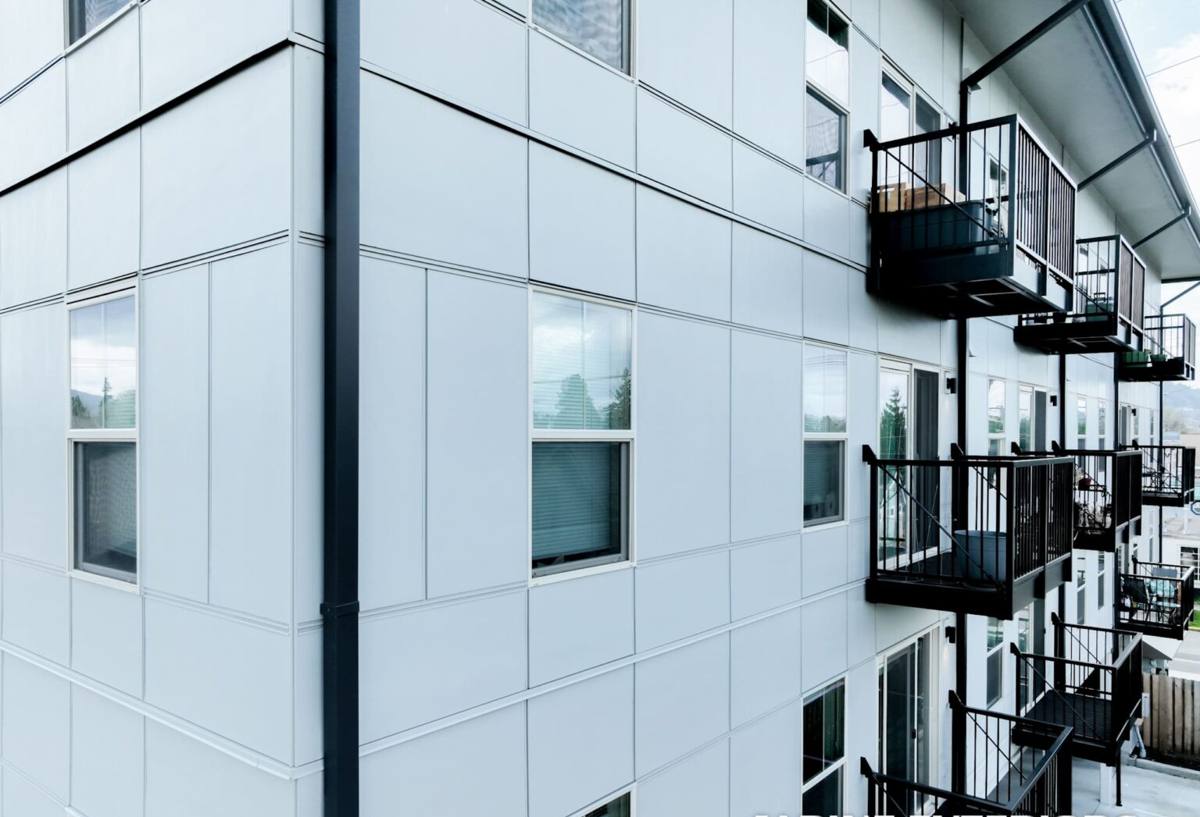
Columbia has a mix of housing styles and eras, and the right Hardie product depends on the home. HardiePlank lap siding is the most common choice and works well on traditional and craftsman-style homes. HardiePanel offers a cleaner, more vertical or board-and-batten look that suits some newer builds. HardieShingle is worth considering on homes with existing shingle-style detailing where a full lap replacement would change the character of the house.
Color selection matters here too. Darker ColorPlus tones show less staining from airborne salt residue over time, while lighter, cooler tones can better complement homes tucked under heavy tree cover. We'll walk through the current ColorPlus palette during the estimate and talk through what tends to hold up best on shaded versus more exposed elevations.
Our Process, Start to Finish
- On-site assessment — we walk the exterior, check current siding and sheathing condition, and note trouble spots like north-facing walls or areas with heavy shade
- Written estimate — a clear scope covering product line, color, trim details, and any sheathing or moisture repair needed before siding goes on
- Prep and moisture barrier — removal of old siding, sheathing repair as needed, and installation of a proper drainage plane
- Installation — Hardie siding installed to manufacturer spec, with flashing and fastening details handled up front, not patched afterward
- Final walkthrough — we go over the finished exterior with you before calling the job done
Why Hiring a Crew That Already Works in Columbia Matters
Siding installation isn't uniform across Whatcom County. A crew that mostly works drier, more sheltered neighborhoods can miss details that matter on a shaded, wind-exposed Columbia lot — where a drainage plane needs to work a little harder, or where a north wall needs extra attention to flashing because it rarely gets direct sun to dry out. Local experience means we've already seen how homes in this neighborhood age, what parts of the exterior take the most weather, and where past installations — on any product — tend to fail first.
It also means straightforward logistics: we're familiar with typical lot layouts, access considerations, and the permitting expectations in this part of Bellingham, so there are fewer surprises once work starts.
After Installation: Keeping Siding Performing
James Hardie siding is low-maintenance compared to wood or engineered wood products, but "low-maintenance" isn't "no-maintenance," especially in a moss-prone climate.
- Rinse siding annually with a garden hose to clear pollen, salt residue, and organic buildup
- Trim back tree limbs and shrubs that keep any section of wall in constant shade
- Check caulking at trim and penetrations every year or two, since sealants age faster than the siding itself
- Address any gutter or downspout issues quickly — overflow is one of the fastest ways to soak a wall assembly repeatedly
- Watch for moss or algae starting on shaded elevations and clean it early, before it holds moisture against the surface
What Affects the Cost of a Columbia Siding Job
| Factor | Why It Matters |
|---|---|
| Home size and elevation complexity | More corners, gables, and window openings mean more flashing and cut work |
| Existing sheathing condition | Moisture damage found during tear-off adds repair scope before new siding goes on |
| Product line and profile | HZ5 boards, panel size, and shingle-style siding carry different material costs |
| Color and finish | ColorPlus finishes vary by collection; custom field-painting is a different cost structure |
| Access and site conditions | Tree cover, tight lot lines, and multi-story walls affect labor and equipment needs |
We don't quote a job without seeing it — every Columbia property has its own mix of these factors, and a written estimate is the only way to give you real numbers instead of a guess.
If your Columbia home needs new siding or you're planning ahead for a replacement, we'd be glad to walk the exterior with you and put together a free, no-pressure estimate using the form below.