 Bellingham
 Why Columbia Roofs Take a Different Kind of Beating
Columbia is one of Bellingham's older, established neighborhoods, with a mix of home ages and a fair amount of mature tree canopy shading many lots. That combination is exactly what gives Whatcom County roofs a harder life than roofs in drier parts of the country. Sitting this close to Bellingham Bay means salt-laden air is a constant, low-grade stressor on metal flashing, fasteners, and vent components. Add driving, wind-pushed rain off the Strait of Georgia during fall and winter storms, and you get water finding its way into laps and seams that would stay dry in a calmer climate.
Then there's shade. Homes tucked under conifers and bigleaf maples dry out slowly after every rain, and a roof that stays damp for days at a time is a roof that grows moss, lichen, and algae. None of this is unique to any one street in Columbia — it's a neighborhood-wide pattern tied to tree cover, orientation, and how close a home sits to the water. Understanding that pattern is the starting point for any honest repair, because a patch that ignores the underlying moisture cycle just fails again next winter.
Signs a Columbia Roof Needs Repair, Not a Full Tear-Off
Most roofs don't fail all at once. They show localized symptoms first, and catching those symptoms early is usually the difference between a repair bill and a replacement bill. Here's what we look for, and what homeowners should watch for between visits:
- Granule loss around a specific valley, ridge, or penetration rather than across the whole field of the roof
- Curling or lifted shingle tabs concentrated on one slope, often the side that gets the most wind-driven rain
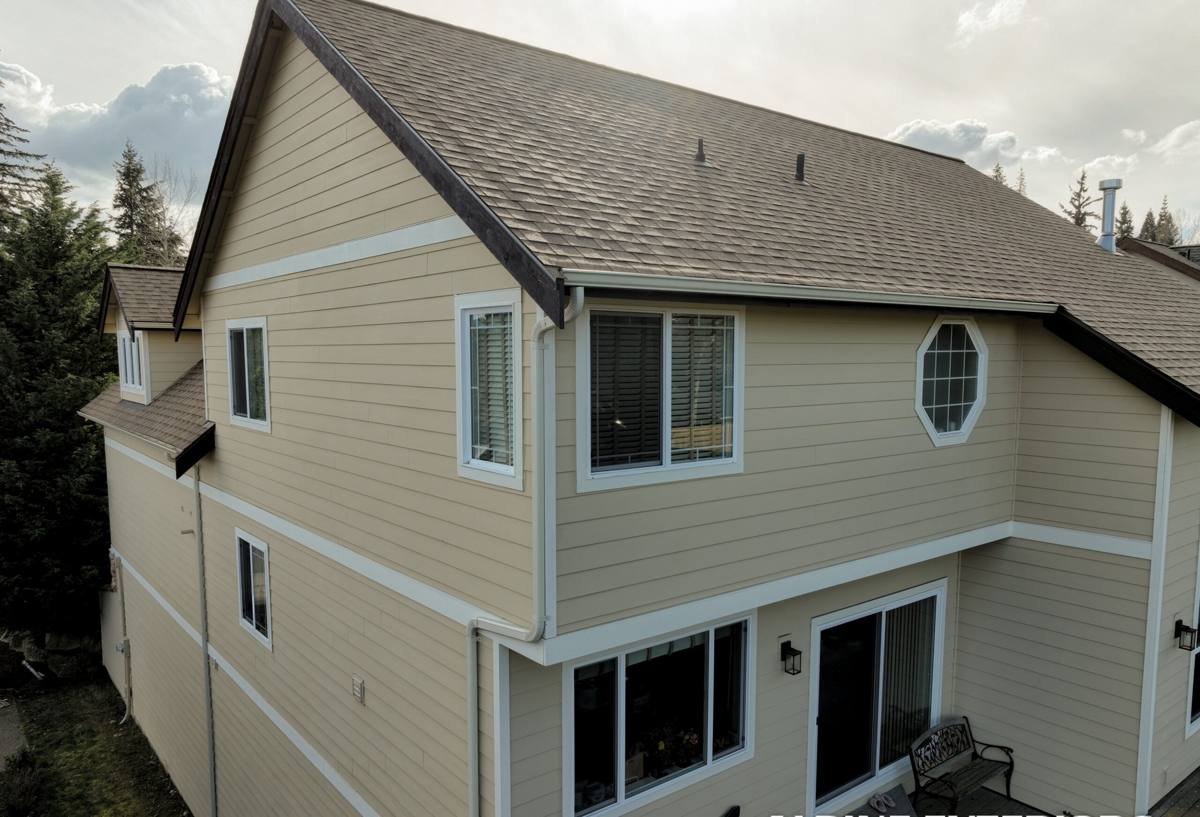
- Thick moss mats along the north-facing slope or under tree cover, especially where moss has started to lift shingle edges
- Ceiling stains or a musty smell in an upstairs closet or attic space after a heavy storm
- Rusted or lifted flashing around chimneys, skylights, and where a lower roof meets a wall
- Daylight visible around vent boots or nail heads when viewed from inside the attic
- Soft or spongy decking felt underfoot near a valley or eave — a sign moisture has already gotten past the roofing material
Any one of these, on its own, is usually a repair — not a reason to replace a roof that still has years of life left in the rest of its field. The judgment call is whether the damage is contained or whether it's evidence of a systemic problem, like poor original flashing detail or a ventilation imbalance that's been cooking the decking from underneath for years.
What a Correct Roof Repair Actually Involves
Getting Back to Sound Material
A repair that's done right starts by removing more than the visibly damaged area. We pull back roofing until we reach dry, sound decking and underlayment on all sides of the problem, not just the spot that's staining the ceiling below. Water travels sideways under roofing material far more than most homeowners expect, so the actual entry point is often a foot or more away from where the leak shows up inside.
Flashing Is Where Most Repairs Live or Die
In our experience, the majority of leaks on Columbia's older housing stock trace back to flashing, not the roofing material itself. Step flashing at wall intersections, counter-flashing at chimneys, and valley metal all have to be woven and lapped correctly so water sheds outward rather than working its way under the next course. Reusing old, corroded flashing to save time is a shortcut that shows up as a callback within a season or two, so we replace flashing as part of the repair rather than caulking around it.
Underlayment and Ice-and-Water Protection
At eaves, valleys, and around penetrations — the spots most exposed to wind-driven rain — we install self-adhered waterproof underlayment as a second line of defense, not just felt or synthetic underlayment. Given how often Whatcom County gets sideways rain rather than straight-down rain, this detail matters more here than it would in a calmer climate.
Matching Material and Checking Ventilation
We match the repair material to the existing roof as closely as possible in profile and color, and while we're up there we check attic ventilation. An imbalance between intake and exhaust venting traps moisture and heat, which shortens the life of decking and shingles from underneath — a problem no amount of surface repair can fix if the attic itself is staying damp.
Common Roofing Materials on Columbia Homes
The neighborhood's mix of home ages means we work on a range of roofing materials, each with its own repair profile in this climate.
| Material | Typical Climate Stress | Common Repair Need |
|---|---|---|
| Composition (asphalt) shingle | Moss lifting tabs, granule loss from driving rain | Section replacement, valley and flashing rework |
| Wood shake or shingle | Slow drying under tree cover, moss and rot | Spot replacement of split or decayed shakes, moss removal |
| Standing seam or panel metal | Salt-air corrosion at fasteners and seams | Fastener and sealant renewal, seam and flashing repair |
| Low-slope membrane (torch-down or similar) | Ponding water, seam separation | Seam re-welding or patching, drain and flashing repair |
Whatever the material, the repair principle is the same: address the water path, not just the visible symptom, and use materials rated for the moisture and salt exposure this area actually sees rather than a generic, one-size-fits-all patch.
Our Roof Repair Process
- Inspection. We walk the roof and the attic where accessible, tracing the water path from the interior stain or leak back to its actual entry point, not just the nearest visible damage.
- Honest findings. We tell you what we found, what caused it, and whether it's a contained repair or a sign of a bigger issue — no upselling a full replacement when a repair will genuinely hold.
- Clear estimate. You get a written scope and price before any work starts, so there are no surprises once the roof is opened up.
- Material matching. We source shingles, shakes, metal, or membrane that match the existing roof as closely as available product allows.
- The repair itself. Decking replaced where soft, flashing renewed, underlayment installed at vulnerable points, and new material fastened to hold up under real Whatcom County wind and rain.
- Cleanup and walk-through. Debris and old material hauled off, gutters cleared of anything we knocked loose, and a walk-through so you can see exactly what was done.
Moss, Moisture, and Protecting the Repair Long-Term
A repair is only as good as the maintenance that follows it. Because Columbia's tree cover and proximity to the bay create a long moss season, a roof here needs more upkeep than one in a drier, more exposed location. A few habits go a long way toward protecting the work we've just done:
- Clear gutters and valleys of needles and leaf litter at least twice a year — clogged valleys are one of the most common causes of repeat leaks
- Treat moss with a roof-safe product rather than letting it build into thick mats that hold moisture against the material
- Avoid pressure washing, which can drive water under shingles and strip protective granules
- Trim back branches that overhang the roof to improve drying time and reduce debris buildup
- Have the attic checked periodically for adequate airflow, especially in homes with additions or converted attic space where original venting may have been altered
None of this is glamorous work, but it's the difference between a repair that lasts its full expected life and one that reopens the same problem in a year or two.
Repair vs. Replacement: How We Help You Decide
Not every roof problem in Columbia needs a full replacement, and we don't default to recommending one. The decision usually comes down to a handful of factors we walk through with you honestly:
| Factor | Leans Toward Repair | Leans Toward Replacement |
|---|---|---|
| Roof age | Well within expected service life for the material | At or past the typical lifespan for its material |
| Extent of damage | Localized to one area, valley, or penetration | Spread across multiple slopes or the whole field |
| Decking condition | Sound except in the immediate repair area | Soft or rotted in multiple locations |
| Repair history | First or second repair on this roof | Repeated patches in the same or nearby areas |
| Underlying cause | A single identifiable failure point such as flashing or one damaged section | A systemic issue like poor original ventilation or widespread moss damage |
When a roof clearly falls on the repair side of that table, we say so and price it as a repair. When the evidence points toward a roof that's nearing the end of its useful life, we'll tell you that too, along with why, so you can plan rather than be surprised by a second call a year later.
Why a Crew That Already Works in Columbia Matters
Roofing crews who mostly work elsewhere in the county tend to treat every Columbia job as a first encounter with its particular mix of tree cover, older framing, and salt-air exposure. A crew that already works this neighborhood regularly has a head start: we've seen how these homes' roofs age under this specific shade and moisture pattern, which flashing details tend to fail first on houses of a given era, and how quickly moss rebuilds on a north-facing slope tucked under mature trees.
That familiarity also means faster response when a storm knocks a limb loose or drives rain sideways under a marginal flashing detail. We know the City of Bellingham's permitting requirements for roofing work, and we're not learning a neighborhood's quirks on your dime — we already know them, which keeps the inspection shorter and the diagnosis more accurate from the first visit.
Ready for an Honest Look at Your Roof?
If you're dealing with a stain on the ceiling, a mossy slope that's starting to concern you, or just want a second opinion before committing to a bigger repair, we're happy to take a look. We'll give you a clear, no-pressure estimate and tell you plainly whether you're looking at a straightforward repair or something bigger — use the form below to request your free estimate.