 Bellingham
 Storm Damage Roof Repair, Built for Columbia's Climate
The Columbia neighborhood sits close enough to Bellingham Bay that its roofs deal with a combination most inland homes never see: salt-laden air, wind-driven rain that finds every weak seam, and a moss season that runs longer here than almost anywhere else in Whatcom County. A roof that would hold up fine in a drier climate can start failing in Columbia within a few seasons if it wasn't built or repaired with that reality in mind. Storm damage repair here isn't just about patching what broke during the last windstorm — it's about fixing the underlying vulnerability so the same spot doesn't fail again next winter.
We work on roofs throughout Bellingham, and Columbia's older housing stock, mature tree canopy, and proximity to the water give it its own repair patterns. This page walks through what we actually see, how we approach the work, and what a homeowner should expect from a proper repair versus a quick cosmetic fix.
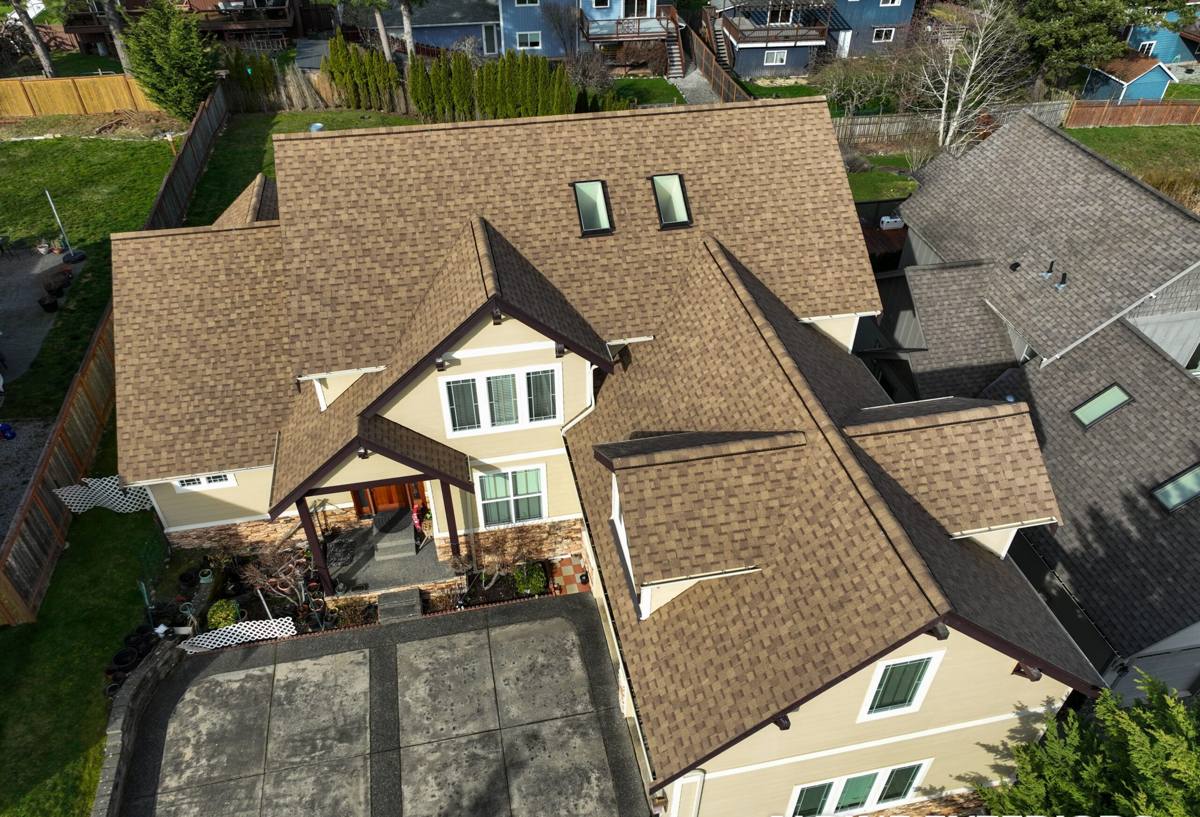
Why Columbia Roofs Take a Different Kind of Beating
Salt Air and Corrosion
Homes near the bay get a steady, low-grade exposure to salt-carrying air. Over time this accelerates corrosion on exposed metal — flashing, fasteners, gutter hardware, and any unprotected roof vents. A storm doesn't have to be dramatic to finish off a flashing seam that's already been quietly corroding for years; it just has to deliver the wind and rain that finds the gap.
Driving Rain
Whatcom County storms rarely come straight down. Wind off the water pushes rain sideways and under roof edges, which is exactly the kind of weather that exposes marginal flashing, worn underlayment, and shingles that have started to curl or lift. A roof can look intact from the ground and still be letting water in at a valley, a chimney flashing, or a low-slope transition.
The Long Moss Season
Shaded lots and the region's damp, mild winters mean moss has a long window to establish itself on north-facing slopes and anywhere tree cover blocks the sun. Moss holds moisture against the roofing material, lifts shingle edges as it grows, and works its way under laps and around fasteners. Left alone through a wet Columbia winter, a patch of moss can turn a minor storm ding into a real leak.
What Storm Damage Actually Looks Like Here
Storm damage isn't always a dramatic hole or a missing section of shingles. In Columbia, the more common failures are quieter:
- Wind-lifted or creased shingles that still look mostly fine but no longer seal properly
- Flashing around chimneys, skylights, and roof-wall junctions that's been forced open by wind or worked loose by corrosion
- Granule loss on older composition shingles, which accelerates after a hard hail or wind event and shortens the roof's remaining life
- Gutter and downspout damage that redirects water back under the roof edge instead of away from the house
- Moss-softened decking under shingles that looked okay from above but had already been compromised before the storm hit
That last one is the reason we never just replace the visibly damaged shingles and call it done. If moss or trapped moisture already weakened the material underneath, a surface-level patch will fail again — often in the very next storm.
A Patch Versus a Proper Repair
What a Quick Patch Misses
A fast patch addresses the obvious symptom: missing shingles get replaced, an exposed nail gets sealed, and the job is called finished. That can be appropriate for very minor, isolated damage. But if the patch doesn't include checking the decking underneath, the condition of the underlayment, and the flashing at nearby transitions, it's a temporary fix on a roof that may already have other weak points from the same storm or from ongoing moss and moisture exposure.
What We Actually Check
A proper storm damage repair starts with tracing the damage back to its cause, not just its location. That means checking whether decking is soft or delaminated, whether underlayment near the damaged area has already failed, whether nearby flashing is corroded or was never sealed correctly, and whether moss or debris contributed to the failure. We repair what's damaged and address what caused it — otherwise we're just scheduling the next repair call.
Our Storm Damage Repair Process
- Roof and attic assessment. We inspect the damaged area from both the exterior and, where accessible, the attic side, since water intrusion often shows up on decking or insulation before it stains a ceiling.
- Documentation. We photograph and note the extent of damage, which is useful both for our own repair plan and for any insurance claim you may file.
- Scope and options. We explain what needs to be repaired now, what's borderline and worth monitoring, and what your realistic options are — repair, partial re-roof of the affected slope, or full replacement if the roof is near the end of its service life.
- Repair work. This includes removing compromised shingles and decking as needed, replacing damaged flashing, correcting underlayment in the affected area, and reinstalling roofing material matched as closely as possible to your existing roof.
- Cleanup and moss treatment. If moss contributed to the damage, we address it as part of the job rather than leaving it to regrow into the new work within a season.
- Final walk-through. We show you what was done and what to watch for going forward.
Repair or Replace: The Honest Cost Factors
Not every storm-damaged roof needs to be replaced, and not every roof can be responsibly patched. The right call depends on a handful of factors, not just the size of the visible damage.
| Factor | Favors Repair | Favors Replacement |
|---|---|---|
| Age of roof | Under roughly half its expected lifespan | Near or past its expected service life |
| Extent of damage | Isolated to one area or slope | Spread across multiple slopes or recurring |
| Decking condition | Solid, no rot or soft spots | Widespread soft decking or delamination |
| Moss history | Minor, treatable | Long-term, has damaged underlying material |
| Shingle condition elsewhere | Granules intact, no widespread curling | Significant granule loss or curling roof-wide |
| Rough cost range | Typically a few hundred to a few thousand dollars | Typically several thousand dollars and up |
We'll always tell you honestly which side of this table your roof falls on. A repair that's likely to fail again within a year or two isn't a good value even if it's the cheaper option today.
Materials We Use and Why
For repairs, we match your existing roofing material as closely as possible so the fixed area blends in and performs consistently with the rest of the roof. In flashing and underlayment, we favor corrosion-resistant metal and, in valleys and other high-exposure areas, self-adhering ice-and-water membrane rather than felt alone — it holds up better against the wind-driven rain typical of storms coming off the bay. We don't cut corners on flashing details, since that's where the large majority of storm-related leaks originate, not in the field of the roof itself.
Insurance and Storm Claims
Many storm repairs in Columbia are at least partially covered by homeowners insurance, particularly when damage is tied to a specific wind or storm event. We're not insurance adjusters and can't promise coverage, but we can provide clear documentation and photos of the damage, a written repair scope, and straightforward answers if your adjuster has questions about the work needed. If you're not sure whether damage is claim-worthy, it's worth getting an inspection before you decide — that way you have the facts either way.
Preventing the Next Round of Storm Damage
Whatcom County's weather isn't going to change, but a lot of storm damage is preventable with basic upkeep between seasons. Homeowners in Columbia get the most out of their roof by staying ahead of a few recurring issues:
- Clearing moss on north-facing and shaded slopes before it spreads, rather than after it's already lifted shingles
- Keeping gutters and downspouts clear so storm water has somewhere to go besides under the roof edge
- Trimming back tree limbs that overhang the roof, which reduces both impact risk in wind and the shade that feeds moss growth
- Having flashing around chimneys, skylights, and vents checked periodically, since these fail quietly long before a leak shows up inside
- Scheduling a roof check after any major windstorm, even if nothing looks obviously wrong from the ground
Why a Local Columbia Crew Matters
A roofer who mostly works dry, inland neighborhoods will treat a Columbia roof the same as any other. A crew that regularly works this part of Bellingham knows to expect corrosion on metal that looks fine at a glance, to check north-facing slopes for moss even when the homeowner hasn't mentioned it, and to take driving rain and wind exposure seriously when detailing flashing rather than treating it as an afterthought. That local familiarity shows up in fewer repeat calls and repairs that actually hold through the next storm season.
If a recent storm has left you with damaged shingles, a leak, or just some uncertainty about your roof's condition, we're happy to take a look and give you a straightforward assessment. Reach out for a free, no-pressure estimate using the form below — we'll tell you plainly what needs attention and what can wait.