 Bellingham
 Roofing for Cordata's Particular Climate
Cordata sits in north Bellingham, close enough to Bellingham Bay and the Salish Sea that salt-laden air is part of daily life, and far enough into Whatcom County's marine weather pattern that roofs here rarely get a real dry season. The combination is tough on asphalt shingles specifically: driving rain pushed sideways by wind works its way under poorly lapped shingles, salt air accelerates the breakdown of cheaper granules and fasteners, and the long stretch of overcast, damp months from fall through spring gives moss and algae months on end to take hold. None of this means asphalt shingles are a poor choice for this area — they remain one of the most practical, cost-effective roofing materials available anywhere in Western Washington. It means the installation details matter more here than they would in a drier climate, and a roof that's just "good enough" somewhere else can fail early in Cordata.
A shingle roof that's specified and installed correctly for this environment will outperform one built to a generic national standard. That's the distinction this page focuses on: what "correct" actually looks like for a Cordata roof, not just what asphalt shingle roofing is in general.
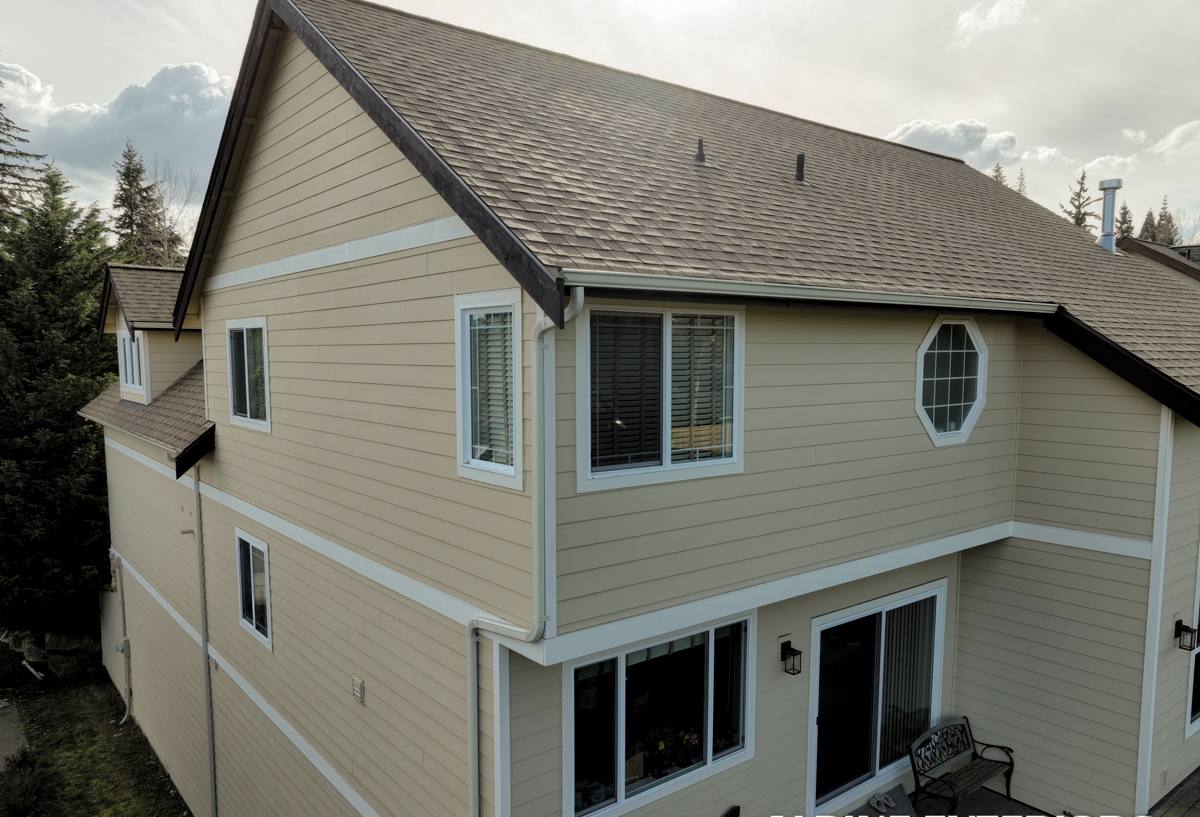
What a Correct Asphalt Shingle Job Actually Involves
A shingle roof is a system, not just a layer of shingles. Every component below has to be right, because in a climate with this much sustained moisture, a weak link in any one of them shows up as a leak, premature granule loss, or a shortened roof life.
Underlayment and Ice-and-Water Barrier
Synthetic underlayment goes down over the deck before a single shingle is installed, and it's the backup layer that protects the house if wind-driven rain ever gets past the shingles themselves — which, in this climate, it eventually will on some corner of the roof. Self-adhered ice-and-water membrane belongs at eaves, valleys, and around every penetration, since those are the spots where water backs up or concentrates. Skipping or skimping on this layer is one of the most common ways a roof looks fine for a year or two and then starts leaking.
Flashing Details
Step flashing at walls, counter-flashing at chimneys, and properly woven or metal valleys matter more in a wet climate because there are simply more rain events per year testing every seam. Reused old flashing, flashing that's caulked instead of properly lapped, or valleys that aren't sized for real volume are common shortcuts that cause callbacks.
Ventilation
Balanced intake at the soffits and exhaust at the ridge keeps the attic close to outdoor temperature and humidity. Without it, moist air trapped under the roof deck condenses on cold surfaces, which rots sheathing from the underside and can void a shingle manufacturer's warranty even when the shingles themselves were installed correctly.
Moss, Algae, and the Whatcom County Wet Season
Moss doesn't just sit on top of a roof — its roots work under shingle tabs and granules, lifting edges and holding water against the shingle surface long after the rest of the roof has dried out. On north-facing slopes and areas shaded by mature trees, which are common throughout Cordata's residential streets, moss can establish itself within a couple of wet seasons on a roof that isn't maintained. Algae staining (the dark streaking many homeowners notice on older roofs) is a related but separate issue — it's a bacterial growth that feeds on the limestone filler in some shingles and mostly affects appearance rather than roof integrity, but it's a visible sign that a roof is holding moisture longer than it should.
The fix isn't one-time pressure washing, which can strip granules and shorten shingle life. It's a combination of correct shingle selection, adequate ventilation so the deck and shingle undersides dry out between storms, and simple mechanical debris removal on a regular schedule — covered in the maintenance checklist below.
Choosing Shingles for Driving Rain and Salt Air
Not every asphalt shingle on the market is built the same, and the differences matter more in a climate that stays wet for months at a stretch. We steer Cordata homeowners toward algae-resistant (AR) shingles, which have copper- or zinc-infused granules that inhibit algae growth, and toward products with a wind rating suited to the gusts that come off the bay during winter storms. Standard three-tab shingles are the lowest-cost option and still a reasonable choice for some budgets, but architectural (dimensional) shingles have a heavier laminate construction that generally holds up better to wind uplift and driving rain over time.
| Shingle Type | Typical Lifespan | Wind Performance | Best Fit |
|---|---|---|---|
| 3-Tab (Standard) | 15–20 years | Adequate on sheltered roofs | Budget-conscious projects, lower-exposure slopes |
| Architectural / Dimensional | 25–30 years | Stronger uplift resistance | Most Cordata homes, especially exposed roof faces |
| Algae-Resistant (AR) Upgrade | Same as base shingle | No change | Shaded roofs, north slopes, moss-prone areas |
| Premium / Designer Laminate | 30+ years | Highest available | Homeowners prioritizing longevity and appearance |
We'll walk through these trade-offs honestly during an estimate rather than defaulting to whatever carries the best margin — the right shingle depends on your roof's exposure, slope, and how long you plan to stay in the home.
Our Process, Start to Finish
Inspection and Estimate
We start by getting on the roof, not just looking at it from the ground. That means checking the deck for soft spots, evaluating existing ventilation, and noting problem areas like valleys, chimney flashing, and any slopes with moss buildup. You get a written scope and a straight answer on what's actually needed versus what could wait.
Tear-Off and Deck Repair
Old shingles come off down to the deck so we can see the wood underneath — you don't want a new roof installed over hidden rot. Any damaged sheathing gets replaced before anything else goes down.
Underlayment, Flashing, and Shingle Installation
Ice-and-water membrane at vulnerable areas, synthetic underlayment across the field, new flashing where needed, and shingles installed to manufacturer nailing and exposure specs — not shortcuts that speed up the job but compromise wind resistance.
Cleanup and Final Walkthrough
Magnetic sweeps for nails, hauling debris, and a walkthrough so you know what was done and what to watch for going forward.
What This Kind of Roof Costs
Every roof is different, but the factors below are what actually move the price on a Cordata reroof, more than the brand name on the shingle wrapper.
| Cost Factor | Why It Matters |
|---|---|
| Roof size and number of slopes/valleys | More cuts, flashing, and waste on complex roofs |
| Number of layers being removed | Tear-off labor and disposal cost scale with layers |
| Deck condition | Rotten sheathing found during tear-off adds material and labor |
| Shingle tier chosen | 3-tab vs. architectural vs. premium laminate |
| Ventilation upgrades | Adding intake/exhaust venting where none exists |
| Roof access and pitch | Steep or hard-to-reach roofs require more safety setup and time |
We'd rather walk your roof and give you real numbers than quote a price range that doesn't mean much until we've seen the actual conditions.
Maintenance Checklist for Cordata Homeowners
A well-installed shingle roof still needs a bit of regular attention in this climate to reach its full lifespan.
- Clear moss and debris from valleys and north-facing slopes at least once a year, ideally before the wet season sets in
- Keep gutters clear so water isn't backing up under the eave line during heavy rain
- Trim back tree limbs that shade the roof and keep it damp longer than it needs to be
- Have flashing around chimneys and skylights checked periodically — these are the most common leak points, not the open field of shingles
- Watch for granule buildup in gutters, which can signal a shingle layer nearing the end of its service life
- Avoid pressure washing shingles directly — it strips granules and shortens the roof's life instead of extending it
Why Local Experience in Cordata Matters
A crew that already works this neighborhood knows which slopes hold moss the longest, which older homes were built with ventilation that hasn't kept pace with current code, and how Whatcom County's inspection and permitting process actually runs for reroofing. That familiarity saves time and avoids the guesswork of a contractor learning the area's quirks on your project. It also means someone who can respond quickly if a storm off the bay causes damage that needs an honest, prompt assessment rather than a multi-week wait.
If you're weighing a repair against a full reroof, or just want a clear-eyed look at how much life is left in your current roof, we're glad to come out and take a look. There's no pressure and no charge for an honest estimate — just use the form below to get started.