 Bellingham
 Decking in Cordata Has to Work With Whatcom County's Weather, Not Against It
Cordata sits in north Bellingham, close enough to the water and the marine air pattern that moves through Whatcom County to feel its effects year-round. That means a deck here isn't just a backyard upgrade — it's an exterior structure that has to shed a lot of rain, resist a long stretch of shade-driven moss growth, and hold up to salt-tinged air without warping, splitting, or turning into a slip hazard by December. A deck built with the wrong materials or the wrong details might look fine the first summer. By year three or four, homeowners start seeing soft spots, green film that won't scrub off, or fasteners bleeding rust through the boards. We build decks in this area specifically to avoid that outcome, and this page covers what that actually takes.
Why This Matters More Here Than in Drier Climates
In places with a short, dry summer and long dry falls, a deck can get away with mediocre detailing for a while. Bellingham doesn't give you that grace period. Between the Pacific storm track, the humidity off the Salish Sea, and tree cover that keeps a lot of yards shaded well into the afternoon, moisture sits on deck surfaces and under them longer than most manufacturers' install guides assume. The build has to account for that from the framing up, not just at the surface.
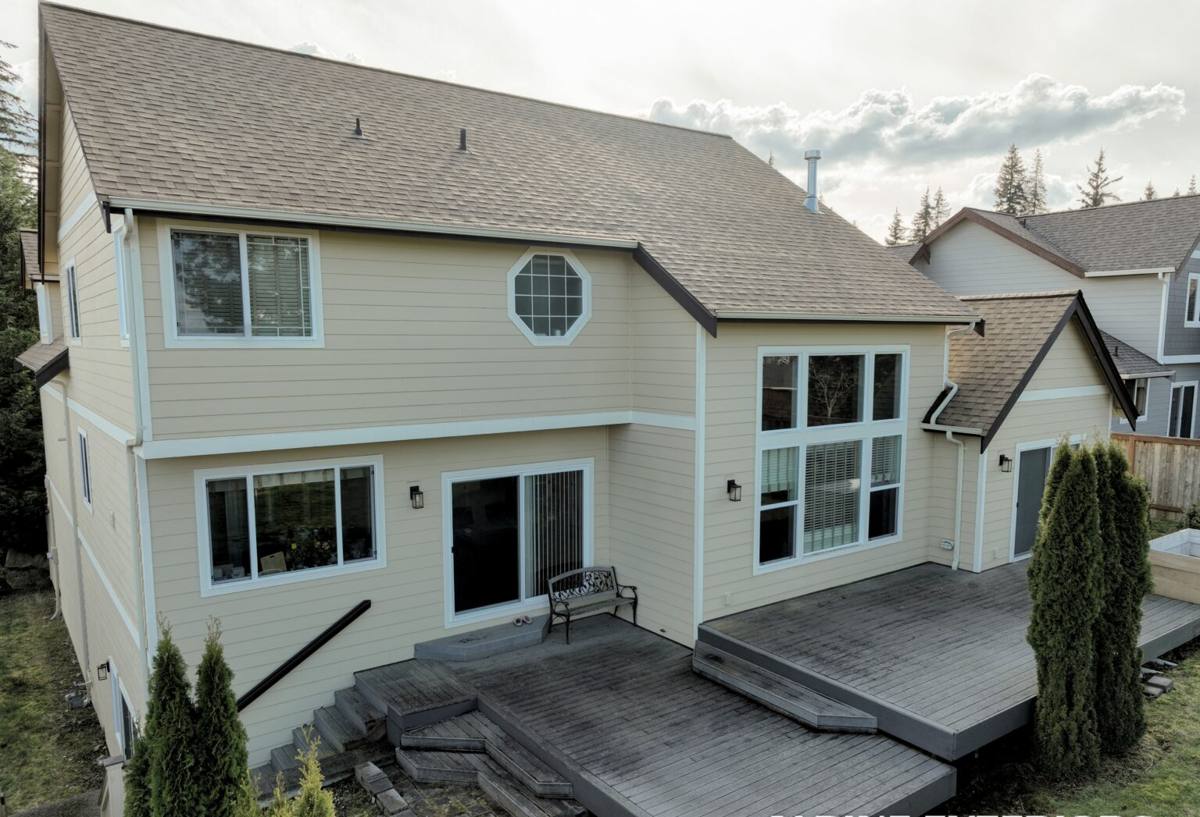
What "Composite Decking" Actually Covers
Composite decking is a blend of wood fiber and plastic, engineered into boards that don't need staining, sealing, or annual sanding the way a wood deck does. But "composite" isn't one product — it's a category, and the differences between tiers matter a lot in a wet climate.
- Uncapped composite — wood fiber and plastic mixed all the way through the board, no protective outer layer. Cheaper, but the exposed fiber can absorb moisture at the surface over time, which is exactly what you don't want in a high-rainfall area.
- Capped composite — a solid polymer shell wrapped around the wood-plastic core, usually on all four sides. This is what actually resists moisture intrusion, staining, and the surface fading that comes from constant damp/dry cycling.
- PVC / cellular decking — no wood fiber at all, fully synthetic. Very moisture-tolerant, often lighter, generally the highest cost tier.
For Cordata's climate, we steer most homeowners toward fully capped composite unless there's a specific reason to go with PVC. Uncapped boards can perform fine in drier regions, but with the rain totals and shaded yards common in this part of Bellingham, the extra protection of a cap earns its cost over the life of the deck.
What Bellingham's Climate Actually Does to a Deck Over Time
It helps to be specific about the failure modes, because they're predictable and mostly preventable with correct material choice and installation.
Moss and Algae
Whatcom County's long wet season and abundant shade give moss and algae exactly what they need: consistent moisture and low sun exposure. On composite decking this shows up as a greenish film, usually starting in board grooves, corners, and anywhere water sits instead of draining. It's mostly cosmetic on capped boards, but it makes the surface genuinely slick — a real concern on stairs and near door thresholds.
Salt Air and Metal Fasteners
Proximity to the water means airborne salt reaches yards further inland than people expect, especially with the prevailing wind patterns off the Sound. Standard fasteners and hidden clip systems that aren't rated for coastal exposure can corrode faster here, which shows up as rust streaking on light-colored boards and, eventually, fastener failure.
Driving Rain and Substructure Rot
The surface boards get all the attention, but the framing underneath is where a poorly built deck actually fails. Driving rain pushes water sideways under railings and against ledger boards, not just straight down. If flashing, joist protection, and drainage gaps aren't handled correctly at install, the substructure can be rotting for years before it shows on top.
What a Correct Composite Deck Build Actually Involves
The composite boards themselves are the easy part. Most of what separates a deck that lasts 25+ years from one that needs rework in five happens below the surface, before a single visible board goes down.
- Ledger board flashing — where the deck attaches to the house, a properly integrated flashing system keeps water from tracking behind the siding and into the wall framing. This is one of the most common shortcuts we see on older or DIY builds.
- Joist tape — a protective membrane over the top of every joist, so fasteners don't create an open wound in the wood that traps water underneath the decking.
- Coastal-rated fasteners and hardware — stainless or coated hardware rated for exposure near saltwater environments, not the standard-grade hardware that's fine further inland.
- Proper board spacing — composite expands and contracts with temperature and moisture more than people expect; gaps that are too tight cause buckling, gaps that are too wide catch heels and debris.
- Drainage and airflow underneath — enough clearance and slope so water moves off the site instead of pooling under the deck, which is where hidden rot and pest issues start.
- Stair and railing detailing — code-compliant rise/run and railing height, with the same moisture protections carried through, since stairs take the brunt of foot traffic and standing water both.
How Our Process Works
We keep the process straightforward because most homeowners just want to know what's happening and when.
- On-site visit and assessment — we look at sun exposure, tree cover, existing structure (if it's a replacement), and how water currently moves across the yard and against the house.
- Material and layout discussion — we walk through capped vs. PVC options, color and board profile choices, and railing systems, with honest trade-offs on cost and long-term maintenance for each.
- Permitting — decks above a certain height or attached to the structure typically require a permit in Whatcom County; we handle that paperwork rather than leaving it on the homeowner.
- Demo and framing — removal of the old structure if applicable, then framing built to current code with joist tape and flashing integrated from the start.
- Decking, railing, and stair install — boards, fascia, railings, and stairs installed with correct fastening and spacing for this climate.
- Final walkthrough — we go over the finished deck together, including basic care expectations, before we consider the job done.
Composite vs. Wood vs. PVC — A Straight Comparison
| Factor | Wood (Cedar/Pressure-Treated) | Capped Composite | PVC / Cellular |
|---|---|---|---|
| Upfront cost | Lowest | Mid-range | Highest |
| Annual maintenance | Staining/sealing needed most years | Occasional cleaning | Occasional cleaning |
| Moss/algae resistance | Low — wood surface holds moisture | Good, especially with textured caps | Very good |
| Moisture absorption | High if finish isn't maintained | Low | Very low |
| Typical lifespan | 10–15 years before major rework | 25–30+ years | 25–30+ years |
| Appearance over time | Grays/weathers without upkeep | Holds color well | Holds color, can look more synthetic |
There's no universally "right" answer here — cedar still has a natural look some homeowners want, and we'll install it correctly if that's the preference. But for a low-maintenance deck that holds up to Cordata's specific mix of rain and shade without becoming a yearly chore, capped composite is where most of our clients land.
Living With a Composite Deck in This Climate
Composite is low-maintenance, not no-maintenance, and setting that expectation upfront avoids disappointment later.
- Rinse or sweep debris off the deck regularly, especially fallen leaves and needles that trap moisture against the boards.
- Clean visible moss or algae with a soft-bristle brush and a manufacturer-approved cleaner — avoid pressure washers on composite, which can damage the cap layer.
- Check railing hardware and fasteners once a year for early signs of corrosion, particularly if the yard has direct exposure to prevailing winds off the water.
- Keep gutters and downspouts near the deck clear so runoff isn't dumping extra water directly onto or under the structure.
- Trim back overhanging branches where practical — less shade means faster drying and less moss pressure overall.
Why a Crew That Already Works in Cordata Makes a Difference
A lot of deck problems we get called out to fix aren't material failures — they're detailing mistakes made by installers who don't build regularly in this specific climate. A crew based elsewhere in a drier region might not think twice about skipping extra flashing at the ledger or using standard-grade hardware, because in their market it doesn't matter. In north Bellingham, those shortcuts show up as callbacks. Working consistently in Whatcom County means we've already seen how sun exposure, drainage, and shade patterns play out on real decks here over multiple wet seasons, and we build accordingly the first time.
Cost Factors to Expect
| Factor | How It Affects Price |
|---|---|
| Deck size and shape | More square footage and complex shapes (angles, multiple levels) increase material and labor |
| Board tier | Uncapped composite costs less than capped; PVC costs more than both |
| Substructure condition | Replacing rotted framing on an existing deck adds cost beyond a straightforward rebuild |
| Railing system | Composite or metal railings cost more than basic wood but need less upkeep |
| Height and stairs | Elevated decks need more structural work and code-compliant stair/railing detailing |
| Site access | Tight yards or limited equipment access can add labor time |
We don't quote off square footage alone — the site visit is what lets us give a number that actually holds once work starts, rather than a low estimate that grows once we're into the job.
Get a Free Estimate for Your Cordata Deck
If you're planning a new deck or replacing one that's showing its age, we're happy to come take a look, walk the site with you, and talk through what makes sense for your yard's sun exposure, shade, and drainage. No pressure, no obligation — just a straight assessment from a crew that builds decks in this climate regularly. Use the form below to request your free estimate.