 Bellingham
 Why Roofs in Cordata Wear Differently Than You'd Expect
Cordata sits in north Bellingham, close enough to Bellingham Bay and the broader Puget Sound air mass that homes here deal with a slow, steady kind of weathering rather than one dramatic storm. Salt-tinged air corrodes exposed metal fasteners and flashing over years, not weeks. Driving rain off the Sound pushes water sideways under shingle tabs and around penetrations that would stay dry in a calmer climate. And Whatcom County's mild, wet winters stretch the moss-growing season longer than most homeowners who moved here from drier regions expect. None of these factors destroy a roof by themselves. Together, over ten or fifteen years, they add up to the kind of gradual failure that often isn't obvious until water is already inside the attic.
A roof replacement done right for this part of Bellingham has to account for all three at once — not just pick a shingle and nail it down.
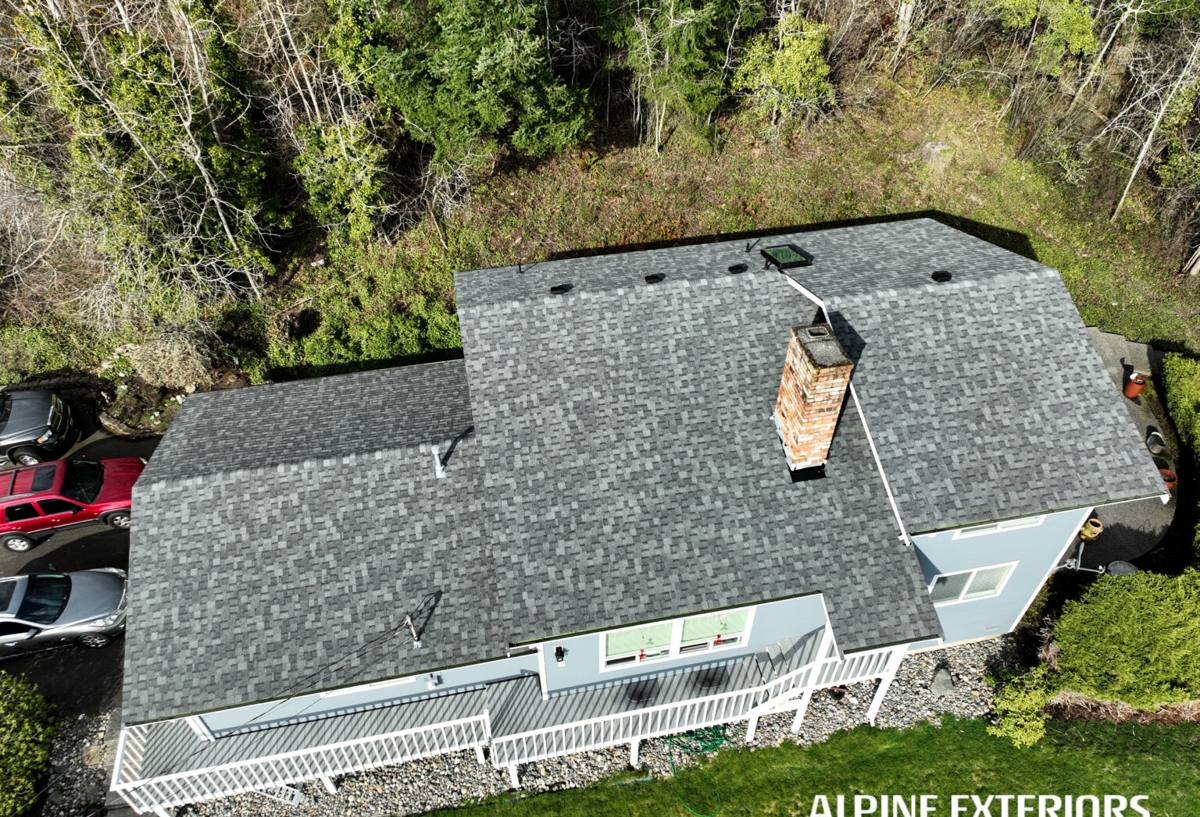
Moss, Shade, and Tree Cover Around Cordata
Like much of north Bellingham, many Cordata properties sit near mature conifers and mixed tree cover that shade roof sections for a good part of the day. Shaded, north-facing slopes stay damp longer after rain, and that moisture is exactly what moss needs to establish. Once moss gets a foothold, it holds water against the shingle surface, lifts tabs at the edges, and works its way under the granule layer — which is what actually protects the asphalt mat underneath from UV and weather. A roof that looks "just a little mossy" from the ground is often further along than it appears from the driveway.
Gutters and valleys near tree cover also collect needles and debris faster here than on more open lots, which means water can back up at exactly the spots where a roof is already vulnerable — valleys, eaves, and behind chimneys.
Signs a Cordata Roof Needs Replacement, Not Another Patch
Repairs make sense when a roof has years of life left and the damage is localized. Replacement makes sense when the underlying materials are worn out across the board, even if only part of the roof is leaking today. Some signals we look for:
- Granules collecting in gutters or at downspout outlets, showing the shingle surface is breaking down
- Shingles that are curling, cupping, or cracking, especially on south- and west-facing slopes
- Moss or algae staining across large sections rather than isolated patches
- Soft spots in the decking felt underfoot, or daylight visible through the attic sheathing
- Repeated leaks in different spots after previous patch jobs
- A roof approaching or past the manufacturer's expected service life for its material and climate exposure
If a roof is showing two or three of these at once, patching usually just delays a bigger repair bill without actually solving anything.
What a Correct Roof Replacement Actually Involves
Full Tear-Off and Deck Inspection
We don't install new roofing over old. A full tear-off lets us see the actual condition of the plywood or OSB decking underneath — soft, delaminated, or water-stained sections get replaced before anything new goes down. Skipping this step is how a new roof ends up failing early from a rotten deck nobody could see.
Underlayment That Matches the Exposure
Given how much driving rain this area sees, we pay close attention to underlayment at eaves, valleys, and around any roof penetration — these are the spots where wind-driven rain is most likely to find a way in. A synthetic underlayment paired with self-adhered membrane at the vulnerable areas gives the roof a real second line of defense, not just a formality under the shingles.
Ventilation That Actually Works
Proper intake and exhaust ventilation keeps the attic close to outdoor temperature and controls moisture buildup from the inside. In a climate this damp, poor ventilation contributes to premature shingle aging from underneath and can encourage condensation issues that have nothing to do with the roof surface at all.
Flashing at Every Transition
Chimneys, skylights, sidewalls, and vent pipes are where most roof leaks actually start — not in the open field of shingles. Correct flashing, properly lapped with the underlayment and shingles rather than just caulked over, is one of the biggest differences between a roof that lasts and one that leaks within a few years.
Roofing Material Options for Whatcom County Homes
There isn't one "best" roofing material for every Cordata home — it depends on tree cover, roof pitch, budget, and how long you plan to own the house. Here's how the common options compare for this climate:
| Material | Moss & Moisture Resistance | Typical Lifespan | Maintenance |
|---|---|---|---|
| Architectural asphalt shingle | Good with proper ventilation and periodic cleaning | 25–30 years | Low to moderate |
| Standing seam metal | Excellent — sheds moisture, minimal surface for moss to grip | 40–50+ years | Low |
| Cedar shake | Requires diligent upkeep in shaded, damp conditions | 20–30 years with maintenance | High |
| Synthetic composite shingle | Good; engineered to resist moisture absorption | 30–50 years | Low |
Cedar shake has real aesthetic appeal, but on a shaded, moss-prone Cordata lot it demands more consistent maintenance than most homeowners realize going in — that's a fair trade-off to weigh, not a reason to rule it out entirely. Metal and synthetic composite options tend to fare better with minimal upkeep on heavily shaded roofs, while a quality architectural asphalt shingle remains a solid, cost-effective choice for most homes when it's installed and ventilated correctly.
What Our Process Looks Like
We keep the sequence straightforward so you know what's happening and when:
- On-site inspection and estimate — we walk the roof (or use a drone where pitch or access makes that safer), check the attic, and note deck condition, ventilation, and flashing issues before quoting anything.
- Material selection — we walk through the trade-offs above based on your roof's exposure, your budget, and how long you plan to stay in the home.
- Scheduling around the weather — Whatcom County's wet stretches mean we plan tear-off days with real weather windows, not just a date on a calendar.
- Tear-off, deck repair, and installation — done in a continuous sequence so the deck isn't left exposed overnight if it can be avoided.
- Final walkthrough — we review the finished roof with you, including flashing points and ventilation, before calling the job done.
- Cleanup — magnetic sweep for nails, debris hauled off, and the property left the way we found it.
Cost Factors to Expect
Every roof is different, but the line items that actually move the price on a Cordata job tend to be the same ones:
| Factor | Why It Affects Cost |
|---|---|
| Roof size and number of planes | More squares and more valleys/hips mean more material and labor |
| Deck condition | Rotten or soft sheathing found during tear-off has to be replaced before anything else goes down |
| Pitch and access | Steeper roofs and limited access (tight lots, tall trees) require more safety setup and time |
| Material choice | Asphalt, metal, and composite carry different material and installation costs |
| Ventilation and flashing upgrades | Bringing older ventilation or flashing up to current standards adds scope but reduces future callbacks |
| Layers to remove | Tearing off multiple existing layers takes more labor than a single-layer tear-off |
We'd rather walk your roof and give you real numbers than throw out a broad range that doesn't mean much either way — every one of these factors is roof-specific.
What to Ask Before You Hire a Roofing Crew in Cordata
A roof replacement is a significant investment, and it's worth vetting a contractor the same way you'd vet anyone else working on your home:
- Are they licensed and insured to do roofing work in Washington State, and will they show you proof without being asked twice?
- Do they do a full tear-off and deck inspection, or just layer over the old roof?
- Will they put the material, warranty terms, and scope of work in writing before the job starts?
- Do they carry manufacturer certifications for the shingle or metal system they're recommending?
- Can they explain why they're recommending a specific ventilation or underlayment approach for your roof, not just a generic package?
- Do they have experience with the moss and moisture conditions specific to shaded, tree-covered lots in this area?
Why a Crew That Already Works Cordata Matters
A roofing crew that regularly works this part of Bellingham has already seen how the local combination of shade, moisture, and salt-influenced air plays out over time on real roofs — not just in a training manual. That means fewer surprises during tear-off, better judgment about where to reinforce ventilation or flashing, and a material recommendation grounded in what actually holds up on Whatcom County homes rather than what sells well in a showroom. It also means someone local to call if a question comes up after the job is finished, instead of chasing down a crew that's moved on to the next region.
If your roof is showing its age or you're just trying to plan ahead, we're happy to take a look and give you an honest read on where things stand. Use the form below to request a free, no-pressure estimate for your Cordata home.