 Bellingham
 Deck Building in Cordata: A Different Set of Problems Than a Wall Faces
A deck takes on this climate differently than siding or a roof does. It's a horizontal surface, which means it doesn't just get rained on — it holds water, catches falling debris from overhead trees, and stays in direct contact with the ground or a support structure that's damp for most of the year. In Cordata, a neighborhood on the north side of Bellingham, that combination of salt-tinged air off the water, driving rain, and a moss season that runs long into spring puts real, ongoing pressure on any outdoor structure, and a deck usually shows the wear first.
Homeowners often assume deck problems come down to the choice of board — wood versus composite — but material is only part of it. How the deck is framed, flashed, fastened, and spaced determines whether it sheds water the way it's supposed to or slowly traps moisture in the places you can't see until a board goes soft underfoot. We build decks throughout Cordata and the rest of Whatcom County with that full picture in mind, not just the surface layer.
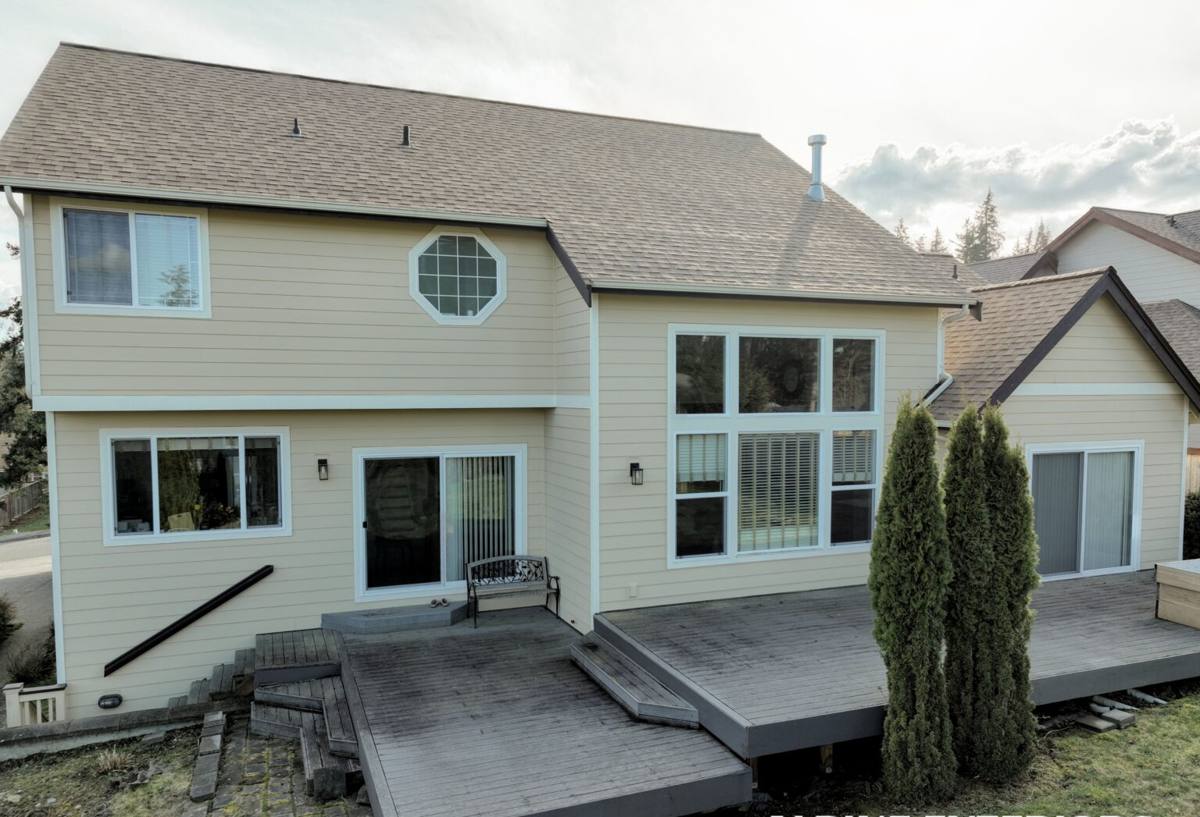
What Driving Rain, Salt Air, and Moss Actually Do to a Deck
Driving rain in this area doesn't fall straight down as often as it comes in at an angle, which means it reaches surfaces a calm-weather deck design wouldn't need to account for — the undersides of rail caps, the backs of fascia boards, and gaps around posts where water can work its way in and sit. Over time, that wind-driven exposure finds any spot where flashing, sealing, or spacing wasn't handled correctly the first time.
Salt-laden air moving inland off the water accelerates corrosion on anything metal — fasteners, joist hangers, post bases, and railing hardware all take that hit faster here than they would in a drier inland climate. A fastener that starts to rust doesn't just look bad; it loses holding strength, and that's a structural concern on a deck people actually stand and walk on.
Moss is the piece that's easy to underestimate. Shaded decks, decks under tree cover, and anything that doesn't get a few hours of direct sun end up damp for extended stretches through fall, winter, and much of spring — exactly the conditions moss needs. On deck boards, moss isn't just a cosmetic problem. It holds moisture directly against the wood or composite surface, and on stairs or a walking surface it becomes a genuine slip hazard once it takes hold.
Choosing a Decking Material for a Cordata Backyard
There's no single right answer here — the right material depends on budget, how much upkeep a homeowner wants to take on, and how shaded or exposed the specific lot is. What matters is going in with a clear-eyed view of how each option actually behaves in this climate rather than deciding on looks or price alone.
Wood Decking
Pressure-treated lumber is the most common framing material and a common decking surface too, mainly because of upfront cost. It holds up structurally when properly maintained, but the surface needs regular sealing or staining to keep moisture out, and in a shaded, damp yard it's more prone to moss and mildew than a composite surface would be. Cedar has a natural look many homeowners want, but it's a softer wood that absorbs moisture readily and needs the same ongoing maintenance commitment, if not more.
Composite and PVC Decking
Capped composite and PVC decking cost more upfront but don't require sealing or staining, resist moisture absorption at the core, and generally hold up better against moss compared to bare wood, since there's less for it to root into. The trade-off is a higher initial price and a different look and feel underfoot than natural wood — some homeowners prefer that, some don't. We install both and will walk through the honest trade-offs for your specific yard rather than pushing whichever costs more.
| Material | Moisture & Moss Behavior Here | Ongoing Maintenance |
|---|---|---|
| Pressure-treated lumber | Absorbs moisture without a maintained sealant; moss-prone in shaded spots | Sealing or staining every 1-2 years, moss treatment as needed |
| Cedar | Attractive but moisture-absorbent; softens faster than treated lumber if neglected | Regular sealing and cleaning to hold appearance and integrity |
| Capped composite | Resists moisture absorption at the core; less hospitable to moss | Occasional washing, no sealing or staining required |
| PVC decking | Fully moisture-resistant surface; performs consistently in shaded, damp areas | Lowest maintenance of the group, occasional cleaning only |
What Correct Deck Construction Actually Involves
The material on top only performs as well as what's underneath it. A deck that's framed, flashed, and fastened correctly will outlast one built with a nicer board on a shortcut structure.
The Ledger Board: Where Most Deck Failures Start
On a deck attached to the house, the ledger board is the single most important point on the whole structure. It has to be flashed correctly — with proper waterproof membrane or flashing tape between the ledger and the house's weather barrier — so that water running down the siding above doesn't track behind the ledger and rot the house's rim joist from the inside. This is one of the most common failure points we see on older or poorly built decks in wet climates, and it's almost always invisible until real damage has already been done.
Footings, Framing, and Fasteners
Footings need to be sized and set to local frost and load requirements, not just poured to whatever depth is convenient. Joist hangers and structural connectors should be corrosion-resistant hardware rated for exterior and treated-lumber contact, since standard fasteners degrade faster in salt-tinged, wet-weather conditions. Deck boards need consistent gapping for drainage and airflow underneath — too tight, and water and debris get trapped between boards; too wide, and the deck feels unfinished and can be a hazard for narrow items or bare feet.
Railings, Stairs, and Code
Railing height, baluster spacing, and stair stringer construction all follow building code requirements that exist for real safety reasons, not just red tape. We build to those specifications as a baseline, not a minimum to talk a homeowner out of.
- Ledger board flashed with waterproof membrane where the deck meets the house
- Footings sized and set to code, below frost depth
- Joist hangers and structural hardware rated for exterior, treated-lumber use
- Corrosion-resistant fasteners appropriate for a salt-air climate
- Consistent board spacing for drainage and airflow underneath
- Railings and stairs built to current code height and spacing requirements
- Post bases set to keep wood contact off standing water and damp grade
Our Deck Building Process
We start with a walkthrough of the yard — sun exposure, grade, drainage, tree cover, and whether the deck will attach to the house or stand free — because those details shape both the design and the material recommendation. From there we talk through decking material, layout, and railing style based on how the space will actually be used and what kind of maintenance commitment makes sense for the household.
Depending on the size, height, and attachment of the deck, a permit through the City of Bellingham or Whatcom County may be required before construction starts. We handle that process as part of the project rather than leaving it for the homeowner to sort out. Once permitting and material selection are settled, construction moves through footings and framing first, then decking, then railings and stairs, with a final walkthrough before we call the job done.
Keeping a Cordata Deck Ahead of Moss and Moisture
A well-built deck still needs some seasonal attention in this climate, especially if it sits under tree cover or gets limited direct sun. None of this is difficult, but skipping it for a few seasons in a row is usually how small problems turn into board replacement.
- Sweep leaves, needles, and debris off the deck surface regularly, especially in fall
- Keep the gaps between boards clear so water can actually drain through
- Wash the surface periodically with a deck cleaner appropriate to the material — avoid aggressive pressure-washing on wood, which can damage the grain
- Reseal or restain wood decking on a regular schedule; composite and PVC don't need this step
- Check the ledger board flashing area for any sign of staining or moisture once a year
- Tighten or inspect railing and stair connections periodically, since hardware can loosen over time
Signs an Existing Cordata Deck Needs Attention
Most homeowners don't think about their deck's condition until something specific catches their attention. It's worth knowing what to watch for before a maintenance issue becomes a safety issue:
- Boards that feel soft, spongy, or give slightly underfoot
- Persistent moss or green staining that comes back soon after cleaning
- Rust streaks below fasteners or visible corrosion on hardware
- Gaps between boards that have widened or boards that have cupped
- A railing or stair rail that flexes or feels loose when you lean on it
- Water pooling on the surface instead of draining through
- Any staining or gap at the point where the deck meets the house
Any one of these is worth a real look rather than a wait-and-see approach. Moisture-related damage in this climate tends to spread rather than stay contained to one spot, and a structural issue on a deck is a safety concern, not just a cosmetic one.
Why a Local Crew Matters for Deck Work in Cordata
A lot of what separates a deck that holds up for decades from one that needs early repair comes down to details a crew unfamiliar with this specific climate tends to underweight — how much wind-driven rain a given deck orientation will actually take, how long a shaded corner of the yard stays damp relative to the rest of the property, and how much clearance and flashing a ledger board really needs given how consistently wet this area gets compared to drier parts of the state.
A crew that builds decks around Bellingham and Whatcom County regularly sees these patterns repeat from yard to yard, and that familiarity shows up in decisions that aren't always obvious to a homeowner walking the finished project — where extra flashing was worth the added step, why a certain post base was chosen over a cheaper one, or why board spacing was set slightly wider on a shaded section than a sunny one.
If you're planning a new deck in Cordata or you're not sure whether an existing one is still sound, we're glad to take a look. Reach out using the form below to schedule a free, no-pressure estimate.