 Bellingham
 Deck Repair Built for a Waterfront Climate
A deck in Birch Bay does not age the way a deck does a few miles inland. Sitting this close to the water means more direct salt exposure, more wind-driven rain finding its way into joints and fastener holes, and a moss season that can run most of the year on shaded boards. Decks take that punishment sitting horizontally, exposed to sun and standing water in a way that vertical siding never has to deal with. That is why a deck that looks fine from a distance can be hiding real structural problems underneath, and why repair work out here has to account for exposure that a general contractor working inland rarely sees.
We repair decks for homes in and around Birch Bay — structural framing, ledger connections, board replacement, railing, and the flashing and fastener details that determine whether a repair lasts five years or twenty. We treat deck repair as structural work first and cosmetic work second, because the failures that actually hurt people start below the surface.
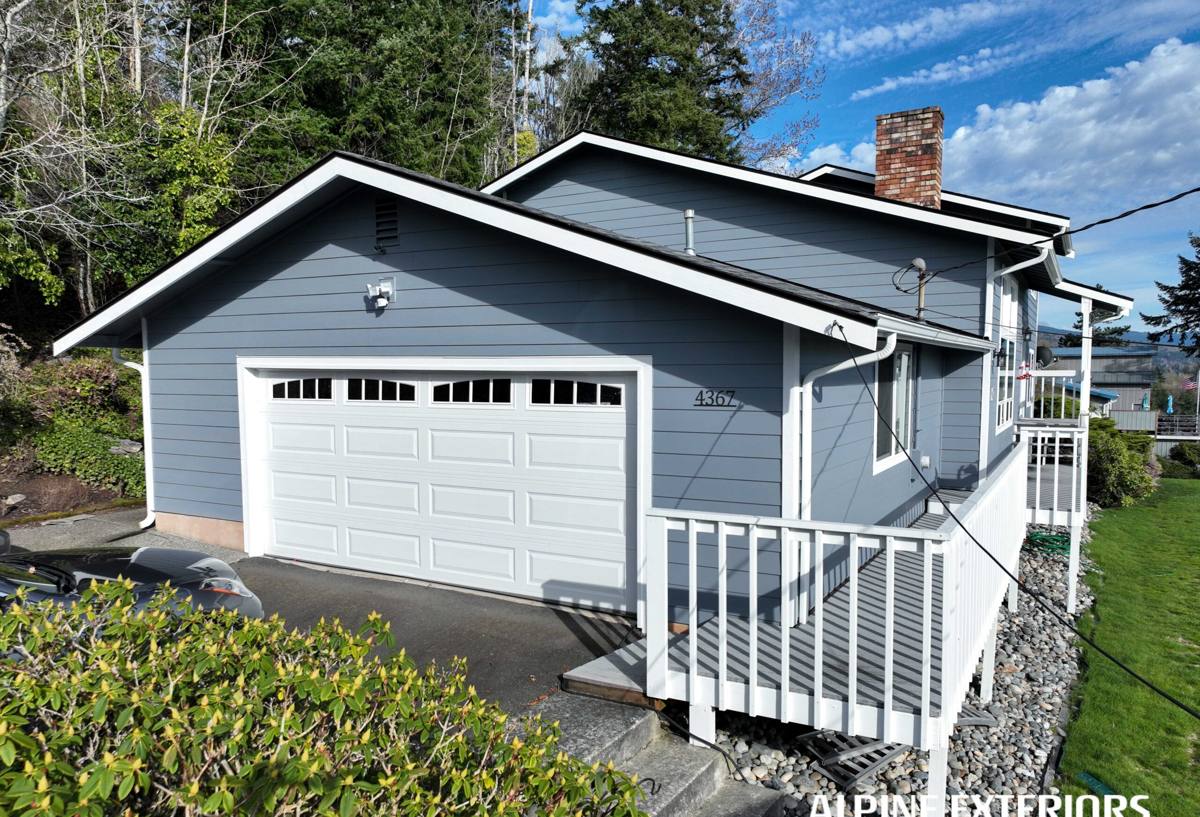
What This Climate Does to a Deck
Salt Air and Fastener Corrosion
Salt-laden air off the bay accelerates corrosion in any fastener, joist hanger, or piece of hardware that is not rated for it. A deck built with standard galvanized hardware instead of stainless or properly coated fasteners can start showing rust streaks and weakening connections years before a similar deck built a few miles inland would. Corroded fasteners are one of the most common things we find during a Birch Bay deck inspection, often well before the boards themselves show serious wear.
Driving Rain and Trapped Moisture
Wind off the water pushes rain sideways into places it would not reach in a calmer, more sheltered spot — under railing posts, into ledger board connections, behind fascia trim. Decks that were built without proper flashing at the ledger, or without gaps for drainage between boards, end up holding water against wood and framing long after a storm has passed. That trapped moisture is what turns a cosmetic issue into a structural one.
Moss and Organic Growth
Shaded decks, or decks under tree cover, collect moss and algae for most of the year in this part of Whatcom County. Beyond making the surface slick and unsafe underfoot, moss holds moisture directly against the wood or composite decking, which speeds up rot in wood boards and can stain or degrade lower-grade composite material. North-facing decks and anything shaded by the house or nearby trees typically need more frequent cleaning and closer inspection than a sun-exposed deck would.
What a Correct Deck Repair Actually Involves
Deck repair gets treated as a cosmetic fix more often than it should be. Swapping a rotten board for a new one without checking what caused it to rot in the first place just buys a few more years before the same problem shows up again. A repair done right starts with finding out why a board, post, or connection failed, not just replacing what is visibly damaged.
Structural Inspection First
Before any boards get replaced, we check the ledger board connection to the house, the condition of the joists and beams underneath, post bases where they meet concrete footings, and any hardware showing corrosion. A deck can look solid on the surface while the ledger connection or a load-bearing post has already lost real strength. That inspection is what determines whether a project is a straightforward board swap or something that needs framing repair first.
Board and Surface Repair
When decking boards themselves are cupping, splintering, soft, or rotting, we replace them individually or in sections rather than defaulting to a full tear-off when the framing underneath is still sound. Matching board spacing and fastener pattern to the rest of the deck matters here — inconsistent gaps trap water and moss faster than a properly spaced deck does.
Railing and Guard Repair
Railings take direct wind load and constant hand contact, and loose or rotting railing posts are a safety issue, not just a cosmetic one. We check post attachment, baluster spacing against current code, and overall rail rigidity as part of any repair scope, since a railing that looks fine but flexes under load needs attention regardless of how it appears.
Flashing and Drainage Details
The single biggest factor in how long a deck repair lasts in this climate is whether water can actually get away from the structure. That means correct ledger flashing where the deck meets the house, adequate gaps between boards for drainage, and hardware placement that does not create a spot for standing water. These are the details that separate a repair that holds up through a Whatcom County winter from one that needs the same fix again in two or three years.
Common Signs a Birch Bay Deck Needs Repair
- Boards that feel soft, spongy, or spring back when you press on them
- Visible gaps, rust streaks, or corrosion around fasteners and joist hangers
- A railing or post that wobbles or flexes when you lean on it
- Persistent moss or algae that returns quickly after cleaning
- Gaps or separation where the deck ledger meets the house
- Discoloration, staining, or a musty smell near ground-level framing
- Nails or screws visibly backing out of the decking boards
Any one of these on its own might be minor. Several showing up together, especially near the ledger or main support posts, usually means it is worth having someone look at the framing before doing any cosmetic patching.
Repair or Replace: How We Make That Call
Not every deck problem calls for a full rebuild, and not every deck is worth repairing piece by piece. The decision usually comes down to how much of the structural framing is still sound versus how much of the visible damage is just surface wear.
| Condition | Usually Repairable | Usually Needs Replacement |
|---|---|---|
| Decking boards | A few boards showing rot, splintering, or cupping while framing is solid | Widespread rot or cupping across most of the deck surface |
| Ledger connection | Minor flashing gaps caught early with sound wood behind them | Soft or rotted wood at the ledger, or signs the connection has pulled away from the house |
| Joists and framing | Isolated soft spots or corrosion on a joist or two | Rot or corrosion spread across multiple joists or support beams |
| Posts and footings | Surface wear on posts with a solid footing underneath | Cracked, shifted, or undersized footings, or posts rotted at the base |
| Railing system | Loose balusters or a single damaged post | Widespread rail flex or railing that no longer meets code spacing |
Cost is also part of the decision. Repairing sound framing with new boards and hardware is almost always less expensive than a full rebuild, but a deck with failing structural members usually costs more to patch repeatedly than to replace outright once the framing is compromised. We give a straight answer on which category a given deck falls into rather than defaulting to the larger job.
Wood Versus Composite: What We Consider During a Repair
A lot of Birch Bay decks we work on are pressure-treated wood, though composite decking has become more common on newer builds and past renovations. The material affects how a repair gets approached.
- Pressure-treated wood: Repairable board by board, but needs regular sealing or staining in this climate to keep moisture from working into the grain, especially on shaded sections.
- Cedar decking: Weathers well visually but is softer and more moisture-absorbent than pressure-treated lumber, so it needs closer attention to fastener corrosion and consistent maintenance in salt air.
- Composite decking: Resists rot in the boards themselves, but the framing underneath is still typically wood and needs the same structural inspection. Lower-grade composite can also stain or discolor faster than expected under heavy moss and shade exposure.
Whatever the surface material, the framing underneath is almost always wood, and that framing is where the real structural risk lives. We inspect it accordingly regardless of what the decking boards are made of.
Our Process for Birch Bay Deck Repair
We start with an on-site inspection of the full deck structure, not just the visible surface — ledger connection, framing, posts and footings, hardware condition, and the decking and railing themselves. From there we give a clear, written scope that spells out what needs structural repair versus what is cosmetic, along with a straight answer on repair versus replacement where that decision is close. Work follows that scope, with flashing, drainage, and corrosion-resistant hardware handled as standard practice for this climate, not as an add-on.
Before You Hire Someone for Deck Repair in Birch Bay
- Ask whether they inspect the structural framing and ledger connection, not just the visible boards
- Confirm they carry current Washington contractor licensing and liability insurance
- Ask what fastener and hardware grade they use given the salt air exposure here
- Get a written scope that separates structural repair from cosmetic replacement
- Ask how they handle drainage and flashing at the ledger, since that detail affects how long the repair lasts
Why a Crew That Already Works Birch Bay Matters
A contractor who repairs decks in Birch Bay regularly already knows what tends to fail here and why — which fastener grades hold up against the salt air, how far moss and moisture problems typically travel from a shaded ledger connection, and what a marine-exposure deck needs that an inland deck usually does not. That familiarity shows up in decisions made on-site, not just in the final invoice, and it is the difference between a repair that addresses the actual cause of a problem and one that just replaces what is visible and hopes for the best.
If you have a deck in Birch Bay that is showing soft spots, corrosion, wobble in the railing, or persistent moss, we are happy to come take an honest look and tell you what it actually needs. Reach out below for a free, no-pressure estimate.