 Bellingham
 Why Edgemoor's Setting Is Hard on Exterior Siding
Edgemoor sits close to Bellingham Bay under a heavy canopy of mature evergreens, and that combination is tougher on a home's exterior than most people realize. The bay puts a steady dose of salt-laden air onto every wall that faces the water, which accelerates corrosion on fasteners, trim, and any siding material that isn't built to shrug off airborne salts. The tree cover that gives the neighborhood its shaded, established feel also means large sections of siding rarely see direct sun, so they stay damp far longer after a storm than siding on an open lot across town.
Add in Whatcom County's driving rain — wind-driven storms off the Salish Sea that push water sideways into wall assemblies rather than letting it run straight down — and you have a climate that punishes any siding product with weak seams, absorbent cores, or a finish that depends on the homeowner staying on top of repainting. Bellingham's long, wet, cool moss season compounds all of it: moss and algae hold moisture against a wall for weeks at a time, and on shaded, north-facing elevations common throughout Edgemoor, that green film can take hold on siding that isn't resistant to it.
None of this means Edgemoor is a bad place to own a home with wood-look siding — it means the siding has to be chosen and installed with this specific combination of salt, shade, and rain in mind, not with a generic approach that works fine in a drier part of the state.
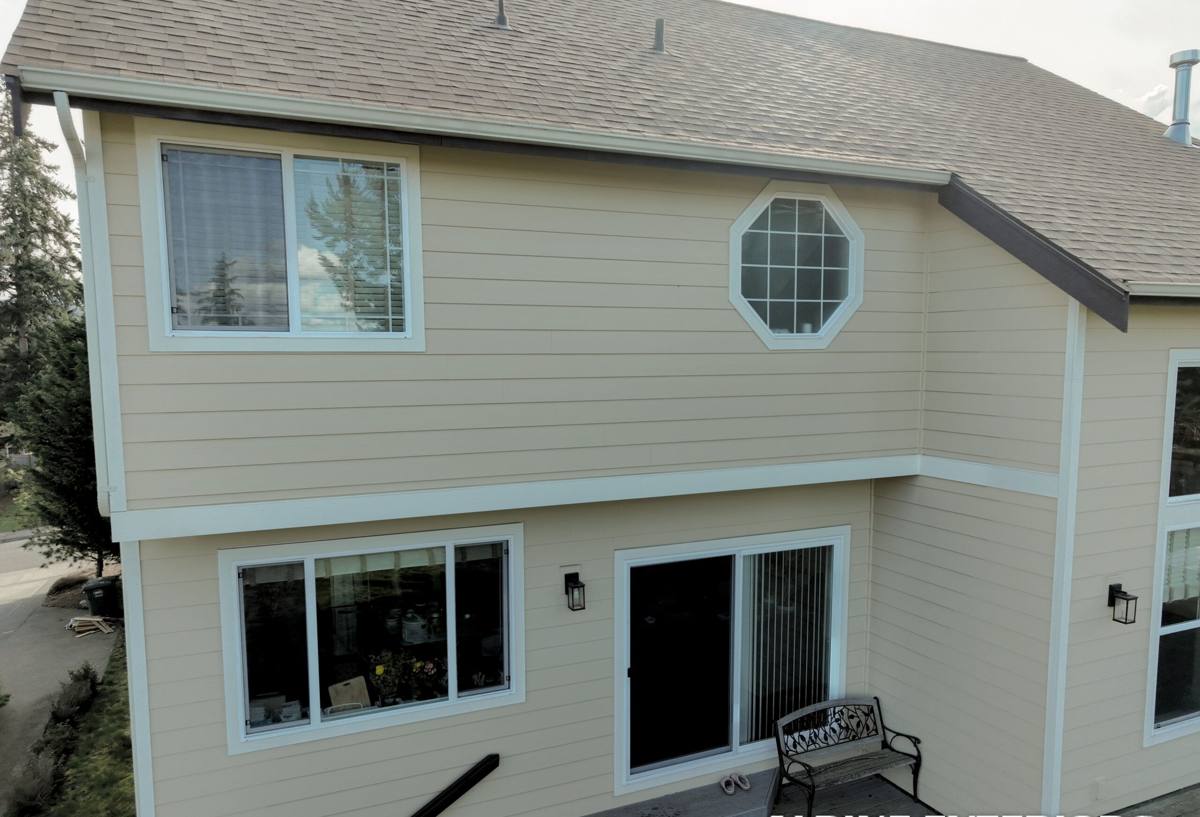
What Fiber Cement Siding Needs to Deliver Here
For a home in this neighborhood, siding has three jobs that matter more than curb appeal alone: it has to resist moisture absorption at the core, it has to hold its factory finish without chalking or peeling under UV and salt exposure, and it has to resist moss and mildew growth on the shaded sides of the house. A lot of siding materials do one or two of those well. Very few do all three without an aggressive maintenance schedule.
This is the reason fiber cement earns its reputation in coastal Pacific Northwest markets. Unlike wood-based products, it doesn't have an organic core for moisture to swell, rot, or feed mold on. Unlike vinyl, it doesn't rely on a thin surface color that fades and chalks under years of damp, low-light conditions. Done correctly — with the right product line, the right fasteners, and correct water management details — fiber cement is one of the few siding systems built to handle Edgemoor's specific mix of salt air, shade, and rain without the homeowner fighting it every year.
Why We Install Only James Hardie Fiber Cement
We don't install every brand of fiber cement, and we don't install vinyl, LP SmartSide, primed wood, or cedar siding at all. That's a deliberate standard, not a sales pitch. Wood-based products like LP SmartSide use an engineered wood substrate — it's treated and improved over older wood siding, but it's still a wood product, and wood products are the ones most vulnerable to the exact conditions Edgemoor delivers: shade, moisture, and a long moss season. Vinyl handles moisture fine on its own, but it's a thin, flexible plastic that doesn't offer the fire resistance, rigidity, or long-term color stability that homeowners in a high-value, tree-shaded neighborhood like this one are usually looking for.
James Hardie fiber cement is a Portland cement, sand, and cellulose fiber composite — it has no organic core to feed mold or rot, and it's manufactured with regional climate exposure specifically engineered into the product line. That engineering, combined with a factory-applied finish that's warrantied against fading and peeling, is why we standardized on it as the only siding system we put on homes.
The HardieZone System and Edgemoor
James Hardie designs its siding in HZ product lines matched to regional climate zones rather than making one national product. Homes in Whatcom County typically call for the HZ5 or HZ10 formulations, engineered for wetter, more moisture-exposed climates like ours rather than the hot, dry-climate versions sold in the Southwest. That distinction matters — it's part of why we specify Hardie by climate zone for every Edgemoor project rather than treating fiber cement as a one-size-fits-all product.
Most Edgemoor homes we work on use HardiePlank lap siding for the main field, with HardiePanel for accent sections or shingle-style gables and HardieTrim around windows, corners, and fascia for a finished, factory-matched look. All of it comes through in the ColorPlus finish — a baked-on, multi-coat factory finish that resists fading and chipping far better than a field-applied paint job, and it's backed by a 30-year non-prorated substrate warranty along with a separate finish warranty on the ColorPlus coating itself.
What a Correct Fiber Cement Installation Involves
Fiber cement's biggest weakness isn't the material — it's a rushed or careless installation. The product is only as good as the water management system behind it, and that's where a lot of siding jobs quietly fail years before the homeowner notices anything on the surface.
Flashing and Water Management
Every window, door, and horizontal trim transition needs proper flashing and a correctly lapped weather-resistive barrier behind the siding — not caulk used as a substitute for flashing. On a home exposed to driving rain off the bay, any gap in that layer becomes an entry point for water that then has nowhere to evaporate under a dense tree canopy. We integrate house wrap, flashing, and siding laps in the correct shingle-style order so water is always directed outward and down, never trapped behind the panel.
Fastening, Clearances, and Cut Ends
Hardie siding has published fastener spacing, nailing zones, and minimum clearances from grade, roof lines, and decks — deviating from those specs is one of the most common causes of premature failure on fiber cement jobs done by crews unfamiliar with the product. We also seal and prime every field-cut end before installation, since a raw, unsealed cut edge is the one place engineered fiber cement can absorb water it wasn't designed to.
Ventilation Behind the Cladding
On shaded, moisture-prone elevations, a rainscreen or properly vented assembly behind the siding gives trapped moisture somewhere to go instead of sitting against the wall. This detail matters more in Edgemoor than in a sunnier part of Whatcom County, simply because shaded walls dry out so much more slowly.
| Detail | Why It Matters in Edgemoor |
|---|---|
| Climate-matched HZ product line | Correct formulation for a wet, shaded, salt-air exposure vs. a generic national product |
| Sealed and primed field cuts | Prevents moisture entry at the one vulnerable point on engineered fiber cement |
| Proper flashing and WRB integration | Manages wind-driven rain instead of relying on caulk alone |
| Rainscreen / ventilation gap | Lets shaded, slow-drying walls release trapped moisture |
| Correct fastener spacing and clearances | Prevents the panel movement and cracking that voids warranty coverage |
Our Process From Estimate to Finished Siding
We start with an on-site visit to look at the specific conditions on your elevations — which walls face the bay and take direct wind-driven rain, which are shaded by tree canopy and slow to dry, and where the existing siding or sheathing has already shown moisture damage. That inspection shapes the product selection, the flashing plan, and whether any sheathing repair is needed before new siding goes on.
From there we provide a detailed, written estimate covering the HardiePlank or HardiePanel profile, ColorPlus color, trim package, and full scope of work — no vague allowances. Old siding is fully removed rather than covered over, since installing over existing siding traps moisture and defeats the water management the new system depends on. We install house wrap and flashing, hang and fasten the siding to spec, finish all trim and caulk joints with Hardie-compatible sealant, and walk the finished job with you before calling it complete.
Maintenance in a Moss-Prone, Salt-Air Climate
Correctly installed Hardie siding is low-maintenance, not zero-maintenance. In Edgemoor specifically, a few habits go a long way:
- Rinse shaded, moss-prone elevations once or twice a year, especially after the wet season, using a garden hose and soft brush rather than a pressure washer, which can force water behind panels or trim.
- Keep gutters and downspouts clear so runoff doesn't sheet down the siding face during heavy rain events.
- Trim back tree limbs and branches that keep a wall in constant shade — a little more airflow and light can meaningfully cut down moss growth.
- Inspect caulking at trim joints and window returns every couple of years and re-seal any cracked or shrunken beads before the wet season starts.
- Touch up any chips or scrapes near grade promptly, since exposed edges are the one spot on fiber cement that benefits from quick attention.
None of this is heavy work, and it's a fraction of what a wood-based or vinyl exterior typically demands in this climate — but skipping it entirely does shorten the life of any siding system, Hardie included.
Why Hiring a Crew That Already Works Edgemoor Matters
Siding crews that mostly work drier, sunnier parts of the state can do fine work and still get Edgemoor wrong, because the failure points here aren't obvious until a wall has been wet for a few winters. A crew that regularly works this neighborhood already knows which elevations need extra flashing attention, which lots have tree cover dense enough to justify a ventilated rainscreen assembly, and how City of Bellingham and Whatcom County permitting and inspection requirements apply to exterior work on established homes. That local familiarity shows up in fewer callbacks and a siding job that's still performing well a decade or two later, not just at the final walkthrough.
It also means realistic scheduling — knowing which weeks of the year give a fiber cement installation the dry working window it needs, rather than pushing a job through during the wettest stretch of the moss season and hoping for the best.
Questions Worth Asking Before You Hire
- Do they install only fiber cement, or do they also sell vinyl and wood-based siding — and can they explain why they'd recommend one over another for your specific walls?
- Will they specify the climate-matched HZ product line, or just "James Hardie" in general?
- Do they remove old siding completely, or install over it?
- What's their plan for flashing and ventilation on shaded, north-facing elevations?
- Can they walk you through the manufacturer's warranty terms, including what voids coverage?
If you're weighing a siding replacement or repair on an Edgemoor home, we're happy to take a look and walk you through what your specific elevations need — no pressure, no obligation. Use the form below to request a free estimate.