 Bellingham
 Edgemoor's Setting Is Hard on Windows
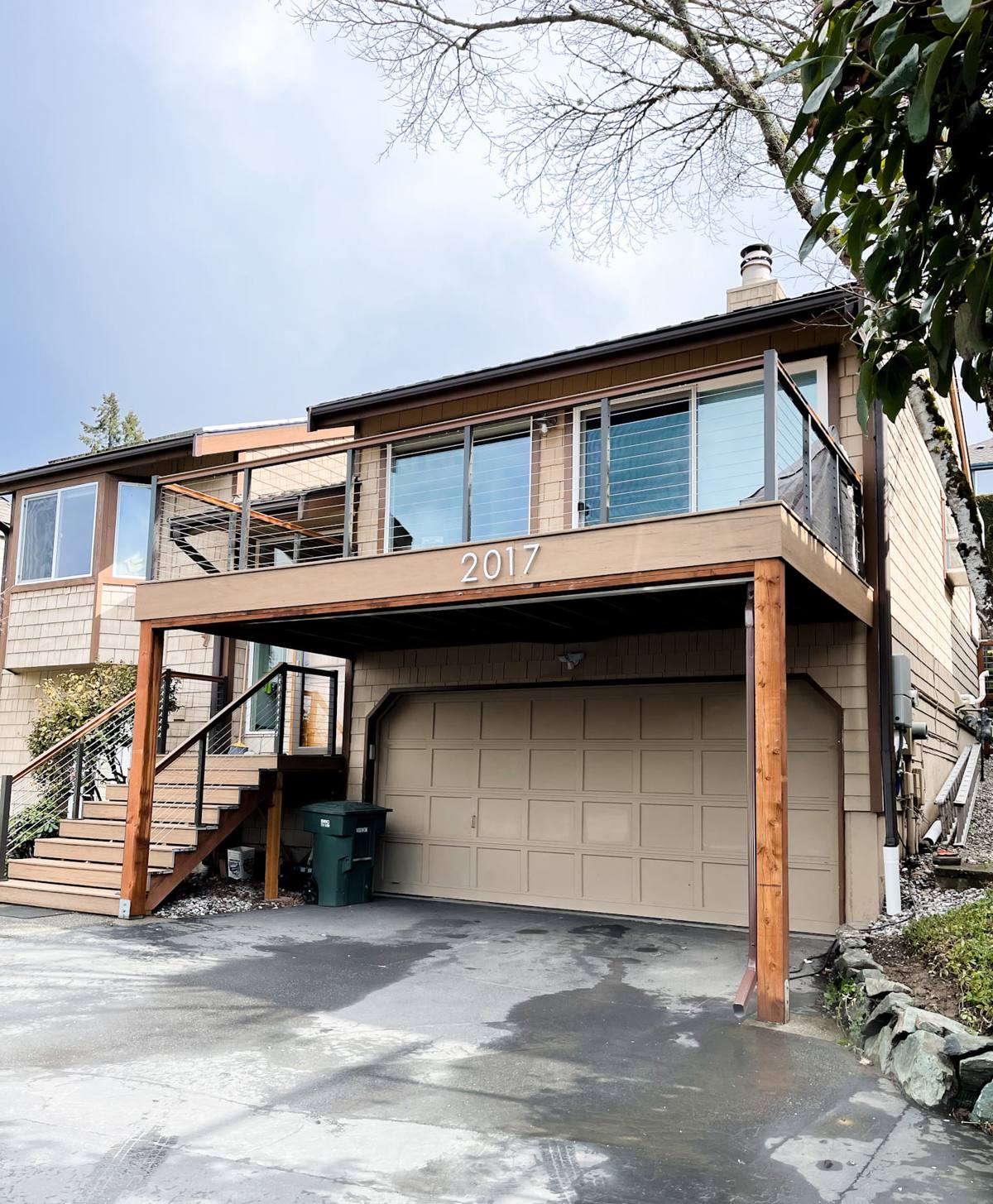
Edgemoor sits close enough to Bellingham Bay that salt-laden air, wind off the water, and heavy tree cover are just part of daily life. That combination is tougher on windows than most homeowners realize. Salt air accelerates corrosion on hardware and fasteners. Driving rain, especially in wind, finds any gap in flashing or sealant around a window opening. And the long stretch of damp, low-light months that Whatcom County gets every year keeps moss and algae established on sills, tracks, and frames for most of the year. None of this is dramatic on its own, but over a decade or two it adds up to fogged glass, soft framing, and windows that cost more to heat around than they should.
Energy-efficient window work in this neighborhood isn't just about a lower heating bill, though that's real. It's about choosing products and installation methods that hold up to this specific exposure without turning into a maintenance project every fall.
What "Energy-Efficient" Actually Means Here
Manufacturers publish two numbers that matter far more than marketing language: U-factor and Solar Heat Gain Coefficient (SHGC). Both are tested and labeled through the National Fenestration Rating Council (NFRC), and both should be treated as real selection criteria, not fine print.
U-Factor vs. Solar Heat Gain
U-factor measures how much heat escapes through the window — lower is better for our mild, rain-heavy winters where heating (not air conditioning) is the bigger annual cost. SHGC measures how much solar heat passes through the glass. In a place with as much cloud cover as Bellingham gets, homeowners don't need to reject solar heat the way a desert climate would; a balanced SHGC that lets in some free winter warmth without overheating south-facing rooms in summer is usually the right call.
Meeting Washington's Energy Code
Washington's state energy code sets minimum performance requirements for replacement windows, and ENERGY STAR's Northern Climate Zone criteria are a reasonable benchmark on top of that baseline. We treat both as a floor, not a ceiling — an Edgemoor home a few blocks from the water benefits from going a step past minimum, particularly on air infiltration and glass package, because the wind and moisture exposure here is more demanding than the code assumes for a typical inland lot.
Signs Your Windows Are Underperforming
Most homeowners don't notice window failure until it's well along, because the symptoms show up gradually and get blamed on other things. Watch for:
- Cold glass or a noticeable draft near the frame even with the window fully latched
- Fogging or a permanent haze between panes — a sign the seal on a double- or triple-pane unit has failed
- Sashes that stick, swell, or won't latch cleanly, often worse in the wet months
- Moss, algae, or black staining building up on sills and in tracks faster than you can keep it cleaned off
- Visible gaps in exterior caulking or trim, or soft/discolored wood at the sill or jamb
- A heating bill that's crept up without a clear reason, especially in rooms with older windows
Any one of these can be a minor fix. Several together, especially on a home with its original windows, usually means the glass and the frame are both past the point where sealing or weatherstripping alone will fix it.
Frame and Glass Options We Weigh
There's no single "best" window material for every house — the right choice depends on the home's age, exposure, and how much upkeep the owner wants to take on. For a bay-adjacent, tree-shaded neighborhood like Edgemoor, moisture and salt-air resistance carry extra weight in that decision.
| Frame Material | Salt Air / Moisture Resistance | Maintenance | Notes for Edgemoor |
|---|---|---|---|
| Vinyl | Good — won't corrode or rot | Low | Reliable, cost-effective default for most full-frame replacements |
| Fiberglass | Very good — dimensionally stable in temperature and moisture swings | Low | Worth the upgrade cost on larger openings or heavy sun/shade exposure |
| Wood, clad exterior | Good on the exterior face; interior wood still needs care | Moderate | Common on older character homes where interior wood trim matters |
| Aluminum | Poor near salt air unless properly finished — prone to corrosion and thermal loss | Moderate to high | We generally steer clients away from bare aluminum this close to the bay |
On the glass side, a double-pane unit with a low-E coating and argon fill is the practical baseline for this climate. Triple-pane glass adds real value on north-facing rooms, rooms over an unheated space, or homes right along the water where wind-driven heat loss is more pronounced — it costs more, and for most interior or sheltered rooms in Edgemoor, a well-built double-pane unit performs perfectly well.
Full-Frame Replacement vs. Insert (Pocket) Replacement
This is one of the most consequential decisions in the whole project, and it's not one that should be made from a brochure. An insert (or "pocket") replacement keeps the existing frame in place and fits a new window inside it — faster and less invasive, but it only makes sense if that existing frame is dry, square, and structurally sound.
A full-frame replacement removes the old unit down to the rough opening, which lets us inspect and repair whatever is behind the trim. In a neighborhood with a good number of older homes and near-constant moisture exposure, that inspection step matters. Wood rot at the sill or jamb doesn't always show from the inside, and installing a new window — even a great one — over a soft or wet opening just locks the problem behind new trim. We recommend full-frame replacement whenever there's any sign of past water intrusion, and insert replacement only when the existing frame checks out clean.
What a Correct Installation Actually Involves
The window unit itself is maybe half the job. The other half is how it's tied into the wall assembly, and that's where driving rain either stays outside or doesn't. A correct installation includes:
- Removing the old unit and inspecting the rough opening for rot, soft framing, or prior water damage before anything new goes in
- A proper flashing sequence — sill pan, jamb flashing, and head flashing integrated with the existing weather-resistive barrier and siding, so water is shed outward at every layer, not just caulked over
- Backer rod and a sealant rated for exterior movement and UV exposure, not a bead of whatever caulk was on the truck
- Insulating the gap between the frame and rough opening properly — filled, not overpacked, since overfilled foam can bow a frame out of square
- Interior and exterior trim resealed and finished to match the surrounding siding or trim work
- A functional check — the sash opens, closes, and locks smoothly, and weatherstripping seats correctly
- Full cleanup and haul-away of the old units and packaging
Skip the flashing and sealant details and you can install the most efficient window on the market and still get a leak behind the wall within a few wet seasons.
What Drives the Cost
Every window project is different, and giving a number without seeing the house isn't honest. What we can say is which factors move the price, so you know what you're actually paying for:
| Factor | Why It Matters |
|---|---|
| Full-frame vs. insert replacement | Full-frame costs more upfront but is often the right call once rot or a damaged opening is found |
| Frame material | Vinyl, fiberglass, and clad-wood carry different material costs and different long-term maintenance |
| Glass package | Double-pane low-E is the baseline; triple-pane or specialty coatings add cost where the exposure justifies it |
| Number and size of openings | Larger units and picture windows cost more per opening than standard operable sizes |
| Access and condition | Second-story work, masonry openings, or hidden rot repair all add labor time |
Why a Crew That Already Works Edgemoor Matters
A window crew that's worked this specific stretch of Bellingham knows things a generic estimate doesn't account for. They know which blocks catch the worst of the wind off the bay, and size up flashing and sealant accordingly. They know how much shade a mature tree canopy throws on a north wall and what that does to drying time after a storm. They're used to the City of Bellingham's permitting requirements and can flag upfront whether a project needs a permit before work starts, not after. And they plan around the wet season realistically — sequencing full-frame replacements so an opening isn't sitting exposed to Whatcom County rain overnight.
That local familiarity shows up in small decisions — which sealant actually holds up to this air, how tight the flashing lap needs to be on a wall that catches driving rain, when insert replacement is genuinely fine versus when it's cutting a corner. Those are the details that decide whether a window job lasts five years or twenty-five.
Get a Straight Answer for Your Home
Every house on a street like this ages a little differently depending on sun exposure, tree cover, and how the original windows were installed. If you're seeing drafts, fogged glass, or rising heating bills, or you just want an honest read on what your current windows have left in them, we're happy to take a look. Use the form below to request a free, no-pressure estimate — we'll tell you what we actually find, not just what's easiest to sell.