 Bellingham
 Deck Replacement in Fairhaven: A Job the Site Conditions Actually Dictate
A deck in Fairhaven doesn't age the same way a deck forty miles inland does. Sitting close to Bellingham Bay means the structure underneath the decking boards is exposed to a near-constant drift of salt-tinged marine air, rain that arrives sideways as often as it falls straight down, and a moss and algae season that can run most of the year on shaded, tree-covered lots. None of that shows up on day one. It shows up three, five, ten years in, as soft framing, corroded fasteners, and a walking surface that's gone slick and dark long before it should have. We work throughout Whatcom County, and Fairhaven is one of the places we see that climate pressure hit deck structures earliest and hardest.
Replacing a deck here isn't just a matter of pulling up old boards and screwing down new ones. The parts of the structure nobody sees when the deck looks fine from the yard, the ledger connection, the joists, the fasteners, the footings, are exactly where this climate does its damage. A replacement that doesn't correct those details just resets the clock on the same failure.
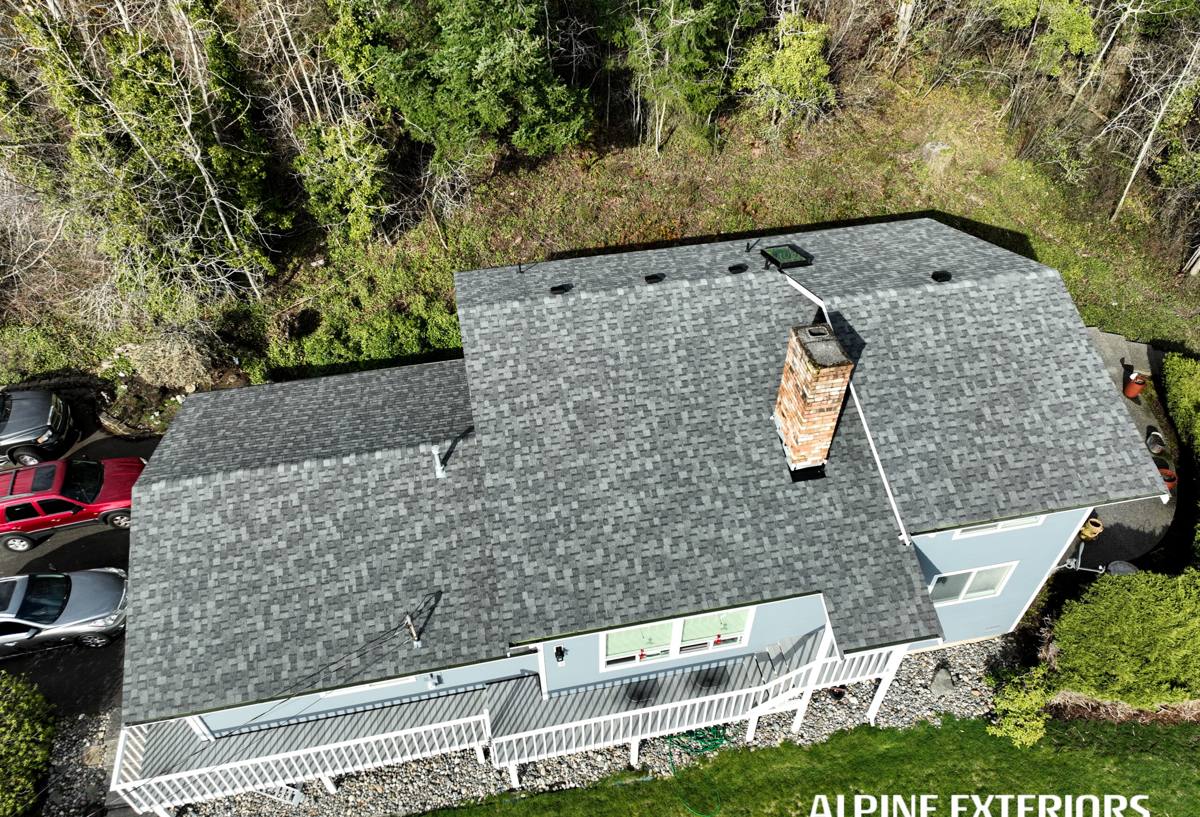
What Salt Air, Driving Rain, and Moss Actually Do to a Deck Structure
The Ledger Board and Wall Connection
The ledger board, where the deck attaches to the house, is the single most common point of hidden failure on decks in this climate. Wind-driven rain works its way behind poorly flashed ledger connections, and once moisture gets trapped between the ledger and the wall it has nowhere to dry out. Over years, that turns into rot in the ledger itself and, in the worst cases, damage to the wall framing and siding behind it. A deck can look structurally sound from underneath while the ledger connection is quietly failing.
Joists, Beams, and Fasteners
Standard fasteners and connector hardware corrode faster in salt-laden marine air than manufacturers' generic ratings assume. Galvanic corrosion between mismatched metals, an aluminum flashing paired with the wrong screw, for example, accelerates that further. The result is hardware that looks fine on the surface but has lost real holding strength, which matters most exactly when it's tested hardest: during a heavy wind-driven storm with a full deck of people on it.
The Decking Surface Itself
Whatever material sits on top, wood, composite, or PVC, spends a long season each year staying damp longer than it does in drier parts of the state. Shaded lots and mature tree canopy common around Fairhaven keep the surface from drying fully between rain events, which is exactly the condition moss, algae, and mildew need to take hold. A surface that's slick with growth isn't just an appearance issue, it's a slip hazard that gets worse every year it's left untreated.
Footings and Drainage on Sloped Lots
A fair amount of Fairhaven's housing sits on sloped terrain leading up from the waterfront. On these lots, how water moves around and under the deck's footings matters as much as anything happening above ground. Poor grading or a footing set too shallow can let water pool against posts and pier blocks, undermining the structure from below in a way that's invisible until a post starts to shift.
Signs a Fairhaven Deck Needs Replacement, Not Just Repair
- Soft, spongy, or spring-back decking, especially near the ledger or around post bases
- Visible rot, splitting, or discoloration at the ledger board or where posts meet the ground
- Rust staining or corrosion visible on joist hangers, bolts, or other structural hardware
- Persistent moss or algae that returns quickly after cleaning, particularly on shaded sections
- Railings or stair stringers that feel loose, wobbly, or have visible movement
- Gaps or separation where the ledger meets the house, or staining on the siding just above the deck
- A deck older than 15-20 years that's never had the substructure inspected
Decking Material Options for This Climate
Homeowners usually come to us with a material preference already in mind, and we're glad to talk through the honest trade-offs for each one in a climate that stays wet this much of the year.
| Material | What It Offers | Trade-Off in a Marine Climate |
|---|---|---|
| Composite decking | Low maintenance, consistent appearance, resists rot | Higher upfront cost; still needs airflow underneath to avoid trapped moisture and mold on the underside |
| Pressure-treated lumber | Lower material cost, widely available | Requires regular sealing or staining to keep moisture out; that upkeep tends to slip, shortening real-world life |
| Cedar | Natural appearance, moderate rot resistance | Needs consistent sealing and cleaning to fend off the moss and mildew this climate produces |
| PVC decking | Fully synthetic, highly moisture-resistant | Can feel less like natural wood underfoot; expands and contracts more with temperature swings |
Whatever surface material you choose, the framing, flashing, and fastener decisions underneath it matter more to how long the deck actually lasts in Fairhaven than the decking brand does. We'll walk you through what we recommend for your specific site, including sun exposure, tree cover, and how close the deck sits to the water.
What a Correct Deck Replacement Involves
A deck that's going to hold up here needs more than new boards. Every replacement we do addresses the details that this climate specifically punishes:
- Ledger flashing done right: proper flashing and a water-resistant barrier between the ledger and the house wall, not just lag bolts and caulk
- Corrosion-appropriate fasteners and hardware: connectors and fasteners rated for the moisture and salt exposure this site sees, matched to avoid galvanic corrosion between dissimilar metals
- Proper joist protection: joist tape or an equivalent moisture barrier on top of framing members so trapped water doesn't sit directly against the wood
- Footings set to current code depth: footings and post bases sized and set correctly for the soil and slope conditions on the lot
- Airflow underneath: enough clearance and ventilation below the deck surface so moisture has somewhere to go instead of sitting trapped against framing
- Code-compliant railings and stairs: guardrail height, baluster spacing, and stair geometry built to current Washington building code, not just matched to what was there before
Permits and Inspections
Most deck replacement projects in this area require a permit, particularly when the ledger connection, footings, or railings are being rebuilt rather than just resurfaced. We handle that process as part of the job rather than leaving it for the homeowner to sort out, and we build to the inspection standard the first time so there's no rework at the end of the project.
Our Process for a Fairhaven Deck Replacement
- On-site walkthrough: we inspect the existing deck, including what's underneath it, to understand the actual condition of the ledger, framing, and footings before quoting anything
- Honest scope discussion: we tell you plainly whether you're looking at a full replacement, a partial rebuild, or whether repair is actually enough
- Material and layout decisions: we go over decking material, railing style, and layout options based on your budget and how the space is actually used
- Permitting: we pull the necessary permits and schedule required inspections
- Demolition and structural rebuild: the old deck comes off down to the ledger and posts, and the substructure is rebuilt to current code with corrosion-appropriate hardware and flashing
- Decking, railing, and stair installation: the finish work goes on once the structure underneath is confirmed sound
- Final walkthrough: we go over the finished deck with you before calling the job done
Deck Replacement Cost Factors in Fairhaven
| Factor | What It Affects | Why It Matters Here |
|---|---|---|
| Deck size and layout complexity | Material and labor totals | Multi-level decks and stair sections common on Fairhaven's sloped lots add framing and labor time |
| Substructure condition | Repair costs before new decking goes on | Hidden ledger and joist rot from years of trapped moisture is common on older decks this close to the bay |
| Decking material choice | Material cost and long-term maintenance | Lower-maintenance materials cost more upfront but hold up better against this climate's moss and moisture cycle |
| Site slope and access | Labor time and footing work | Hillside lots near the waterfront can require additional footing depth and site access planning |
| Railing and stair requirements | Material and code compliance labor | Current code requirements may differ from what was built decades ago, adding scope to a straight resurfacing job |
Real numbers depend on what we find once we're actually looking at the structure, which is why we walk the deck in person, including underneath it, before quoting instead of pricing off square footage alone.
Why a Local Whatcom County Crew Matters for This Job
A crew that works Fairhaven and the surrounding Bellingham waterfront regularly knows what a deck ledger looks like after five wet seasons here, not just what a fastener spec sheet says it should hold up to. That experience shows up in practical decisions on the job: which hardware actually holds up against this specific salt air exposure, where extra flashing attention pays off around a ledger connection, and how to grade around footings on a sloped lot so water doesn't just find a new path underneath. Fairhaven's proximity to the bay and its hillside terrain aren't the same conditions a deck faces elsewhere in Whatcom County, and a crew with real local experience builds accordingly instead of applying a generic approach.
If your Fairhaven deck is showing soft spots, corroded hardware, moss that won't quit, or you're just not sure whether it needs a repair or a full rebuild, we're glad to take a look. Reach out using the form below to schedule a free, no-pressure estimate.