 Bellingham
 Windows in Fairhaven Work Harder Than Windows Inland
Fairhaven sits close to Bellingham Bay, which means the windows on these homes take a different kind of beating than windows fifteen minutes east in a sheltered valley. Salt-laden air off the water accelerates corrosion on hardware and metal components. Wind-driven rain off the Strait pushes moisture sideways into gaps that would stay dry in a calmer setting. And Whatcom County's long, damp moss season keeps humidity elevated around window frames and sills for months at a stretch, not just a few weeks in the fall. None of that is dramatic on its own, but stacked together over years, it's exactly the combination that finds every weak seam in a window installation.
A window that's rated efficient on paper still underperforms if it isn't matched to this climate and installed correctly for it. That's the gap we focus on closing for Fairhaven homeowners: not just swapping in new glass, but making sure the whole assembly — frame, flashing, sealant, and glazing — is built to hold up against salt air and sideways rain for the long haul.
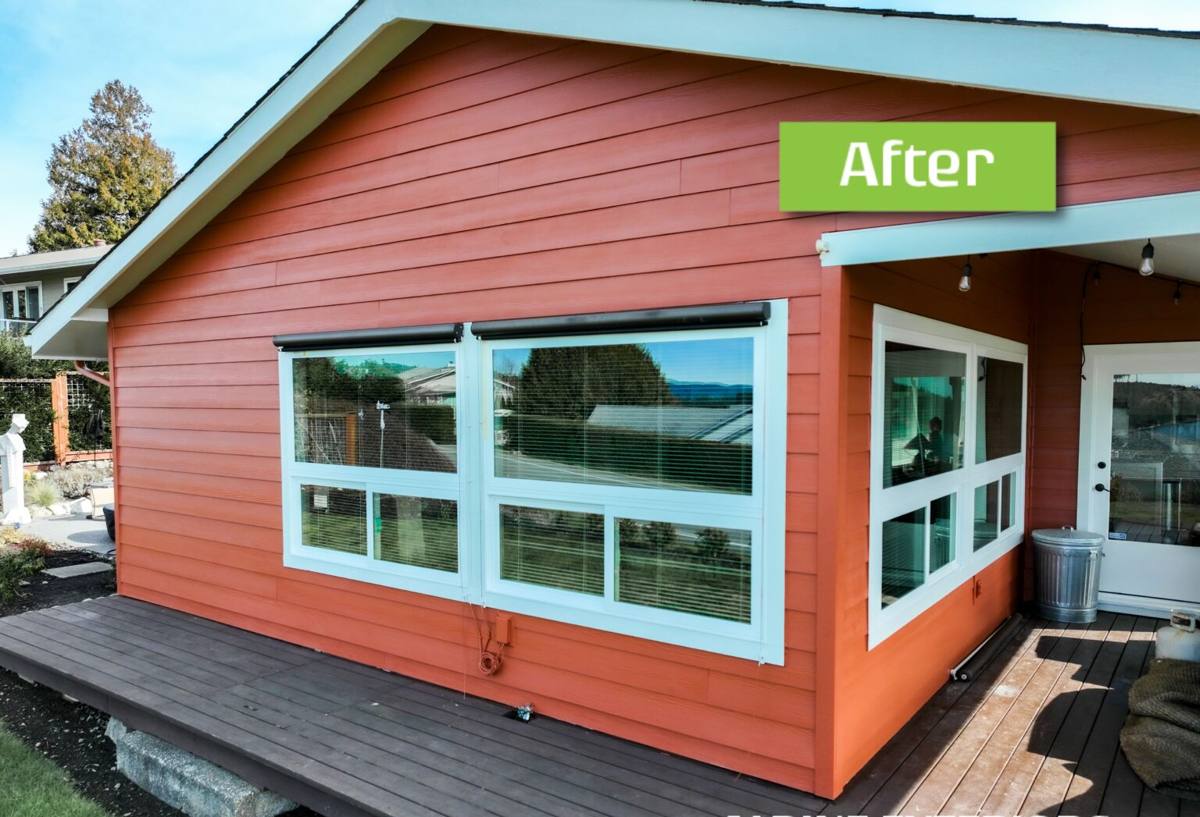
What "Energy-Efficient" Actually Means Here
Energy efficiency in a window comes down to a handful of measurable factors, and in a marine climate like Bellingham's, some matter more than others.
U-Factor Matters More Than Solar Heat Gain
U-factor measures how much heat a window lets escape — lower is better. In a climate where the bigger cost is keeping heat in during long gray winters (rather than keeping sun out), U-factor is the number worth paying attention to first. Solar heat gain coefficient matters more in sunnier, hotter climates than it does here.
Gas Fills and Spacer Systems
Double-pane windows with argon gas between the panes are the standard efficiency upgrade for this area, and they perform well for the price. Triple-pane and krypton-filled options exist and push the numbers slightly further, but the spacer system — the material separating the panes at the edge — matters just as much. Warm-edge spacers (foam or non-metal composite) resist condensation and heat loss at the frame perimeter better than older aluminum spacers, which is a real issue during Bellingham's cool, humid winters when condensation on interior glass is a common complaint.
Frame Material and Weather Sealing
The frame is where salt air and moisture do the most damage over time, and it's also where a lot of the real energy loss happens if the seal isn't tight. We'll cover frame material trade-offs in detail below, but the short version is: the best glass package in the world won't save you if the frame corrodes, warps, or lets water behind the trim.
Frame Material Comparison for a Fairhaven Home
There's no single "best" frame material — each has real trade-offs, and the right choice depends on your home's exposure, style, and budget. Here's how the common options stack up for a home dealing with salt air and driving rain.
| Material | Salt Air / Moisture Performance | Energy Performance | Maintenance |
|---|---|---|---|
| Vinyl | Good — won't corrode or rot, but can become brittle with age in UV/salt exposure | Good, especially multi-chambered profiles | Low — occasional cleaning |
| Fiberglass | Excellent — dimensionally stable, resists corrosion and warping | Very good, low thermal expansion helps seal integrity | Low |
| Wood-clad | Fair — cladding protects the exterior, but any breach exposes wood to rot risk | Very good natural insulator | Higher — cladding seams need periodic inspection |
| Aluminum | Poor to fair — prone to corrosion near salt air unless marine-grade and well-finished | Weakest unless thermally broken | Moderate |
For most Fairhaven homes we recommend vinyl or fiberglass for straightforward efficiency and low upkeep, and wood-clad when matching the character of an older or historic-style home is the priority. We're generally cautious about standard aluminum frames this close to the water — without a thermal break and marine-grade finish, they're simply more maintenance and more corrosion risk than most homeowners want to sign up for, not because the material is bad everywhere, just because this particular environment is hard on it.
Signs Your Current Windows Are Working Against You
Homeowners often assume a window problem will announce itself with a cracked pane or a window that won't open. Usually it's quieter than that. Watch for:
- Condensation forming between the panes (a sign the seal has failed and the gas fill is gone)
- Cold drafts near the frame even when the window is fully latched
- Visible moss, algae, or dark staining building up on the sill or exterior trim
- Paint or finish bubbling and peeling around the frame — often a sign of trapped moisture
- Wood trim that feels soft or spongy when pressed
- Noticeably higher heating bills compared to similar homes nearby
- Difficulty opening or closing that wasn't there a year or two ago (frame swelling or warping)
Any one of these on its own might be minor. Two or three together, especially on the side of the house facing the water or prevailing wind, usually means the window and its surrounding seal are past the point where caulk and weatherstripping fix the problem.
What a Correct Installation Actually Involves
The window unit itself is maybe half the job. The other half — the part that determines whether you get 20+ years of performance or a callback in three years — is how it's installed.
Flashing and Water Management
Every window opening needs a flashing system that directs water down and out, not into the wall cavity. In driving rain, water finds any gap in the flashing at the head, jambs, and sill. We integrate flashing with the existing weather-resistive barrier rather than just caulking over gaps, because caulk alone is a maintenance item, not a permanent water management strategy.
Sealing Without Trapping Moisture
It's possible to seal a window too well in the wrong way — trapping moisture inside a wall assembly with no way to dry out causes exactly the rot problems homeowners are trying to avoid. The goal is a sealed, insulated gap between the frame and the rough opening that also allows any incidental moisture to escape rather than pool.
Level, Plumb, and Square
An out-of-square installation stresses the frame, causes uneven wear on hardware, and creates gaps that widen over time — accelerated by the freeze-thaw and wet-dry cycling common in this climate. This is a basic step that gets rushed on lower-quality installs and shows up as problems years later.
Our Process for a Fairhaven Window Job
- On-site assessment. We look at current window condition, frame material, exposure (which sides take the most wind-driven rain), and any signs of existing moisture damage before recommending anything.
- Product selection. We walk through frame material, glazing package, and style options based on your home, budget, and how exposed that side of the house is to salt air and weather.
- Accurate measurement. Every opening gets measured individually — older homes especially rarely have perfectly uniform openings from window to window.
- Removal and inspection. Once the old window is out, we check the rough opening and sheathing for hidden rot or moisture damage before anything new goes in. This is often where problems get caught early.
- Installation with proper flashing and sealing. Covered in detail above — this is the step that determines long-term performance.
- Interior and exterior finish work. Trim, caulking, and touch-up so the finished window looks like it belongs on the house.
- Walkthrough. We check operation, seals, and finish work with you before calling the job done.
Why Local Experience in Fairhaven Specifically Matters
Fairhaven's mix of older, character-driven homes and its proximity to the water means window jobs here come with considerations that don't apply everywhere in Bellingham. Homes closer to the bay see more direct wind-driven rain and salt exposure than homes set back in more sheltered parts of Whatcom County. Older homes in the area often have non-standard opening sizes, original trim details worth preserving, or existing moisture issues from decades of exposure that need to be addressed during the install, not after.
A crew that regularly works in Fairhaven has already seen how these homes behave in this specific weather pattern — which sides of a house tend to take the worst of the rain, which frame materials hold up and which don't, and how to match new windows to older trim without the finished product looking out of place. That's not something you get from a crew that's used to a drier, more sheltered part of the county.
Living With Moss Season and Salt Air After Installation
Even a well-installed, high-quality window benefits from a little seasonal attention in this climate.
- Rinse salt residue off exterior frames a few times a year, especially on sides facing the water
- Keep gutters and downspouts clear so runoff isn't sheeting directly down over window heads
- Clear moss and organic debris off sills and horizontal trim before it holds moisture against the frame
- Check caulking lines annually and touch up any cracking before wet season sets in
- Wipe down interior sills if condensation appears, and note it — persistent condensation can signal a ventilation issue worth addressing
None of this is heavy maintenance, but skipping it is how a 20-year window turns into a 12-year window in a climate like this one.
Get a Straight Answer for Your Home
Every home in Fairhaven sits a little differently relative to wind and water, and the right window package for one house isn't automatically right for the one next door. If you're dealing with drafts, condensation, fogged glass, or just want an honest read on whether your current windows are holding up, we're happy to take a look and give you a straightforward estimate — no pressure, no upsell. Fill out the form below and we'll get back to you.