 Bellingham
 Fairhaven's Roof Load: Salt Air, Rain, and a Long Moss Season
Fairhaven sits close to Bellingham Bay, which means homes here deal with a combination of stresses that inland Whatcom County properties don't see as often. Salt-laden air drifts in off the water and settles on every exposed surface, including your roof. Add in the Pacific Northwest's long, wet fall-through-spring stretch, plus the tree canopy that shades much of the neighborhood, and you get a roofing environment that's genuinely tougher than the national average — even tougher than a lot of "rainy climate" marketing gives credit for.
None of this is a reason to avoid metal roofing. It's actually the opposite — metal, installed correctly, is one of the better answers to exactly these conditions. But "installed correctly" is doing a lot of work in that sentence, and it's worth understanding why before you sign a contract.
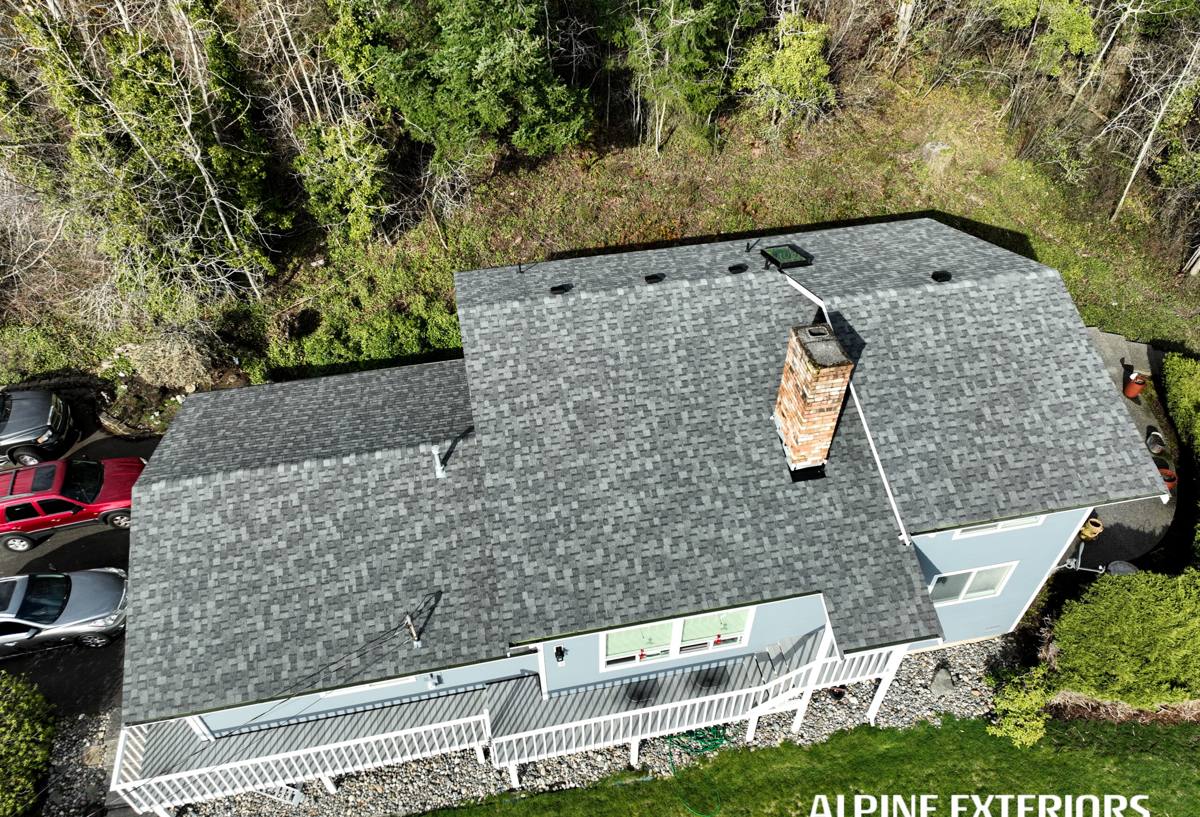
What Salt Air, Driving Rain, and Moss Actually Do to a Roof
Salt Air and Corrosion
Airborne salt accelerates oxidation on any metal it contacts — fasteners, flashing, panel edges, and cut ends where a protective coating has been compromised. On a roof near the water, an uncoated or poorly coated steel fastener can start showing rust streaks years before it would inland. The panel material itself matters less here than the coating and fastener quality, which is a big part of what separates a roof that looks good at year three but fails at year twelve from one that holds up for decades.
Driving Rain and Wind-Driven Water
Bellingham doesn't just get rain — it gets sideways rain, pushed by wind off the water. That changes how flashing, underlayment, and seam design need to perform. A roofing detail that sheds water fine on a calm, straight-down rain can leak under wind-driven conditions if laps, seams, and penetrations aren't handled with that in mind.
Moss, Shade, and Moisture Retention
Fairhaven's tree cover is part of what makes the neighborhood attractive, but shaded, moisture-retaining surfaces are exactly what moss and algae need to establish. On asphalt shingles, moss roots into the granule surface and lifts shingles as it grows, trapping moisture underneath. Metal roofing doesn't give moss the same foothold — there's no porous surface for spores to root into — but debris buildup in valleys and against trim can still hold moisture against the panel if the roof isn't detailed and maintained properly.
Why Metal Roofing Fits This Climate
For a coastal, wet, shaded neighborhood like Fairhaven, metal roofing offers a few specific advantages over asphalt shingles:
- Moss and algae resistance: a smooth metal surface gives organic growth far less to grab onto compared to shingle granules.
- Water shedding: steep-sloped panel systems move heavy rain off the roof faster, reducing the time water sits against the surface.
- Longevity: a correctly installed, properly coated metal roof commonly outlasts two or more asphalt shingle roofs over its service life.
- Wind performance: properly fastened metal panel systems hold up well against the gusty conditions common near the water.
- Lower long-term maintenance compared to a shingle roof fighting moss every wet season.
None of that means metal is maintenance-free, and it isn't automatically the right fit for every home or budget. It means that, for the specific stresses Fairhaven roofs face, metal is a strong match when the material and installation are matched to the environment.
Choosing the Right Metal for a Salt-Air Environment
Not all metal roofing is built the same, and the differences matter more here than they would in a drier, inland town. The two variables that matter most for a home near Bellingham Bay are the base metal and the protective coating.
| Material | Corrosion Behavior Near Salt Air | Typical Trade-Off |
|---|---|---|
| Galvanized or Galvalume steel | Good with an intact coating; cut edges and scratches need proper sealing/touch-up | Cost-effective, strong, widely available panel profiles |
| Aluminum | Naturally corrosion-resistant, performs well in coastal exposure | Higher material cost; slightly softer, so panel handling matters |
| Uncoated or poorly coated steel | Prone to rust streaking and premature failure near the water | We don't install this on coastal properties — the maintenance burden isn't worth the up-front savings |
Fasteners matter just as much as panels. On a Fairhaven roof, we spec corrosion-resistant fastener heads and washers rated for coastal exposure, not the generic fastener that would be fine forty miles inland. It's a small line item that determines whether your roof still looks clean in year fifteen or starts showing rust bleed by year five.
Panel Styles: What Actually Gets Installed
Standing Seam
Concealed fasteners, raised interlocking seams, and a clean, low-maintenance profile. This is generally our first recommendation for coastal, high-exposure homes because there are no exposed fastener heads for salt air to attack over time.
Exposed Fastener Panels
A more budget-friendly option that performs well when installed with quality coastal-rated fasteners and proper maintenance. The trade-off is that exposed fasteners are the first point of wear in a salt-air environment, so periodic inspection matters more with this style.
Metal Shingles and Shakes
For homes in Fairhaven's historic district where matching a traditional shingle or shake look matters, metal shingle systems replicate that appearance while still delivering metal's durability and moss resistance.
What a Correct Installation Actually Involves
Metal roofing fails early almost exclusively because of installation shortcuts, not material failure. A correct job on a Fairhaven home includes:
- Proper deck inspection and repair before any panel goes down — metal will telegraph an uneven or soft deck.
- High-temp synthetic or ice-and-water underlayment at eaves, valleys, and penetrations, sized for our wet-season exposure.
- Correct panel overlap and seam sealing engineered for wind-driven rain, not just straight-down rain.
- Coastal-rated fasteners and flashing, matched to the panel metal to avoid galvanic corrosion between dissimilar metals.
- Balanced ventilation (intake and exhaust) so moisture doesn't get trapped under the panels from the inside.
- Clean valley and trim detailing so debris and needle litter from surrounding trees don't dam water against the roof.
Any one of these done poorly can undercut everything else. A roof with premium panels and a badly flashed valley will still leak.
Our Process on a Fairhaven Roof
We start with an on-site inspection of the existing roof, deck condition, and how the home is exposed to wind and salt air based on its position relative to the water and tree cover. From there we walk you through panel and fastener options honestly, including what we'd choose for our own home in that same spot and why. Once you approve a plan, we handle tear-off (when replacing an existing roof), deck repair as needed, underlayment, panel installation, and flashing detail work, followed by a full site cleanup — magnetic sweep for stray fasteners included. We stand behind the workmanship, and we'll walk you through the manufacturer's material warranty terms so you know exactly what's covered and for how long.
Maintenance in a Moss-Prone, Salt-Air Neighborhood
A metal roof cuts your maintenance load significantly compared to shingles, but "low maintenance" isn't "no maintenance," especially under Fairhaven's tree cover. A simple seasonal routine goes a long way:
- Clear needles, leaves, and debris from valleys and gutters at least twice a year, more if you're under heavy conifer cover.
- Do a visual check of fasteners and flashing after major windstorms.
- Rinse off accumulated grime or salt film during a dry stretch rather than letting it sit season after season.
- Watch for any early rust bleed at cut edges or fasteners and address it before it spreads.
Cost Factors to Expect
Metal roofing costs more up front than asphalt shingles, and pricing on any specific home depends on roof complexity, access, and material choice. Broadly, homeowners should expect metal to run from roughly one and a half to three times the cost of a comparable shingle roof, offset by a much longer service life and lower ongoing maintenance.
| Factor | Why It Moves the Price |
|---|---|
| Panel material (steel vs. aluminum) | Aluminum costs more but resists coastal corrosion without a coating dependency |
| Panel style (standing seam vs. exposed fastener) | Standing seam costs more but has fewer long-term failure points |
| Roof complexity | Valleys, dormers, and multiple planes add labor and flashing detail |
| Deck condition | Repairs found during tear-off affect the final cost |
| Tree access and drop zones | Heavy tree cover can affect staging, cleanup, and site protection |
Why Fairhaven-Specific Experience Matters
A crew that's only worked drier, inland roofs will spec the same details for your Fairhaven home that they would forty miles from the water — and that's how you end up with premature fastener corrosion or a flashing detail that wasn't built for wind-driven rain. Working regularly in this specific pocket of Bellingham means knowing which corners of a roof take the worst weather, how the local tree canopy affects moisture and debris, and which material and fastener choices actually hold up here over time rather than just on paper. That local pattern recognition is worth more than any brochure.
If you're weighing options for your Fairhaven home's roof, we're happy to take a look and give you a straight, no-pressure assessment of what your roof actually needs. Use the form below to request a free estimate.