 Bellingham
 Why Fairhaven Siding Wears Differently Than Inland Homes
Fairhaven sits close to Bellingham Bay, and that proximity to the water shapes how siding ages here. Homes just a few miles inland deal with rain and cold, but Fairhaven properties absorb a steady mix of salt-laden air, wind-driven rain that hits walls at an angle instead of falling straight down, and long stretches of damp, shaded weather that keep moss and algae established on north- and west-facing walls for much of the year. None of this is dramatic on its own. What it does is compound. A small gap in caulking that might dry out and cause no issues in a drier climate becomes, in Fairhaven, a place where moisture sits against the wall assembly for weeks at a time.
That's the core reason siding repair in this neighborhood needs a different mindset than a generic patch job. The goal isn't just to make a damaged board look right again — it's to understand why that section failed in the first place and make sure the repair doesn't just recreate the same failure a year or two later.
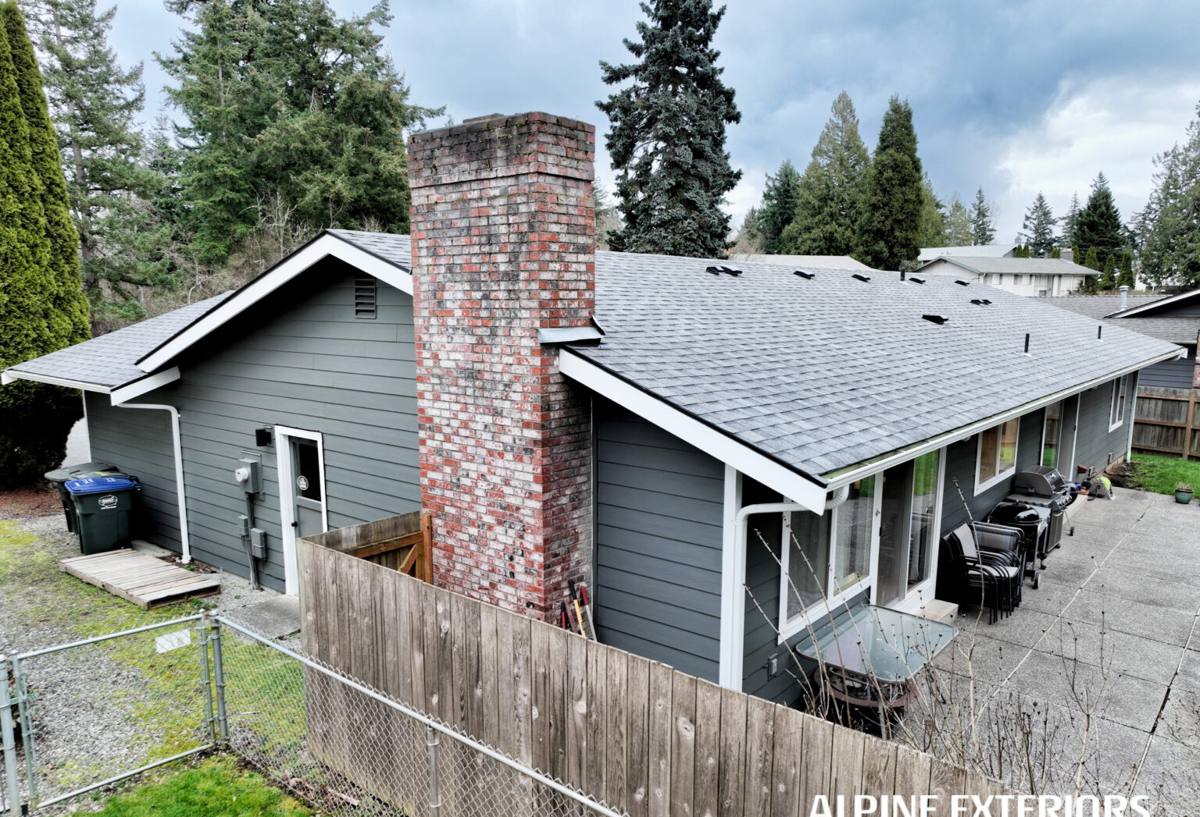
Common Siding Problems We See on Fairhaven Homes
Every home is different, but certain patterns show up again and again on houses close to Bellingham Bay. Knowing what to look for helps you catch problems before they turn into a bigger repair.
- Dark streaking or a greenish film on shaded siding, usually algae or moss getting a foothold where sun never fully dries the wall
- Soft or spongy spots near the bottom courses of wood-based siding, a sign moisture has been wicking upward
- Cracked, bubbled, or peeling paint concentrated on the walls that face prevailing wind and rain
- Gaps opening up around window and door trim where caulking has shrunk or failed
- Warped, buckled, or separated panels, especially on the sides of the home that get the most direct weather
- Rust streaks below nail heads or fasteners, more common on older installations
- Visible corrosion or pitting on metal trim and flashing near the ground or close to plantings that stay wet
Any one of these on its own might be minor. Several of them together, especially on the same wall, usually point to a moisture problem behind the siding rather than just a cosmetic issue on the surface.
What a Correct Siding Repair Actually Involves
Diagnosing the Cause, Not Just the Symptom
The most common mistake in siding repair is treating the visible damage as the whole problem. A cracked or rotted section of siding is usually a symptom of something else: failed caulking, a flashing detail that was never installed correctly, a downspout dumping water against the wall, or house wrap that tore during the original installation. Replacing the damaged board without addressing the underlying cause means the same spot fails again, often within a season or two of Fairhaven's wet weather.
Matching Material and Method
Repairing siding correctly means understanding how the existing material behaves. Wood, fiber cement, vinyl, and engineered wood products each expand, contract, and take fasteners differently, and each has its own correct approach to flashing, caulking, and paint or finish compatibility. A repair that ignores those differences might look fine on installation day and still fail early.
Restoring the Water Management System
Siding is one layer of a larger water management system that includes house wrap, flashing, and properly lapped seams. A repair that only replaces the visible board but doesn't restore the flashing and drainage plane behind it is an incomplete repair. This is especially important in Fairhaven, where wind-driven rain regularly tests every seam and joint on a wall.
Finish and Color Match
On painted or factory-finished siding, getting the repaired section to blend in matters too. Mismatched sheen, color, or texture is the most visible sign of a rushed repair, and it's avoidable with the right prep and product knowledge.
Repair or Replace? How We Help You Decide
Not every damaged wall needs full replacement, and not every problem can be solved with a patch. The table below outlines the factors we weigh when giving you an honest recommendation.
| Factor | Leans Toward Repair | Leans Toward Replacement |
|---|---|---|
| Extent of damage | Isolated to one or two sections or walls | Spread across multiple walls or the whole exterior |
| Underlying cause | A single identifiable issue (flashing, caulk, a one-time impact) | Systemic moisture intrusion or a failed water barrier |
| Material condition | Surrounding siding is sound and stable | Surrounding siding is brittle, delaminating, or soft |
| Age of siding | Well within expected service life | At or past the end of its realistic lifespan |
| Match availability | Matching material and finish are available | Product is discontinued or significantly weathered compared to new stock |
We'll always tell you when a repair is the honest, cost-effective answer. We'll also tell you plainly when a repair would just be a temporary fix on a wall that needs a full re-side — patching around a moisture problem that's already spread doesn't do you any favors.
How Repair Approach Differs by Siding Material
Fairhaven has a real mix of siding types on its homes, from older wood siding on established properties to vinyl, engineered wood, and fiber cement on more recently updated ones. Repair strategy has to match the material.
Wood and Cedar Siding
Wood siding can absolutely be repaired well, but it demands the most maintenance to stay ahead of rot, especially in a damp coastal climate. Sectional repairs need careful attention to back-priming and sealing all cut edges, since exposed end grain is where moisture gets in fastest.
Vinyl Siding
Vinyl repairs are limited by the material's rigidity in cold weather and its tendency to fade unevenly over time, which can make a replacement panel stand out even when it's the correct product. Cracked or warped vinyl (sometimes from heat reflection off nearby windows) often needs a full panel swap rather than a partial patch.
Engineered Wood (LP SmartSide and similar)
Engineered wood products perform reasonably when the factory edge seal and field-applied caulking stay fully intact, but any breach — a nail pop, an unsealed cut edge, a gap at a butt joint — gives moisture a path into the substrate, and swelling at that point tends to spread rather than stay contained. Repairs on this material require aggressive resealing of every edge to prevent the same failure from recurring nearby.
Fiber Cement (James Hardie)
This is the material we install exclusively, and it's also the easiest to repair honestly and durably. Because it's non-combustible fiber cement rather than wood-based, it doesn't swell or rot the way engineered wood or untreated wood can, and its factory-applied ColorPlus finish is formulated to hold color and resist the kind of fading that makes patch repairs stand out. When we do need to replace a damaged section, matching it in both material and finish is straightforward, and the repair holds up the way the rest of the wall does.
Our Siding Repair Process for Fairhaven Homes
- On-site inspection. We look at the damaged area and the surrounding siding, checking for signs the problem extends further than what's visible.
- Diagnose the cause. We identify whether the damage stems from a one-time event, a flashing or caulking failure, or a broader moisture issue.
- Honest recommendation. We tell you plainly whether a targeted repair is the right call or whether a larger scope makes more sense, and why.
- Correct removal. Damaged material is removed carefully to avoid disturbing sound siding or the water barrier behind it.
- Restore the water management layer. House wrap, flashing, and drainage details are repaired or replaced as needed before new siding goes back on.
- Install and finish to match. New material is installed to manufacturer specification and finished to blend with the surrounding siding as closely as possible.
- Final walkthrough. We review the completed repair with you and point out anything worth keeping an eye on going forward.
Why Local Experience in Fairhaven Matters
Siding repair done by a crew that regularly works close to Bellingham Bay is different from a general contractor treating it as just another job. We know which walls in this part of Bellingham take the worst of the wind-driven rain, how fast moss reestablishes on shaded siding in this climate, and what a proper flashing detail needs to look like to hold up through a full Whatcom County winter. That local pattern recognition is what separates a repair that lasts from one that reappears in the same spot a year later.
It also means we're realistic about timelines. Scheduling exterior repair work around Fairhaven's wetter months takes planning, and we account for that so the repair is done under conditions that let caulking, sealants, and finishes cure properly rather than rushed in before rain returns.
Preventing the Next Repair
A good repair should buy you years, not months. A few habits go a long way toward protecting the work once it's done:
- Keep gutters and downspouts clear so water isn't dumping directly against a wall
- Trim back plants and trees that keep siding shaded and damp for long stretches
- Rinse moss and algae off north- and west-facing walls before it gets a firm hold
- Re-caulk around windows, doors, and trim on a regular schedule rather than waiting for visible gaps
- Have any soft, discolored, or cracked siding checked early rather than waiting for it to spread
If you're noticing damage, discoloration, or gaps on your Fairhaven home's siding, it's worth having it looked at before the next stretch of Bellingham's wet weather sets in. We're happy to come take a look and give you a straightforward, no-pressure estimate for what a correct repair — or a longer-term siding upgrade — would involve.