 Bellingham
 Siding Replacement in Fairhaven: What Makes This Job Different
Replacing siding on a Fairhaven home isn't the same job as replacing siding forty miles inland, and it isn't quite the same job as replacing siding on a newer subdivision house a few miles away in Bellingham either. Fairhaven sits close to Bellingham Bay, which means the siding on these homes deals with a steady drift of salt-tinged marine air, rain that regularly gets pushed sideways by wind off the water, and a moss and mildew season that can run most of the year on shaded, tree-covered lots. Add in a housing stock that skews older, with more trim detail and roofline complexity than a lot of newer construction, and a full siding replacement here has to account for conditions a generic install spec was never really built around.
This page is specifically about full siding replacement, not general exterior maintenance. If your Fairhaven home's siding has reached the point where patching and painting no longer make sense, this is what that project actually involves, what correct work looks like, and what to expect from start to finish.
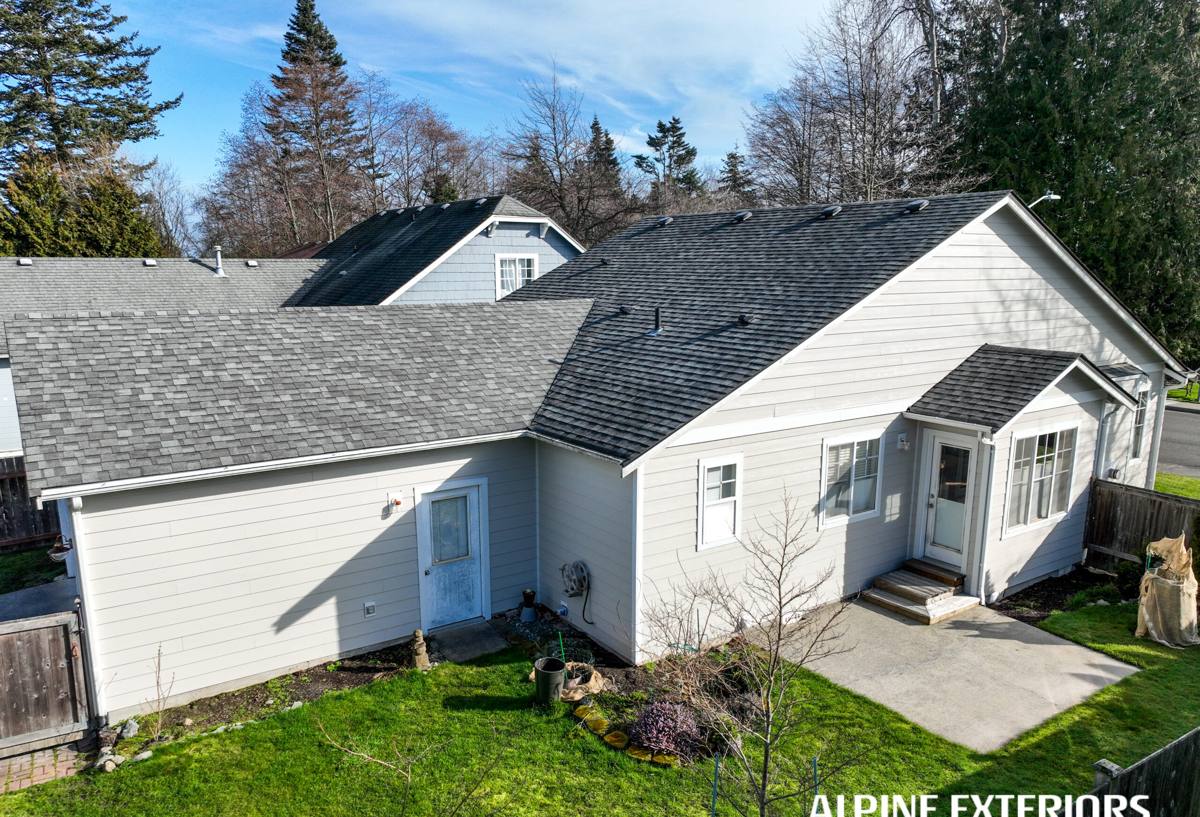
Repair or Replace? How We Make That Call
Not every siding problem means tearing the whole house down to the studs. We walk the property first and give a straight answer about which situation you're actually in, because a full replacement is a bigger investment than a repair and it should only happen when a repair genuinely won't hold.
When a Repair Still Makes Sense
Isolated impact damage, a section that's cracked or come loose around a window, or trim that's worked free from a fastener can usually be repaired and matched into the surrounding siding without disturbing the rest of the wall. If the underlying sheathing is dry and sound and the damage is contained to a small area, replacing just that section is the honest recommendation, even though it's the smaller job.
When Full Replacement Is the Right Call
Full replacement is the right move when moisture has been tracking behind the wall assembly for a while, when the siding material itself has reached the end of its service life, or when damage is spread across multiple sides of the house rather than contained to one spot. On older Fairhaven homes, we also look at how many past repairs the siding has already absorbed. Once a wall has been patched several times, a full replacement often costs less over the next decade than another round of spot fixes on failing material.
What Fairhaven's Climate Demands From New Siding
Salt Air and Slow Corrosion
Homes near Bellingham Bay sit in a steady, mildly corrosive marine atmosphere, not just during storms but as a background condition most of the year. That exposure works slowly on fasteners, flashing, and lower-grade finishes, and it rarely announces itself. It shows up years later as rust bleed at nail heads, degraded caulking around trim, or a finish that's chalked and faded well before its rated lifespan is up.
Wind-Driven Rain at Every Seam
Fairhaven's position near open water means rain doesn't just fall straight down, it gets driven at an angle by wind coming off the bay. That changes where water actually tests a siding installation: lap joints, trim seams, and wall penetrations that would stay dry in a calmer inland setting can take on water here specifically because of how the wind interacts with the coastline. New siding has to be installed with that reality in mind, not just to a generic regional spec.
A Moss Season That Doesn't Really End
Mild temperatures, consistent dampness, and the mature tree canopy common around Fairhaven add up to an extended moss and mildew season, especially on north-facing walls and anywhere shade keeps a surface from drying out between rain events. Porous or moisture-retentive materials become a growth surface over time. When we're replacing siding here, we're not just choosing a product that looks good on day one, we're choosing one that resists that growth cycle for decades, not years.
Why We Replace Siding With James Hardie, and Nothing Else
We install James Hardie fiber cement siding exclusively. We don't offer LP SmartSide, vinyl, Cemplank, Allura, primed spruce, or cedar as replacement options, and that's a deliberate professional standard, not a limitation in what we're capable of installing. Those are legitimate products and other contractors install them competently. Our decision came from a pattern we kept seeing on tear-offs and repair calls in this exact climate: engineered wood siding that swelled and delaminated at cut edges after repeated wet-season cycling, vinyl that trapped moisture behind the panel when house wrap wasn't detailed with real care, and cedar or primed spruce that needed a repainting schedule homeowners rarely kept up with once the newness wore off.
James Hardie fiber cement doesn't share those failure patterns. It's non-combustible, dimensionally stable in wet conditions, and finished at the factory under controlled conditions rather than painted on site, which matters enormously for a replacement project meant to last. For a home this close to Bellingham Bay, we specify Hardie's HZ5 formulation, engineered specifically for regions with heavy sustained moisture and freeze-thaw cycling rather than a generic national spec. Hardie also backs its products with a substantial transferable warranty when installation follows spec, which carries real value if you ever sell the home.
What a Correct Siding Replacement Actually Involves
The material is only half the job. A siding replacement that actually performs the way it's engineered to depends on what happens underneath it, and this is where a lot of the real value of hiring an experienced crew shows up, in decisions a homeowner will never see once the new siding is up.
Tear-Off and What We Find Underneath
Full tear-off exposes the sheathing and framing that have been hidden behind the old siding, sometimes for decades. On Fairhaven homes this close to the water, it's common to find moisture damage that was never visible from outside, soft or delaminated sheathing, or rot around window openings that only becomes obvious once the old siding is off the wall. We document what we find and give you real options before covering it back up, not after.
Water Management Before Anything New Goes On
House wrap and flashing have to function as one integrated water-management system, not a collection of separate steps done in isolation. That means correct flashing at every window and door opening, proper lapping at seams so water sheds outward instead of tracking in, and attention to the transitions where siding meets the roofline, trim, and foundation. This is the layer that determines whether a replacement lasts twenty-plus years or starts having problems again in five.
Fastening, Lapping, and Finish Detail
James Hardie siding has a specific fastening pattern, clearance requirements from grade and roofline, and joint treatment that has to be followed for the material to perform and for the warranty to stay intact. A rushed or corner-cut installation is one of the most common reasons a genuinely good product ends up with problems, and it's the detail we treat with the same seriousness as picking the right material in the first place.
Our Replacement Process, Start to Finish
- Walkthrough and assessment: We inspect the current siding, look for signs of hidden moisture damage, and give you an honest read on repair versus full replacement.
- Written scope and estimate: You get a scope that specifies flashing, house wrap, and fastening details, not just a square-footage number.
- Permitting: Full siding replacement in Bellingham typically requires a permit, which we handle as part of the project.
- Tear-off and substrate inspection: Old siding comes off, sheathing and framing get inspected, and any repairs needed are scoped and priced before new siding goes on.
- House wrap and flashing: The water-management layer goes in correctly before a single piece of new siding is installed.
- Hardie installation: New siding is installed to Hardie's fastening and clearance specifications, with the factory-finished ColorPlus boards handling the final appearance.
- Final walkthrough: We go over the finished work with you directly and address anything before calling the job complete.
Timeline and What to Expect During the Job
A full siding replacement on an average single-family home typically runs somewhere between one and three weeks depending on the home's size, trim complexity, and what tear-off reveals underneath. Weather matters here more than in a lot of other regions. Bellingham's wet season narrows the practical install window, and a crew that works this area regularly plans around that instead of getting caught mid-project by a stretch of driving rain. Expect noise, a dumpster or debris trailer on site, and crew access to most sides of the house during working hours. We'll walk you through what that looks like for your specific property before work starts, not on day one.
What Affects the Cost of a Fairhaven Siding Replacement
| Factor | What It Affects | Why It Matters in Fairhaven |
|---|---|---|
| Substrate condition found at tear-off | Repair costs before new siding installs | Years of moisture behind failing siding can rot sheathing and framing before it's ever visible from outside |
| Home age and trim complexity | Labor time and material detail | Fairhaven's older housing stock often has more trim and roofline intersections where wind-driven rain can work its way in |
| Total wall area and story height | Material quantity and staging needs | Multi-story and hillside homes near the waterfront can add scaffolding and access time |
| Siding profile and color selection | Material cost and finish longevity | Factory-applied ColorPlus finishes outlast field-applied paint against salt air and UV exposure |
| Site access and slope | Equipment and labor setup time | Sloped lots common near the bay can add setup and material-handling time |
Real numbers depend on the specific house, which is why we walk the property in person before quoting rather than pricing off square footage alone.
What to Check Before Hiring a Siding Replacement Contractor
- Confirm an active Washington state contractor license and current insurance
- Ask exactly which siding brand and product line they install for replacement work, and why they chose it
- Ask how they handle substrate damage discovered during tear-off, and how that's priced
- Get a written scope that specifies flashing and house wrap details, not just "new siding installed"
- Ask who pulls the permit and manages inspections
- Ask whether the crew doing the tear-off is the same crew doing the install, or if labor is subcontracted separately
Why a Local Crew Matters for This Specific Job
A crew that works Fairhaven and the surrounding parts of Whatcom County regularly sees how salt air, wind-driven rain, and moss actually behave on real houses over a full year, not just how a product performs on a spec sheet. That translates into practical calls on tear-off day: which wall orientations tend to hide the most moisture damage, where extra flashing attention pays off, and how to sequence the job around Bellingham's wet season instead of getting caught mid-project by it. Fairhaven's proximity to the bay and its older housing stock aren't identical to conditions elsewhere in Bellingham, and a replacement done by a crew that treats every neighborhood the same tends to miss those details.
If your Fairhaven home's siding is past the point of patching, we're glad to take a look and give you a straight answer. Reach out using the form below to schedule a free, no-pressure estimate.