 Bellingham
 Lynden's Marine Climate Is Harder on Siding Than It Looks
Lynden sits inland from Bellingham Bay, up near the Whatcom County line, and it's easy to assume that distance from open water means the siding on a Lynden home has an easier life than a house right on the shoreline. In practice, the difference is smaller than most homeowners expect. The same marine air mass that moves in off the Salish Sea rolls across the whole county, carrying moisture and a fine load of salt with it. Add in the driving rain that comes off the foothills during fall and winter storms, plus a moss season that can stretch from October well into spring, and you've got a climate that's genuinely tough on exterior building materials — whether the house is a half-mile from the water or fifteen.
Salt-Laden Air Reaches Inland Too
Salt air doesn't stop at the waterfront. It travels on prevailing winds and settles on every exterior surface it touches, including siding, trim, and fasteners well inland. Over years, that salt film accelerates corrosion in poor-quality fasteners and speeds up the breakdown of finishes that weren't engineered to shed it. It's a slow, cumulative kind of wear — you don't see it happen, you see the result five or ten years later.
Driving Rain and Wind-Driven Moisture
Whatcom County storms don't just drop rain straight down — wind pushes it sideways into wall assemblies, gable ends, and anywhere the siding meets a window, door, or trim board. If the water-resistive barrier, flashing, and siding overlaps underneath aren't detailed correctly, that wind-driven rain finds its way behind the cladding. Once moisture gets behind siding, the material on the surface almost doesn't matter — the sheathing and framing behind it start absorbing damage long before anything looks wrong from the curb.
A Long Moss Season
Between the tree cover common around Lynden properties and the extended damp season, moss and algae get a real foothold on north- and shade-facing walls. Moss holds moisture against the siding surface for extended periods, which is exactly the kind of sustained dampness that punishes materials not built to handle it.
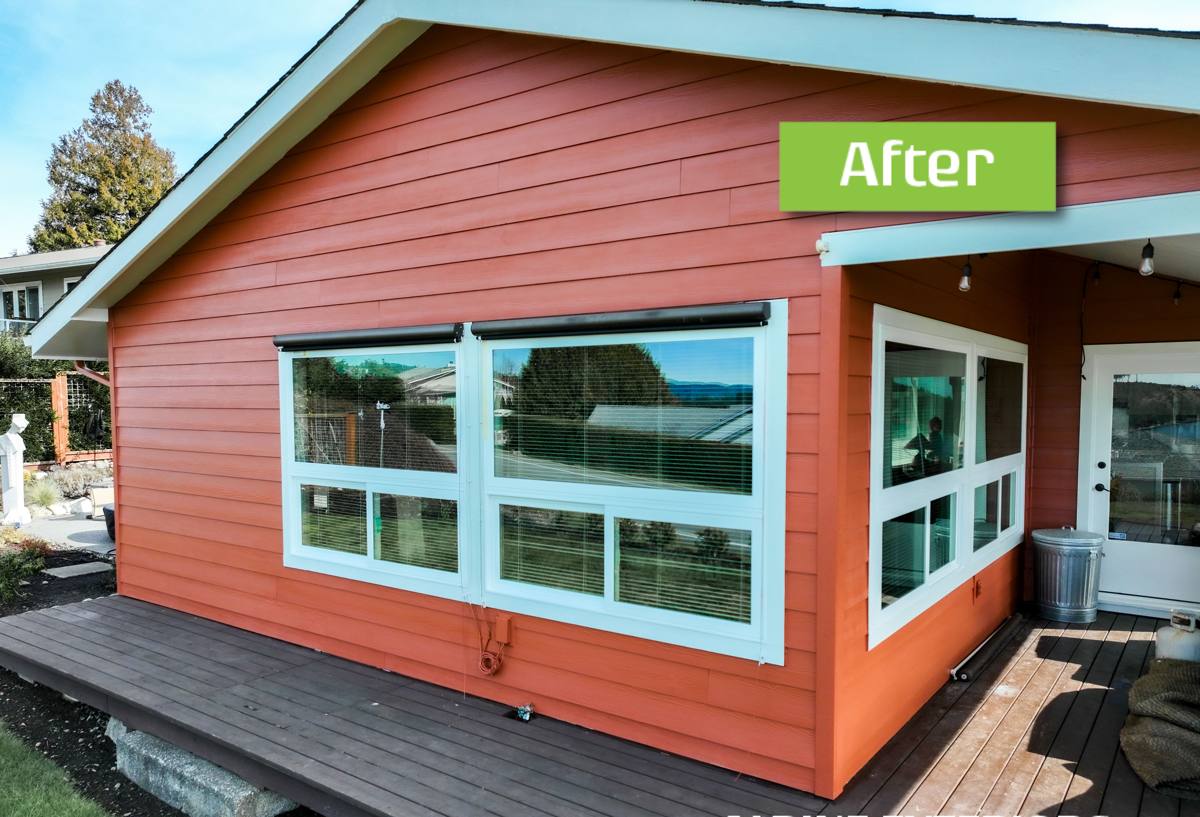
What a Correct Fiber Cement Installation Actually Involves
Fiber cement siding is only as good as the installation behind it. The material itself is non-combustible and dimensionally stable, but a rushed or careless install can undermine all of that in a single wall section.
Clearances and Flashing
Correct installation keeps the bottom edge of the siding a set distance above grade, decks, and roof lines, and keeps kick-out flashing, head flashing, and window/door flashing properly lapped so water sheds outward instead of behind the cladding. This is the single most common place we find shortcuts on older installs — and it's the detail that causes the most expensive hidden damage.
Fastening and Caulking
Fiber cement needs the correct fastener type, spacing, and embedment depth — under- or over-driven nails both cause problems, from popped fasteners to cracked board edges. Joints and butt seams need to be caulked with a sealant rated for the movement and moisture exposure of this climate, not whatever's left over on the truck. Done right, these small details are what separate a fifteen-year repaint job from a forty-year siding system.
Why This Crew Installs Only James Hardie
We don't install LP SmartSide, vinyl, Cemplank, Allura, primed spruce, or cedar. That's a deliberate standard, not a lack of options. Each of those products has legitimate strengths — cedar has real curb appeal, vinyl is inexpensive, engineered wood products install quickly — but each also comes with a trade-off we're not willing to build into a Whatcom County home: wood-based products need consistent maintenance to keep moisture out of engineered wood fiber, vinyl can warp and fade under UV and temperature swings and doesn't stop combustion the way fiber cement does, and not every fiber cement competitor backs its product with the same factory-finish and warranty structure James Hardie does.
James Hardie's HardieZone system is engineered by climate — Western Washington falls in the HZ5 zone, and Hardie's HZ5-engineered products are formulated for the wet, moderate-temperature Pacific Northwest rather than a one-size-fits-all national spec. The ColorPlus factory finish is baked on under controlled conditions, which gives it more consistent UV and moisture resistance than field-applied paint, and it comes with its own finish warranty separate from the substrate warranty. For a climate that punishes finishes with salt air and prolonged damp, that combination is why we standardized on it.
Signs a Lynden Home Needs New Siding
Because moisture damage from behind the siding is invisible until it's advanced, it helps to know the visible warning signs worth acting on:
- Persistent moss or algae staining on walls that doesn't wash off and returns quickly
- Soft, spongy, or crumbling spots when you press on siding, especially near the bottom courses
- Paint that's peeling, bubbling, or won't hold in the same spots year after year
- Visible cracking, warping, or separation at seams and corners
- Rusty streaking around fastener heads
- Rising heating bills or drafts that suggest the wall assembly isn't sealing the way it should
- Interior signs — musty smell, discoloration, or bubbling drywall near exterior walls
Our Process for Lynden Homeowners
- Walkthrough and assessment — we look at existing siding condition, moisture entry points, flashing details, and any rot or sheathing damage before quoting anything.
- Written scope and product selection — plank profile, color, and HZ5-rated product line chosen for the specific exposure of each wall.
- Prep and remediation — removal of old siding, repair of any damaged sheathing or framing, and correction of house-wrap and flashing details before a single new board goes up.
- Installation to Hardie spec — correct clearances, fastener schedule, and joint treatment, not shortcuts to save a day of labor.
- Final walkthrough — we go over the finished work with the homeowner and address anything before we consider the job done.
Why Hiring a Crew That Already Works in Lynden Matters
Siding installation isn't just about the product — it's about knowing how a specific wall will actually perform once it's up. A crew that regularly works Lynden and the surrounding Whatcom County area already understands how local exposure, tree cover, and storm patterns affect wall assemblies, and doesn't have to re-learn that on your house. There's also a practical side: local crews aren't tacking on long drive-time costs or treating your project as a one-off between out-of-area jobs, which tends to show up in both scheduling reliability and follow-up service if anything needs attention after the fact.
Cost Factors for Fiber Cement Siding in Lynden
Every home is different, but the same handful of factors drive most of the price variation we see on Lynden projects:
| Factor | Why It Matters |
|---|---|
| Existing siding removal and disposal | Tear-off adds labor and disposal cost, especially with multiple layers of old siding |
| Sheathing or framing repair | Hidden moisture damage found during removal has to be repaired before new siding goes on |
| Home size and wall complexity | More corners, dormers, and trim details mean more cutting, flashing, and labor time |
| Product line and plank profile | HZ5-rated lines and specific profiles (lap, shingle, panel) vary in material cost |
| Color and finish choice | Factory ColorPlus finishes vary by line; custom trim or accent colors add cost |
| Site access | Tight lots, multi-story walls, and limited staging area affect labor time |
We provide a written, itemized estimate before any work starts, so there's no guessing where the cost is coming from.
Caring for Hardie Siding Through Whatcom County's Wet Seasons
Fiber cement siding cuts down on maintenance compared to wood, but it isn't zero-maintenance, especially in this climate. A yearly rinse-down helps keep salt film and organic growth from building up, particularly on shaded, north-facing walls where moss takes hold fastest. Keeping gutters clear and downspouts directed away from the foundation reduces splash-back onto lower siding courses, which is one of the most common places we see premature wear. It's also worth a quick annual look at caulked joints and trim intersections — sealant is the first line of defense against wind-driven rain, and it's cheap to touch up compared to the repair cost if it fails unnoticed for years.
Get a Straight Answer for Your Lynden Home
If your siding is showing wear, or you're planning ahead rather than reacting to a problem, we're happy to take a look and give you a straightforward assessment — no pressure, no inflated quote to negotiate down from. Fill out the form below for a free estimate, and we'll walk your property the same way we'd walk our own.