 Bellingham
 Fiber Cement Siding for Puget Homes
Puget sits close enough to the water that its homes take on a specific mix of weather most inland Whatcom County properties don't deal with in the same combination: salty, moisture-laden air, rain that rarely falls straight down, and a moss season that can run most of the year on shaded or north-facing walls. Siding here isn't just a cosmetic choice — it's the one layer standing between that weather and the framing underneath, day after day, for decades if it's done right. We install James Hardie fiber cement siding exclusively, and this page is about what that actually means for a home in Puget specifically: what the climate demands, what a correct installation involves, and how our process is built around this area rather than a generic national install guide.
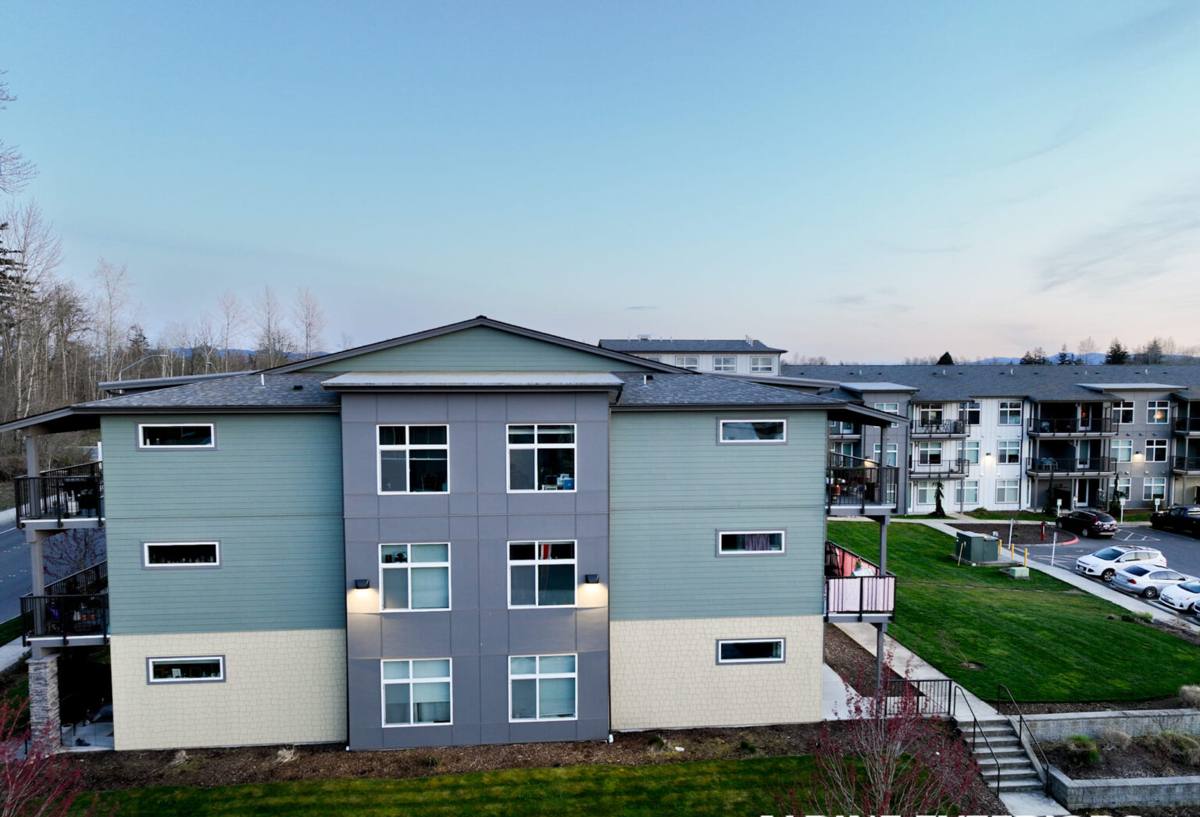
What Puget's Climate Asks of a Siding System
Salt Air and Slow Corrosion
Homes close to the water in Puget deal with a steady, low-grade dose of salt in the air, and that salt is hard on anything metal — fasteners, flashing, trim accessories. It doesn't cause dramatic failures overnight. It works slowly, corroding under-spec hardware over years until a fastener that should have held for decades starts to fail early, sometimes with a rust stain bleeding through the finish as the first visible sign. Siding material that resists moisture is only half the equation in a location like this; the fasteners and flashing holding it up need to be rated for the same exposure.
Wind-Driven, Driving Rain
Rain in this part of Whatcom County tends to arrive sideways more often than straight down, pushed by wind off the water. That matters because it means water is being driven into every horizontal lap, every seam around a window or door, and every joint where two pieces of siding meet — not just landing on the face of the wall and running off. A siding system that's only built to shed rain falling vertically will eventually let water past a joint that wasn't detailed for wind-driven exposure.
A Moss Season That Doesn't Really End
Shaded walls, tree cover, and the general dampness of a marine climate mean moss and mildew have a long growing window in Puget — realistically, most of the year on the sides of a house that don't get much direct sun. Moss holds moisture against a wall far longer than a dry surface would, which accelerates whatever damage is already starting underneath. A siding surface that resists moss growth and doesn't need to be scrubbed or re-treated every year or two is worth more here than it would be in a drier climate.
Why We Install James Hardie Fiber Cement Only
We get asked fairly often why we don't offer LP SmartSide, vinyl, Cemplank, Allura, primed spruce, or cedar alongside Hardie. Those are all legitimate products, and other contractors install them competently. Our reasoning is specific to this climate: given how much of Puget's siding damage traces back to moisture cycling — swelling, cupping, seam failure, fastener corrosion — we decided we'd rather stand behind one material system we trust completely than offer a lower-cost option that quietly shifts maintenance risk onto the homeowner a few years down the road.
| Material | Moisture Behavior | Maintenance in This Climate | Realistic Lifespan |
|---|---|---|---|
| James Hardie fiber cement | Dimensionally stable; doesn't swell, cup, or rot | Low; factory finish resists moss and fading | 30+ years with proper install |
| LP SmartSide (engineered wood) | Sensitive at cut edges and fastener penetrations | Moderate; edge sealing needs regular upkeep | 15-25 years, climate-dependent |
| Vinyl | Can warp, gap, or crack in temperature swings | Low visible upkeep, but hidden moisture issues are easy to miss | 20-30 years, variable |
| Cedar | Absorbs moisture readily without consistent sealing | High; repainting or resealing on a recurring cycle | 15-25 years with consistent upkeep |
Fiber cement's core doesn't expand and contract with moisture the way wood-based products do, which is the property that matters most in a climate that stays damp for most of the year. James Hardie's factory-applied ColorPlus finish adds another layer of protection on top of that — the color is baked on at the factory rather than field-applied, so the paint quality doesn't depend on weather conditions the day the crew is on your roof.
What a Correct Fiber Cement Install Actually Involves
Fiber cement siding is only as good as the installation behind it. The material can handle Puget's climate; a rushed or under-detailed install can still let water in around it. A correct job includes:
- House wrap or a weather-resistive barrier installed and properly lapped before any siding goes up
- A drainage gap or rainscreen behind the siding so any moisture that gets past the surface can dry out instead of sitting against the sheathing
- Corrosion-resistant fasteners, sized and spaced to the manufacturer's specification for this climate zone — not just "enough to hold it up"
- Proper lap and reveal on every course, so water sheds off the face of the wall instead of collecting behind a joint
- Flashing at every window, door, corner, and roofline transition, lapped in the correct order so water is always directed outward and down
- Field-cut edges primed before installation, since those cuts are the one place the factory ColorPlus finish doesn't already cover
Skip any one of these and the wall can still look fine on install day. The problems that show up when corners are cut — staining at seams, soft trim, paint failure around openings — usually take a couple of wet seasons to surface, which is exactly why a rushed install is easy to get away with until the homeowner is the one living with it.
Choosing the Right Hardie Line for a Puget Home
James Hardie makes several product lines, and picking the right one depends on the look you want and the specific wall it's going on:
- HardiePlank lap siding — the standard horizontal profile, available in several widths and textures; the most common choice for a full re-side
- HardiePanel vertical siding — a clean vertical look, often used for accent walls, gables, or modern-style homes
- HardieShingle — a shingle-style profile for homes going for a more traditional or coastal look
- HardieTrim — matching trim boards so window, door, and corner details are made from the same moisture-stable material as the field siding
Hardie also engineers its products by climate zone, and homes in this part of Washington fall into the category built for consistent moisture exposure rather than dry-heat regions. That climate engineering, combined with the ColorPlus factory finish, is a meaningful part of why we standardized on this manufacturer instead of picking whichever siding happened to be cheapest per square foot.
Our Process for a Puget Fiber Cement Project
Walkthrough and Assessment
We start by looking at your specific walls — which ones face the weather and salt air most directly, which stay shaded and slow to dry, and whether there's any existing moisture damage that needs to be addressed before new siding goes on. Installing new siding over a wall with hidden rot just buries the same problem under a fresh surface.
Prep and Tear-Off
Old siding comes off, the sheathing underneath gets inspected, and any soft or damaged framing gets repaired before we move forward. This is the stage where problems that were invisible from the outside get caught and fixed, rather than covered up.
Installation to Manufacturer Spec
Every fastener, lap, gap, and flashing detail follows James Hardie's published installation requirements for this climate zone. That's what keeps the manufacturer's warranty intact, and it's also simply what makes the wall perform correctly for decades instead of years.
Final Walkthrough
We walk the finished job with you, explain what little maintenance fiber cement actually needs in this climate, and make sure you know what a healthy wall looks like if you ever want to check on it yourself down the road.
Cost Factors for Fiber Cement Siding in This Area
Fiber cement generally costs more up front than vinyl but less than premium engineered wood systems over their lifespan, once you factor in maintenance. On a given Puget home, a few things move the price:
| Factor | Why It Matters |
|---|---|
| Wall condition underneath the old siding | Rot or moisture damage found during tear-off needs repair before new siding goes up |
| Home size and wall complexity | More corners, dormers, and roof transitions mean more cuts and flashing details |
| Product line and profile | Lap, panel, and shingle profiles differ in material and labor cost |
| Trim and window detailing | More openings mean more flashing and finish work around each one |
| Site access | Steep lots, limited driveway access, or tight setbacks can add labor time |
We'll walk your specific home and give you real numbers rather than a rough per-square-foot estimate — two houses of the same size can land at very different costs depending on how many of these factors are actually in play.
Why Hire a Crew That Already Works Puget
A crew that's installed fiber cement across this specific stretch of Whatcom County through multiple wet seasons has already learned which walls need extra attention because of shade and salt exposure, how much drainage clearance actually earns its keep in a climate this damp versus what a generic install guide assumes, and where corners tend to get cut on jobs that don't hold up. That judgment doesn't show up on a spec sheet, and it's the difference between a wall that still looks and performs the same in twenty years and one that's showing staining and soft trim by year five. Given how consistently damp and salt-exposed this part of Bellingham stays, that local experience isn't a nice-to-have — it's the thing that determines whether the install actually performs the way the product is supposed to.
If you're considering fiber cement siding for a home in Puget, we're glad to walk the property, talk through what your specific walls need given their exposure and condition, and put together a straightforward, no-pressure estimate. There's a form below — reach out and we'll set up a time to take a look.