 Bellingham
 A Style That Fits Happy Valley's Character
Board and batten has become one of the most requested siding profiles in Happy Valley, and it's easy to see why. The vertical lines read as clean and a little more modern on newer builds, while on older cottages and craftsman-style homes in the neighborhood it echoes a look that's been part of Pacific Northwest residential architecture for generations. It works on full elevations, on gable accents above a lap-sided first floor, on porch surrounds, and on garage faces where homeowners want a break from flat siding runs.
But board and batten is also one of the least forgiving siding profiles to get wrong. The wide flat boards and narrow battens create more seams, more fastening points, and more places for water to find a way in than a standard lap profile does. In a neighborhood like Happy Valley, where mature tree cover, close-set lots, and Bellingham's marine climate all work against a wall system, that matters more than the style question does.
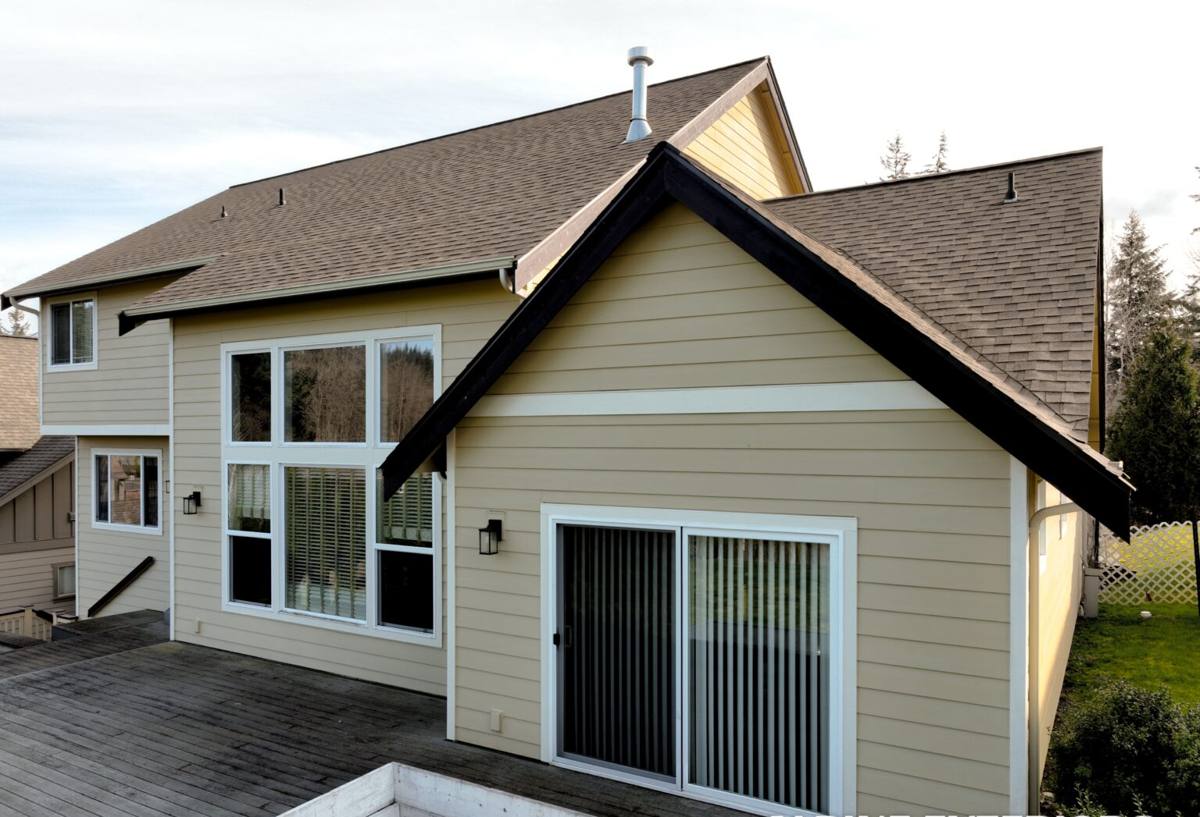
What Bellingham's Climate Asks of Vertical Siding
Driving Rain
Whatcom County doesn't just get rain — it gets rain pushed sideways by wind off the water, and vertical siding profiles like board and batten catch more of that wind-driven moisture across their face than horizontal lap siding does. Every seam between a board and its batten is a potential entry point if it isn't detailed correctly, and on a two-story wall that sees years of exposure, small installation shortcuts eventually show up as staining, soft trim, or paint failure at the joints.
Salt Air
Happy Valley sits close enough to Bellingham Bay that salt-laden air is part of the everyday environment, not an occasional coastal event. Salt air accelerates corrosion in fasteners, flashing, and any metal trim that isn't properly rated for it. On a board and batten wall, where the batten strips are fastened directly through to the boards beneath, the quality and coating of every fastener matters — a corroding nail head under a batten is a slow, hidden problem that's expensive to fix once it starts staining the finish.
A Long Moss Season
Between the tree canopy common in Happy Valley and the region's extended damp season, north-facing and shaded walls stay wet longer than homeowners moving from drier climates typically expect. Moss and algae need sustained moisture to establish, and a wall that doesn't shed water quickly — or that traps it behind the siding — gives them exactly that. The result isn't just cosmetic; sustained moisture against a wall assembly is the single biggest driver of rot and siding failure in this region.
Why James Hardie for Board and Batten
We install James Hardie fiber cement exclusively, and board and batten is one of the profiles where that decision matters most. Fiber cement doesn't swell, cup, or delaminate the way engineered wood products can when a seam takes on moisture, and it doesn't have the thermal expansion behavior that causes vinyl board and batten to buckle or gap over a Bellingham temperature swing. It's also non-combustible, which matters increasingly to insurers and to homeowners thinking about long-term risk.
HZ5 Engineering
James Hardie manufactures its siding in climate-specific formulations called HZ (HardieZone) products, engineered for the moisture and freeze-thaw conditions of a given region. That engineering is exactly why we don't treat board and batten as a one-size-fits-all product — the version specified for the Pacific Northwest is built to hold up to sustained damp exposure rather than the drier, hotter conditions other regions deal with.
ColorPlus Factory Finish
Most of our board and batten installations use Hardie's ColorPlus finish, a factory-applied, baked-on coating that resists fading and holds up to UV and moisture far better than a field-applied paint job. On a profile with this many seams and edges, a consistent factory finish also means fewer touch-up points down the road, and a cleaner look for years longer than site-painted trim typically manages.
What a Correct Installation Involves
Drainage Plane and Rainscreen Gap
Board and batten should never be installed flat against the wall's weather-resistive barrier. A drainage plane — typically a furring strip or rainscreen product — creates a gap behind the siding so any moisture that does get past the surface can drain and the wall can dry out through airflow. Skipping this step is one of the most common corners cut on lower-bid board and batten jobs, and it's invisible once the siding is up, which is exactly why it needs to be verified during installation, not after.
Batten Spacing and Fastening
Battens need consistent spacing, correct fastener placement that lands in framing or proper blocking, and fasteners rated to resist the corrosion that Bellingham's salt air accelerates. Hardie's installation specifications call for specific fastener types, spacing intervals, and edge distances — deviating from those specs is one of the fastest ways to void the manufacturer's warranty, even if the wall looks fine on installation day.
Flashing and Trim Details
Every window, door, corner, and horizontal transition on a board and batten wall is a place where flashing has to be layered correctly so water sheds outward and down, never behind the cladding. This is detail work that shows up in how the wall performs five and ten years out, not on day one — which is exactly why it's worth asking a contractor to walk through their flashing approach before signing anything.
Board and Batten Options Compared
| Material | Behavior in Sustained Damp Conditions | Fastener/Seam Risk | Long-Term Finish |
|---|---|---|---|
| James Hardie fiber cement | Does not swell or absorb moisture; HZ5-engineered for the region | Low, when installed to spec with rated fasteners | Factory ColorPlus finish, resists fading |
| Vinyl board and batten | Can warp or buckle with temperature swings; doesn't rot but traps moisture behind it | Panels can loosen at fastening slots over time | Color molded in, but fades and chalks with UV exposure |
| LP SmartSide / engineered wood | Wood-based core is more moisture-sensitive at cut edges and seams | Seam and edge sealing is critical and installation-sensitive | Field or factory finish; edge exposure is the main failure point |
| Primed spruce or cedar | Natural wood movement; highest maintenance burden in wet climates | Requires ongoing caulking and paint maintenance at every seam | Repainting cycle needed every few years |
This isn't a claim that other materials can't be installed well — it's why we've standardized on one product we can stand behind for this climate, rather than offering several and hoping each one gets installed perfectly every time.
Our Process for Happy Valley Projects
We start with a walk-around of the home to assess the existing wall assembly, look at drainage and grading around the foundation, and identify any moisture damage that needs addressing before new siding goes up — covering rot with new cladding never solves the underlying problem. From there we scope the drainage plane, flashing details, and batten layout specific to the home's elevations, and give a written estimate that reflects the actual wall, not a generic square-footage number.
During installation, we follow James Hardie's fastening and clearance specifications to the letter, because that's what keeps the manufacturer's warranty intact and what actually determines how the wall performs through Bellingham winters. We also handle disposal of old siding and site cleanup as part of the job, not as an add-on.
Living With Board and Batten: Maintenance Checklist
Fiber cement board and batten is low-maintenance compared to wood or vinyl, but "low" isn't "none" — especially in a moss-prone, tree-covered neighborhood. A short annual routine keeps a correctly installed wall performing the way it's designed to:
- Rinse the siding once or twice a year with a garden hose to clear pollen, moss spores, and salt residue before they establish
- Keep tree branches and shrubs trimmed back from the wall to let shaded sections dry out between rains
- Check that gutters and downspouts are directing water away from the wall, not sheeting down it
- Look at caulked joints around windows and trim once a year for cracking or gaps and have them resealed if needed
- Address any moss or algae growth early with a gentle wash rather than letting it establish and hold moisture against the surface
Why a Crew That Already Works Happy Valley Matters
Board and batten forgives almost nothing when it's installed by someone unfamiliar with what a marine climate like Bellingham's demands from a wall assembly. A crew that already works in Happy Valley has seen how the neighborhood's tree cover shades certain walls longer than others, knows what driving rain off the bay does to an improperly flashed corner, and has already worked through the fastening and drainage details that keep a James Hardie wall performing for decades rather than years. That local pattern-recognition is the difference between a board and batten job that looks right on installation day and one that's actually built for the conditions it has to survive.
If you're weighing board and batten for a home in Happy Valley, we're happy to take a look and walk you through what a correctly built wall involves for your specific house — no pressure, just a straight answer. Request a free estimate below and we'll schedule a time to come take a look.