 Bellingham
 Siding Repair Built for Happy Valley's Climate
Happy Valley sits close enough to Bellingham Bay and the surrounding waterways that homes here deal with a specific combination of stressors most inland neighborhoods don't: salt-laden air, wind-driven rain that hits siding sideways rather than straight down, and a moss and algae season that can run most of the year in the shaded, tree-lined lots common throughout the neighborhood. None of that is dramatic on its own. It's the cumulative effect — years of moisture cycling in and out of a wall assembly, salt residue breaking down finishes, and organic growth holding dampness against the surface — that turns small siding problems into real ones.
Siding repair in this kind of environment isn't just about patching what's visible. It's about understanding why that section failed in the first place, so the fix doesn't just cover the damage but actually addresses the cause. That's the standard we hold every repair to, whether it's one damaged board or a full section of a wall.
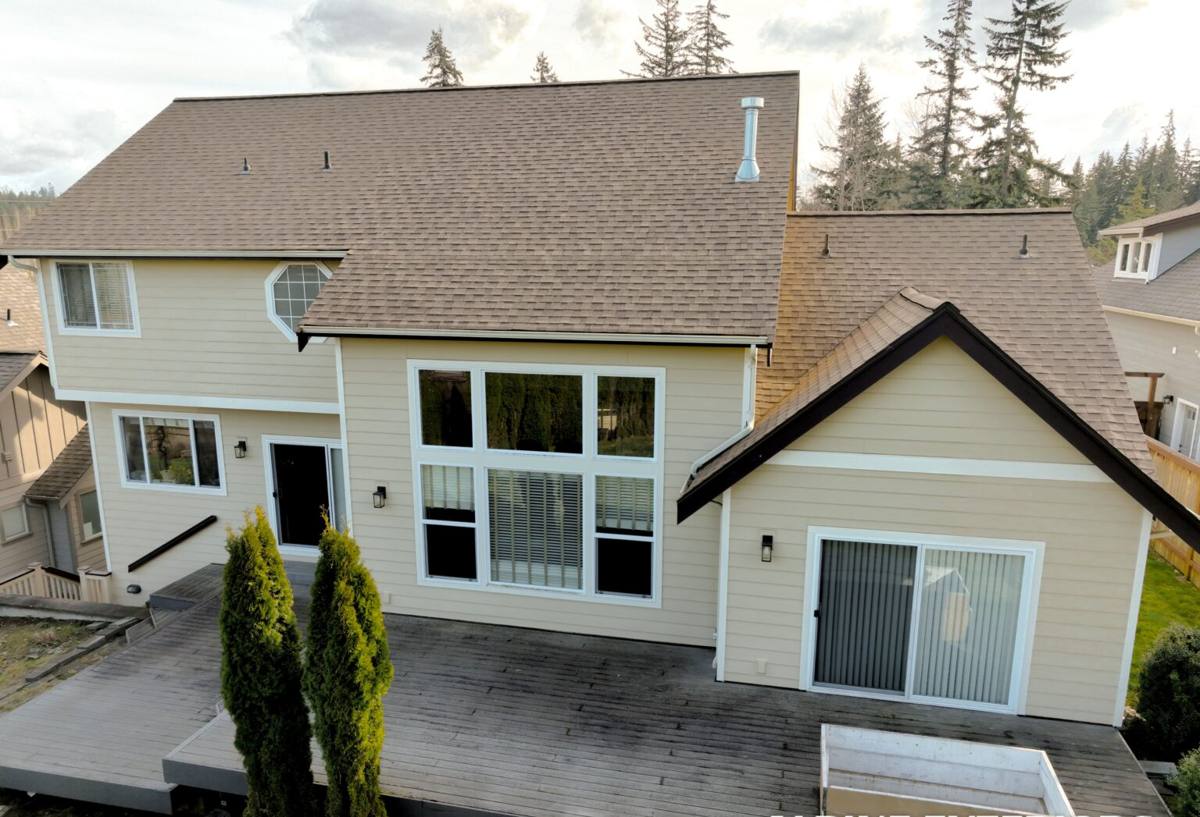
Signs Your Siding Needs Attention
Some siding damage announces itself. Other damage is quiet for years before it becomes expensive. Homeowners in Happy Valley should watch for:
- Soft or spongy spots when you press on the siding, especially near the bottom courses close to grade
- Persistent black, green, or gray staining that comes back within a season or two of cleaning
- Visible cracking, chipping, or splitting, particularly around corners and butt joints
- Bubbling, peeling, or discolored paint that doesn't match the fade pattern of the rest of the wall
- Gaps opening up at seams, trim, or window and door casings
- A musty smell near an exterior wall, or unexplained interior drywall staining on the same wall line
- Warping or buckling boards, which usually means moisture has already gotten behind the siding
Any one of these can be minor. Several appearing together, or in the same area of the house, usually points to a moisture pathway that needs to be found and closed, not just cosmetically covered.
What a Correct Repair Actually Involves
Diagnosing the Cause, Not Just the Symptom
The most common mistake in siding repair is treating the visible damage as the whole problem. A cracked board or a stained panel is usually a symptom of something upstream — failed caulking, a flashing detail that was never installed correctly, a gutter overflowing onto the wall below, or grade that slopes toward the foundation instead of away from it. A repair that ignores the source will look fine for a season and then fail again in the same spot.
Matching Materials and Reveal
Fiber cement siding has a specific thickness, exposure (the amount of each board visible on the wall), and factory finish. A repair that uses mismatched material, or that doesn't account for the existing reveal lines, is visible from the street even after paint. We match board profile and course lines so a repaired section reads as part of the wall, not a patch on it.
Flashing and Water Management
Almost every serious siding failure we see traces back to water management, not the siding material itself. Correct repair work means restoring or upgrading flashing at windows, doors, and horizontal trim, and making sure water sheds away from the wall assembly rather than getting trapped behind the cladding. Skipping this step is the single most common reason a repair doesn't last.
Sealing and Fastening to Spec
James Hardie publishes specific fastener patterns, gapping requirements, and caulking guidance for a reason — the product is engineered to handle expansion, contraction, and moisture exposure when installed to that spec. A repair that fastens through face nailing in the wrong pattern, over-drives nails, or skips gapping at butt joints undermines the very durability the product is designed to deliver.
Common Repair Scenarios in Happy Valley Homes
Moisture Damage Near Grade
Lower courses of siding sit closest to splash-back from rain, irrigation, and snowmelt. Combined with driving rain off the Sound, this is where we most often find soft board, delamination, or coating failure — and it's the area most likely to be misdiagnosed as "just needs paint" when it actually needs the board replaced and the water source addressed.
Moss and Algae Staining
Whatcom County's long wet season and the shade cover common in Happy Valley's mature lots create ideal conditions for moss and algae growth on siding, trim, and fascia. On some products this staining works its way into the surface and keeps returning no matter how often it's cleaned. Addressing it correctly usually means a combination of gentle cleaning, correcting any moisture sources feeding the growth, and — where the finish has broken down — repainting or replacing the affected boards.
Impact and Weathering Damage
Cracked corners, chipped edges, and dented or gouged boards happen from storm debris, landscaping equipment, or simple age. These are usually straightforward board-for-board replacements, but only if the replacement material and finish are matched correctly.
Caulk and Trim Failure
Caulking has a service life, and once it fails at seams, corners, and trim intersections, it becomes an entry point for water rather than a barrier against it. This is one of the most affordable repairs available and also one of the most commonly neglected, which is why it's often the root cause behind bigger problems discovered later.
Repair or Replace? How We Make the Call
Not every damaged section needs a full re-side, and not every "small" repair should be treated as a quick patch. We walk every job through the same honest framework:
| Factor | Repair usually makes sense | Replacement usually makes sense |
|---|---|---|
| Extent of damage | Isolated to one area or a handful of boards | Spread across multiple walls or elevations |
| Underlying cause | Identifiable and correctable (flashing, caulk, grading) | Systemic water intrusion behind the wall assembly |
| Age of existing siding | Relatively recent, still within expected service life | Near or past the product's realistic lifespan |
| Material match | Product still available or closely matchable | Discontinued profile, color, or product line |
| Sheathing condition | Sound wood behind the siding | Rot or damage found in the sheathing itself |
We'll always tell you honestly which category your situation falls into, including when a repair is the right, lower-cost answer.
Why We Repair Exclusively With James Hardie
We install and repair James Hardie fiber cement siding exclusively — we don't patch or match against vinyl, LP SmartSide, cedar, or primed spruce. That's a deliberate standard, not a limitation we apologize for. Vinyl expands and contracts in ways that make clean patch repairs difficult to hide, and it doesn't hold paint if a homeowner wants to change color down the road. Engineered wood products like LP SmartSide depend heavily on unbroken factory-applied sealants at every cut edge; once that's compromised, moisture-related repairs tend to recur. Cedar and primed spruce require an ongoing maintenance commitment — repainting, sealing, and monitoring for rot — that most homeowners underestimate until the bills start adding up.
James Hardie's fiber cement is non-combustible, holds its factory ColorPlus finish far longer than field-applied paint, and is engineered specifically for the kind of wet, marine-influenced climate we have here in Whatcom County. When we repair a section, we're repairing it with the same product system the rest of the wall should be able to trust for decades, backed by a transferable warranty when installed to spec.
Our Repair Process
1. On-Site Inspection
We look at the damaged area and the surrounding wall — siding doesn't fail in isolation, so we check flashing, caulking, grading, and gutter performance nearby.
2. Honest Assessment
You get a clear explanation of what caused the damage, what a proper repair involves, and whether repair or partial replacement is the right call — no upselling to a full re-side that isn't necessary.
3. The Repair Itself
Damaged material is removed, the underlying cause is corrected, and new Hardie board is installed to match reveal, fastening pattern, and finish, with flashing and sealant details restored to spec.
4. Cleanup and Walkthrough
We clear debris, walk the repair with you, and point out anything else worth keeping an eye on so small issues don't turn into repeat visits.
Why a Crew That Already Works Happy Valley Matters
Siding repair done by a crew unfamiliar with Bellingham's coastal conditions tends to treat every job the same way, regardless of exposure, shade cover, or how close a wall sits to prevailing weather off the water. A crew that already works in and around Happy Valley has a working sense of which elevations take the worst of the driving rain, where moss tends to establish first, and how quickly caulking and trim details break down under this specific mix of salt air and moisture. That local pattern recognition shortens diagnosis time and helps prevent a repair from becoming a recurring service call.
Keeping Your Siding in Good Shape After a Repair
A correct repair should hold up for years, but a little upkeep extends that further. Rinse siding periodically to keep salt residue and organic buildup from accumulating, keep gutters clear so water isn't overflowing onto walls below, trim back vegetation that's holding shade and moisture against the siding, and do a quick visual check after major storms for anything that shifted or cracked. Catching a small issue early is almost always cheaper and simpler than waiting for it to spread.
If you're noticing damage, staining, or gaps in your siding in Happy Valley, we're happy to take a look and give you a straightforward, no-pressure assessment of what's going on and what it would take to fix it right. Reach out using the form below to schedule a free estimate.