 Bellingham
 Windows Built for Happy Valley's Weather, Not Just the Showroom
Happy Valley sits close enough to Bellingham Bay and the surrounding hillside drainage that its homes take a specific kind of weather beating: salt-tinged air rolling in off the water, long stretches of driving rain that comes sideways as much as down, and a moss season that can run from fall clear through spring. None of that shows up on a window brochure. It shows up two or three years later as a soft sill, a foggy sealed unit, or a stain bleeding down the siding below a window that was never flashed correctly in the first place.
Window installation is one of those jobs that looks simple from the curb and is unforgiving in the details. The window itself is often the easy part. What separates a window that performs for twenty-five years from one that starts leaking in five is what happens in the rough opening before the window ever goes in, and how the water that inevitably reaches the wall is directed back out instead of into your framing.
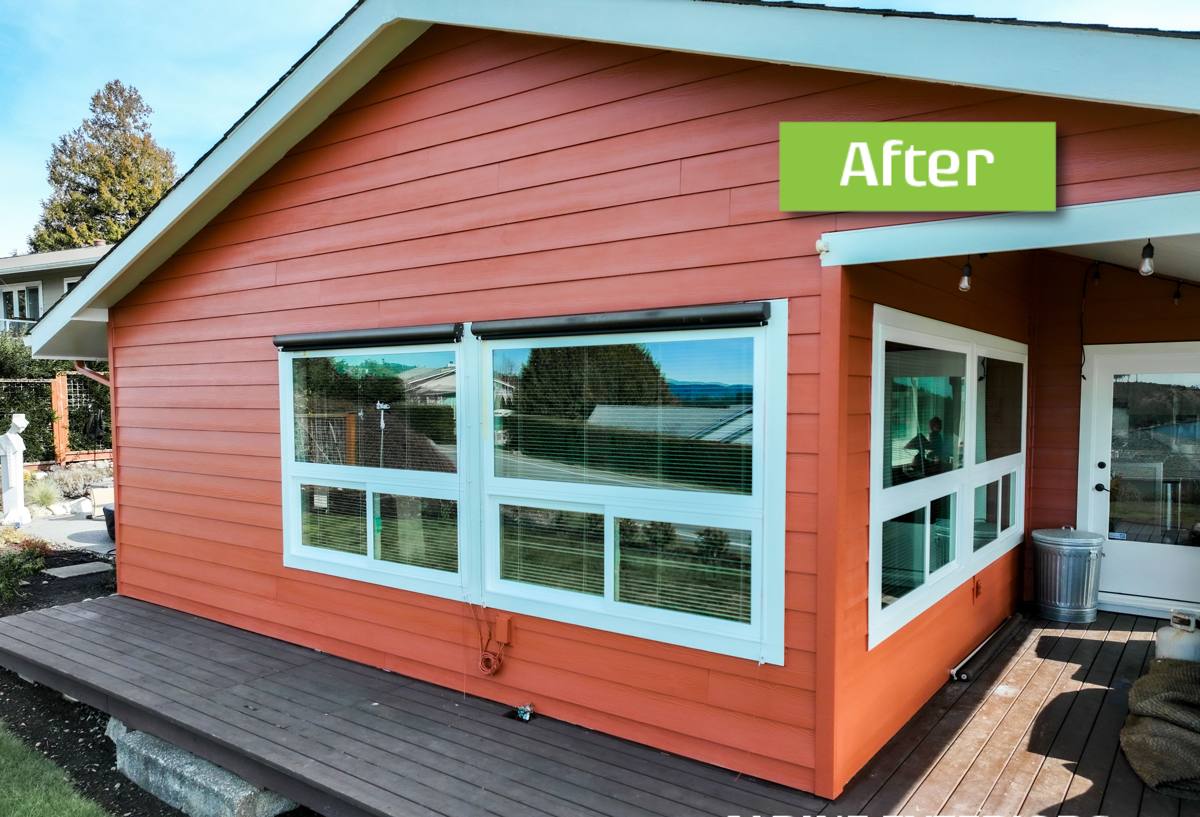
What Happy Valley Homes Actually Need From a Window Job
Whatcom County's marine climate means your walls are almost never completely dry. Relative humidity stays high most of the year, and wind-driven rain pushes moisture into places that would stay dry in a drier climate. A window installation here needs to assume water will get past the outer trim at some point and be engineered to handle that, not just to look tight on a sunny install day.
- Correct flashing sequence at the sill, jambs, and head so water sheds down and out, never inward toward the framing
- Sill pans or sloped sill flashing that give any water that does get in a clear path back outside
- Compatible sealants and flashing tapes — mixing incompatible products is a common cause of early failures
- Weather-resistant barrier integration that laps correctly with the flashing, shingle-style, so gravity does the work
- Frame materials and finishes that hold up to salt-laden air without pitting, chalking, or corroding hardware prematurely
- Attention to moss and organic buildup on adjacent trim and siding, which holds moisture against the wall longer than bare material would
Skip any one of these and the window can look perfect for a year or two before the problem shows itself.
Why Moss Season Matters More Than People Think
A long moss season isn't just a roof and gutter issue. Moss and algae growth on trim boards, window casings, and the siding around window openings holds moisture against those surfaces far longer than they'd stay wet otherwise. Wood trim that's constantly damp softens over time, paint fails faster, and any small gap in the flashing gets more chances to let water in because the surrounding material is wet for more of the year. Part of doing this job right in Happy Valley is choosing trim details and finishes that shed water and dry out quickly, and not creating flat horizontal surfaces around the window where moss and debris can sit.
What a Correct Window Installation Involves
There's a real difference between "the window fits in the hole" and "the window is installed correctly." Here's what we consider non-negotiable on every job, whether it's one window or a whole-house replacement.
Before the Old Window Comes Out
We inspect the rough opening for rot, soft framing, or prior water damage before removing anything. In an older Happy Valley home, this is often where the real story is — a window that looks fine from outside can be sitting in a frame that's been slowly wicking moisture for years. Finding that now, before the new window goes in, is far cheaper than finding it after.
During the Install
The sill gets sloped or pan-flashed so any water that reaches it drains back outside rather than pooling. Flashing tape and building paper get layered in the correct shingle-lap order — bottom pieces overlapped by the ones above, never the reverse. The window gets shimmed and fastened per the manufacturer's specifications so it operates correctly and doesn't bind or sag over time. Insulation goes into the gap between the frame and the rough opening without overpacking, which can bow the frame and cause operational problems.
After the Install
Exterior trim and caulking get finished with products rated for this climate, and interior finish work gets sealed to control air leakage. We walk the job with you before we consider it done, and we're straightforward about what maintenance the window will need going forward — no window is maintenance-free in this climate, and anyone who tells you otherwise is setting you up for a surprise later.
Choosing the Right Window for a Coastal-Influenced Property
Not every window on the market is a good fit for a home exposed to salt air and constant moisture. This isn't about brand loyalty — it's about how different frame materials actually behave over years in this specific environment.
| Frame Material | How It Handles Salt Air & Rain | Trade-Offs to Know |
|---|---|---|
| Vinyl | Resists corrosion well; won't rot or rust from salt exposure | Dark colors can expand/contract more with temperature swings; quality varies widely between manufacturers |
| Fiberglass | Very stable dimensionally, holds paint and finish well against salt and moisture | Higher upfront cost than vinyl |
| Wood (clad or unclad) | Excellent look, but bare wood needs consistent upkeep in this humidity | Cladding on the exterior face is worth the extra cost here; unclad exterior wood is a hard sell for this climate |
| Aluminum | Strong and slim-profile, but bare aluminum can corrode near salt air over time | Look for a quality thermal break and finish rated for coastal exposure |
We'll walk you through what actually makes sense for your home's exposure, your budget, and how the window will be used — a shaded window on a protected wall doesn't need the same spec as one taking direct wind-driven rain.
Cost Factors Worth Understanding
Every home is different, so we won't quote a number without seeing the job, but these are the factors that move the price on most Happy Valley window projects.
| Factor | Why It Matters |
|---|---|
| Rough opening condition | Rot or water damage found during removal adds repair work before the new window can go in |
| Window size and type | Larger units, special shapes, and operable styles (casement, awning) cost more than standard double-hung or slider units |
| Frame material | Vinyl is typically the most economical; fiberglass and clad wood cost more upfront but often last longer in this climate |
| Exterior trim scope | Full trim replacement versus reusing sound existing trim changes both labor and material cost |
| Number of windows | Whole-house projects generally cost less per window than one-off replacements due to shared setup and labor efficiency |
| Access and story height | Second-story or hard-to-access windows take longer and may need additional safety setup |
Our Process Working in Happy Valley
We follow the same sequence on every job because it's the sequence that actually prevents callbacks.
- On-site assessment of your existing windows, framing, and any signs of past water intrusion
- Honest recommendation on repair versus full replacement, and which window products fit your home and budget
- Written estimate with clear scope — what's included, what isn't, and why
- Careful removal with an inspection of the rough opening before anything new goes in
- Correct flashing, sealing, and installation sequence, not shortcuts hidden behind trim
- Final walkthrough with you, plus honest guidance on upkeep specific to our climate
We don't sell you more window than your home needs, and we won't talk you out of a legitimate upgrade either. The goal is a window that performs correctly for Bellingham weather, installed by people who'll still be around locally if you ever have a question about it.
Why Hiring a Crew That Already Works Happy Valley Matters
Window installation done wrong doesn't usually fail on day one — it fails quietly, over a season or two, as water finds the one gap in a flashing detail that was skipped to save time. A crew that works Whatcom County regularly has already seen how these specific conditions — salt air, sustained rain, moss buildup — expose bad installation habits elsewhere in the region. That experience shows up in the small decisions: how the sill pan is shaped, which sealant is compatible with which flashing tape, where extra attention goes on a wall that takes more wind-driven rain than others.
It also matters for accountability. A local contractor is easy to reach if a question comes up two years down the road, and has a reputation in this specific community to stand behind. That's a different relationship than a crew passing through from out of the area for a one-time job.
Signs Your Happy Valley Home May Need Window Attention Now
- Fogging or moisture between the panes of a sealed unit — the seal has failed and it won't clear on its own
- Soft or discolored trim or sill wood around a window frame
- Drafts you can feel around the frame on a windy day, even with the window fully closed and locked
- Difficulty opening, closing, or locking a window that used to operate smoothly
- Visible gaps, cracked caulk, or peeling paint concentrated around the window opening rather than the wall in general
- Moss or dark staining building up on trim or siding directly below a window
Any one of these is worth a look before it becomes a bigger repair. Catching a flashing or sealant issue early is a much smaller job than repairing rotted framing after years of slow leaking.
If you're weighing whether your windows need repair, replacement, or just a closer look, we're happy to come take one. Fill out the form below for a free, no-pressure estimate on your Happy Valley home.