 Bellingham
 Siding That Has to Work Against the Water, Not Just Near It
Blaine sits about as close to the water and the weather it brings as any home in Whatcom County can get. Between Semiahmoo Bay, Drayton Harbor, and the open exposure toward the Strait of Georgia, homes here take a steady diet of salt-laden air, wind-driven rain, and a moss season that runs longer than it does even a few miles inland. Siding that would hold up fine in a more sheltered Bellingham neighborhood can start showing problems years early once it's facing that kind of exposure every day.
This page is about one job on one type of home: installing James Hardie fiber cement siding correctly on a Blaine property, and why we think it's the only product worth putting on a house that has to stand up to this particular stretch of coastline.
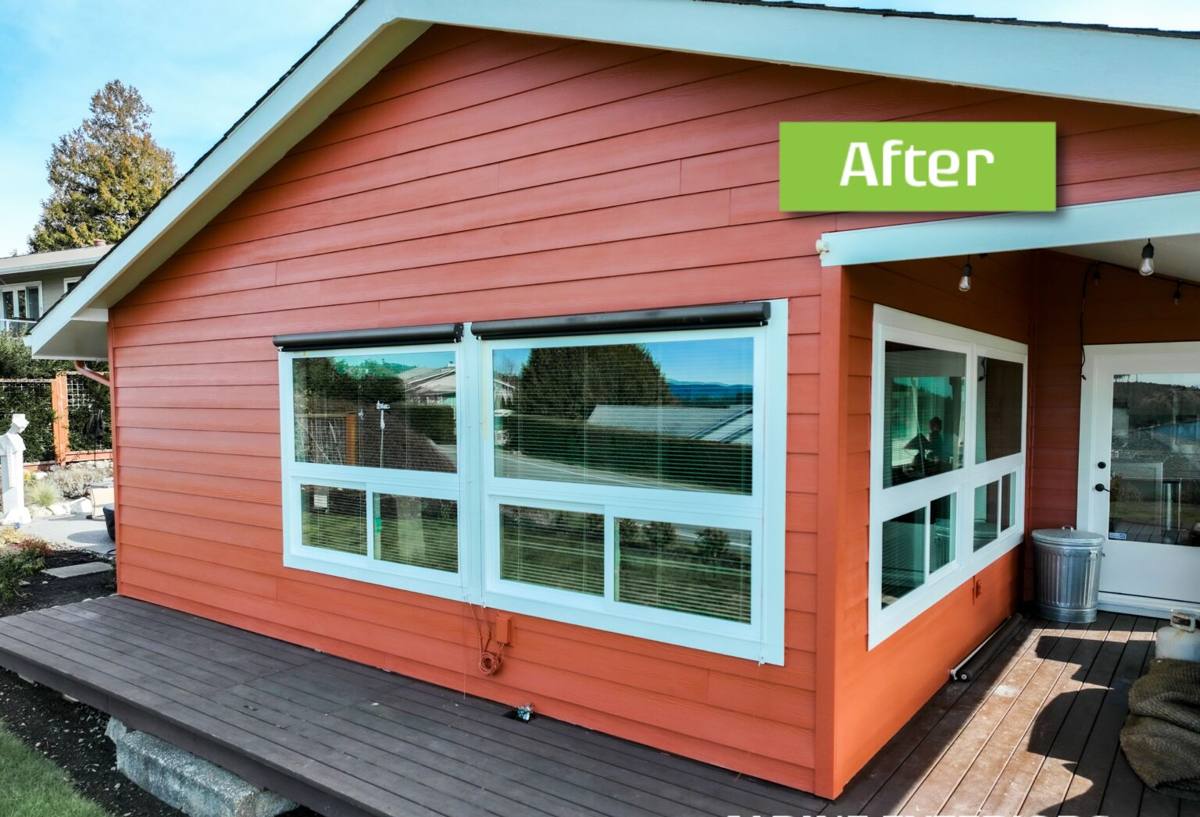
What Blaine's Climate Actually Does to Siding
Salt Air
Airborne salt from the bay doesn't just sit on the surface of a wall — over years it works into seams, fastener heads, and any spot where the finish has been compromised. Bare or under-protected wood trim, exposed fastener heads, and thin coatings all corrode or degrade faster this close to salt water than they would ten or fifteen miles inland.
Driving Rain
Storms coming off the water tend to arrive with wind behind them, which means rain doesn't just fall on Blaine homes — it gets driven sideways into laps, joints, and anywhere the water-resistive barrier or flashing detail is even slightly off. A siding system that depends on perfect caulk lines to stay dry is a bad bet in this location.
A Long Moss Season
Cool, damp, and shaded conditions are exactly what moss and algae need, and Blaine's marine climate gives them a long window to work with — often close to year-round on north-facing or heavily shaded walls. Siding that holds moisture against its surface, or that traps organic debris in its texture, will show green and black staining faster and need more frequent cleaning than a product engineered to shed water and dry out.
Why We Only Install James Hardie Here
We standardized on James Hardie fiber cement for every home we side, and a location like Blaine is a good illustration of why. Hardie's HZ5® and HZ10® engineered product lines are built around the actual climate conditions a house faces — moisture exposure, humidity, and temperature swings — rather than a one-size-fits-all formula. For the marine climate of western Whatcom County, that means a board engineered to handle sustained damp conditions without swelling, delaminating, or losing its shape.
Fiber cement itself is non-combustible and dimensionally stable, so it doesn't expand and contract the way wood-based products do when it cycles between soaked and dry. That matters directly in a place like Blaine, where "soaked and dry" can happen several times a week for months at a stretch.
The factory-applied ColorPlus® finish is just as important as the substrate. It's baked on under controlled conditions, not brushed or sprayed on-site, which gives it more consistent coverage and better resistance to fading and moisture intrusion at the surface than field-applied paint. In a salt-air environment, a factory finish that isn't relying on a homeowner's repainting schedule to stay protective is a real advantage.
What Correct Installation Looks Like on a Blaine Home
Hardie siding is only as good as the installation behind it, and in a high-exposure location the margin for sloppy work is smaller. A correct install includes:
- A properly lapped and sealed water-resistive barrier behind the siding, with no gaps at seams or penetrations
- Correct flashing at every window, door, and roof-to-wall intersection — the details rain actually finds first
- Corrosion-resistant fasteners, sized and spaced to Hardie's published fastening schedule, not generic trim nails
- Proper clearance between the bottom of the siding and grade, decks, or roof lines to keep splash-back and standing moisture away from the board edge
- Factory-cut and factory-primed edges kept intact wherever possible, with any field cuts sealed per Hardie's install guidelines
- Caulk used only where Hardie's instructions call for it — over-caulking joints that are designed to move can trap water instead of shedding it
Skipping any one of these doesn't usually cause an obvious problem on day one. It shows up two, five, or eight years later as staining, rot in the sheathing behind the siding, or premature finish failure — and by then it's a much bigger repair than it would have been to do right the first time.
Fasteners and Hardware: The Detail That Gets Overlooked
This close to salt water, fastener choice deserves its own mention. Standard electro-galvanized nails or screws can start showing corrosion at the head within a few years in a marine exposure like Blaine's, which leads to rust streaking down the face of the siding and eventually a weakened hold. We use fasteners rated for the exposure level of the specific wall — typically stainless steel or heavy hot-dip galvanized — rather than defaulting to whatever is cheapest or most common inland.
Managing Moss and Algae Long-Term
No siding material is immune to moss and algae in a climate like this one, but the combination of Hardie's dense fiber cement substrate and factory finish sheds water and resists staining better than porous or textured alternatives. Beyond the material itself, a few installation and design choices make a real difference over the life of the siding:
- Adequate roof overhangs and gutters that actually direct water away from walls, especially on north and west exposures
- Trimming back vegetation and maintaining a gap between plantings and the siding face so walls can dry between rain events
- Periodic gentle washing — Hardie siding tolerates routine cleaning far better than products that can be damaged by moisture intrusion during a wash
None of this eliminates moss risk entirely on a shaded, water-facing wall, but it's the difference between an occasional cleaning and a siding surface that's constantly staining and holding moisture against the wall assembly.
Our Process for a Blaine Project
- Exterior assessment — we look at existing siding, trim, flashing, and any moisture or rot already present, plus the home's specific exposure (which walls face the water and prevailing wind)
- Tear-off and prep — removal of old siding, inspection and repair of sheathing, and correction of any existing flashing or drainage problems before new material goes up
- Water-resistive barrier and flashing — installed and lapped correctly at every penetration, which matters more here than almost anywhere else in the county
- Hardie installation — lap, panel, or shingle profile installed to Hardie's fastening and clearance specifications, with corrosion-resistant hardware
- Trim, caulking, and finish details — done per manufacturer guidelines, not shortcuts that look fine at handoff but fail early in this exposure
- Final walkthrough — so the homeowner knows what was done and what basic upkeep looks like going forward
Why It Matters That We Already Work in Blaine
A crew that mainly works sheltered inland neighborhoods and occasionally takes a job near the water can miss things that aren't obvious unless you've seen them fail firsthand — how much worse wind-driven rain is on an exposed gable end, how fast moss takes hold on a shaded north wall two blocks from the bay, or which fastener grade actually holds up here versus what holds up fine in a drier part of the county. We work this area regularly, which means the flashing details, fastener choices, and product line decisions on a Blaine home aren't guesswork — they're based on what we've already seen work and not work on homes facing the same exposure.
Cost Factors for a Blaine Siding Project
Every home is different, but these are the main variables that move the price on a James Hardie project in this area:
| Factor | Why It Matters Here |
|---|---|
| Home size and wall complexity | More corners, gables, and dormers mean more flashing and trim detail work |
| Existing siding removal | Tear-off and disposal of old material, plus any sheathing repair it uncovers |
| Product line and profile | Lap, shingle, and panel profiles carry different material and labor costs |
| Fastener and flashing upgrades | Marine-grade hardware costs more than standard, but pays off in an exposure like Blaine's |
| Color and finish selection | Factory ColorPlus finishes vary slightly in cost by color and product line |
| Site access and exposure | Waterfront or high-wind sites can affect scaffolding, scheduling around weather, and safety measures |
We walk every home in person and give a written estimate based on what we actually find — not a phone-quote guess — because the difference between a sheltered wall and an exposed one changes the scope of work more than most homeowners expect.
What a Homeowner Can Check Before Committing
- Ask whether the crew has installed Hardie siding specifically in high-exposure, waterfront, or near-coastal settings — not just inland
- Confirm the fastener type being specified for your home's exposure level
- Ask how flashing will be handled at windows, doors, and roof intersections
- Get the product line and profile in writing, along with the manufacturer's warranty terms
- Make sure the estimate is based on an in-person walk of your home, not a rough phone estimate
If you're weighing a siding project on a Blaine home and want a straight answer on what your walls actually need given their exposure, we're glad to come take a look. The estimate is free, there's no pressure, and you'll get a clear picture of the work and the product before you decide anything — just fill out the form below.