 Bellingham
 Building Decks That Actually Hold Up in Lynden
Lynden sits close enough to the water and far enough into Whatcom County's wet-side weather pattern that a deck built with generic, one-size-fits-all methods rarely ages well here. Salt-tinged air off the Sound, long stretches of driving rain, and a moss season that can run from fall through spring put real stress on outdoor structures. A deck that looks fine the first summer can be hiding soft framing, corroding hardware, or a slick, moss-covered surface within a few years if it wasn't built with this climate in mind.
This page is about one thing: building and replacing decks for homes in and around Lynden, done the way this specific environment demands. Not a generic "deck installation" pitch — the actual construction decisions that matter for a structure that has to survive PNW winters year after year.
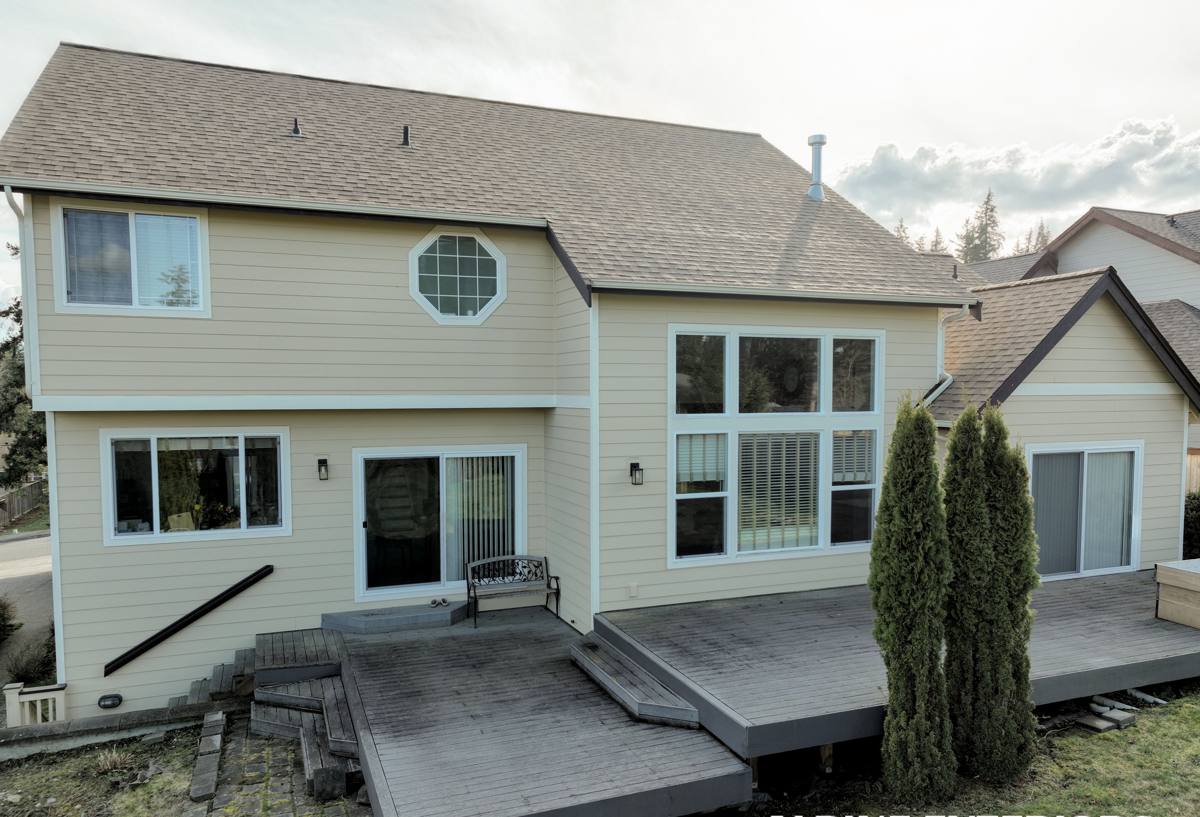
What This Climate Does to an Outdoor Deck Over Time
Before talking about materials or process, it helps to understand what a deck is actually up against out here.
Moisture That Never Really Lets Up
Whatcom County doesn't get brief storms — it gets weeks of low-grade, driving rain that finds its way into any gap in flashing, any exposed end grain, or any joist that wasn't sealed before decking went down. Wood that stays damp for long stretches is what leads to hidden rot, usually starting at the ledger board connection to the house or at joist hangers, long before the surface boards show any obvious damage.
Moss and Algae Growth
A deck surface that stays shaded or doesn't drain well will grow moss and algae here, sometimes within a single wet season. Beyond looking bad, a mossy deck surface is genuinely slippery — this is a safety issue, not just a maintenance annoyance. Board spacing, airflow underneath the deck, and how much sun a spot gets all affect how fast this happens.
Corrosion from Salt Air
Homes closer to the water deal with airborne salt that accelerates corrosion on fasteners, joist hangers, and railing hardware. Standard galvanized screws and connectors can start showing rust and losing strength years before they should. This is one of the most common things we find when we're asked to inspect or rebuild an older deck in this area — the wood is often fine, but the hardware holding it together isn't.
Freeze-Thaw Movement
Whatcom County gets enough freeze-thaw cycling that footings poured too shallow, or without proper drainage around them, can heave or shift slightly over time. That movement telegraphs up through the posts and shows up as a deck that's developed a slope, a bounce, or gaps that weren't there when it was new.
Choosing the Right Decking Material for a Lynden Home
There's no single "best" decking material — there's a best material for your budget, your sun exposure, and how much upkeep you actually want to do. We walk every homeowner through the real trade-offs rather than pushing whatever is easiest for us to install.
| Material | How It Handles This Climate | Maintenance | Typical Lifespan |
|---|---|---|---|
| Composite decking | Resists moisture absorption and rot; doesn't need staining; still needs regular cleaning to prevent moss/algae film | Low — periodic washing | 25–30+ years |
| Cedar | Naturally rot- and insect-resistant when new, but greys and softens faster in constant damp shade | Moderate to high — sealing/staining every 1–2 years | 15–20 years with upkeep |
| Pressure-treated fir/pine | Budget-friendly framing standard; needs consistent sealing on exposed decking surfaces or it checks and cups | High — annual inspection and sealing recommended | 10–15 years for decking surface |
| Tropical hardwoods (e.g., ipe) | Very dense and naturally weather-resistant, but heavy, pricier, and less forgiving to install correctly | Low to moderate | 25+ years |
We install all of these depending on what a homeowner wants, but for most Lynden decks that see real weather exposure, composite has become the practical default for the decking surface — it removes the annual sealing chore that a lot of people fall behind on, and falling behind on sealing is exactly what leads to premature rot in this climate. Pressure-treated lumber still makes sense for the substructure (posts, beams, joists) under almost any decking material.
Framing Material Matters as Much as the Surface
What's underneath the decking boards matters more than what's on top. We use pressure-treated framing rated for ground contact where posts meet footings, and we treat or cap any field-cut ends, since a cut end is where treated lumber loses its protection and starts absorbing water fastest.
What a Properly Built Deck Requires in This Area
A deck that's going to last through Whatcom County winters comes down to a handful of construction details that are easy to skip and expensive to fix later.
- Footings below frost depth — set deep enough and on solid, well-drained soil so freeze-thaw cycles don't shift or heave posts over time.
- Proper ledger board flashing — where the deck attaches to the house, correctly lapped flashing keeps water from tracking behind the siding, which is one of the most common sources of hidden rot in older decks.
- Corrosion-resistant fasteners and hardware — stainless steel or heavy coated hardware rated for the exposure, especially on homes closer to the water where salt air accelerates rust.
- Adequate joist spacing and sizing — sized for the actual span and expected load, not just the minimum that will pass inspection.
- Slope and drainage built into the decking — a slight pitch away from the house so water sheets off instead of pooling on the surface or against the ledger.
- Airflow underneath the deck — enough clearance and ventilation below the joists so the structure can dry out between rain events instead of staying damp.
- Board spacing appropriate to the material — tight enough to be comfortable underfoot, wide enough to let water and debris pass through rather than collecting moss.
Skipping any one of these usually doesn't show up as a problem for a year or two — it shows up as a soft spot, a rusted connector, or a slippery patch three to five winters in, which is exactly the kind of deferred failure that's expensive to trace back and repair.
Permits and Local Building Requirements
Deck construction in Lynden and the surrounding unincorporated parts of Whatcom County is subject to building permit and inspection requirements, particularly for decks attached to the house, decks above a certain height, or any deck with guardrails and stairs. Requirements cover things like footing depth, guardrail height and spacing, stair rise/run, and ledger attachment methods.
We handle the permitting process as part of the job rather than leaving it to the homeowner to figure out. That includes pulling the right permit for the scope of work and coordinating inspections at the framing and final stages. Skipping permits on an attached deck can create real problems later — at resale, with insurance, or if something does fail — so we don't cut that corner even when a homeowner offers to skip it to save time.
How We Build a Deck, Start to Finish
- On-site evaluation — we look at sun exposure, drainage patterns, soil conditions, and how the deck will attach to the house before recommending a design or material.
- Design and material selection — sized and laid out for how the space will actually be used, with a material recommendation based on your budget and how much maintenance you want to take on.
- Permitting — we prepare and submit what's required and schedule inspections at the appropriate stages.
- Footings and framing — footings set below frost depth, posts and beams sized for the span, ledger flashed correctly where the deck meets the house.
- Decking and railing installation — boards and railing installed with corrosion-resistant fasteners and proper spacing for drainage and airflow.
- Final walkthrough and inspection — we walk the finished deck with you, and it passes final inspection before we consider the job done.
- Cleanup — site cleared of debris and offcuts before we leave.
Keeping a Deck Ahead of Moss and Moisture
Even a well-built deck needs some seasonal attention in this climate. This is the maintenance rhythm we recommend to homeowners after a build:
- Sweep and rinse the deck surface regularly through fall and winter to keep wet leaves and debris from sitting on the boards.
- Check for early moss or algae film on shaded sections and clean it off before it gets established — it's far easier to remove early than after it's taken hold.
- Inspect visible fasteners and hardware once a year for rust or corrosion, especially on homes with direct water exposure.
- Keep gutters and downspouts near the deck clear so runoff isn't dumping extra water onto or under the structure.
- For wood decking, reseal or re-stain on the schedule the product calls for — don't let it slide a season or two, since that's when moisture damage gets a foothold.
- Trim back overhanging vegetation that's keeping sections of the deck shaded and slow to dry.
Why Hiring a Crew That Already Works in Lynden Matters
A deck built by a crew unfamiliar with this specific area tends to make the same avoidable mistakes: framing sized like it's going into a drier climate, hardware that's fine for a display home but not for salt air, or a design that ignores where moss is going to become a problem based on sun exposure and layout. We build decks throughout the Lynden area regularly, so footing depths, flashing details, and material choices are dialed in for this weather rather than guessed at.
We also know the local permitting process and inspection expectations, which keeps a project moving instead of stalling on paperwork. That local familiarity is the difference between a deck that needs attention again in five years and one that's still solid in twenty.
If you're planning a new deck or need to replace one that's showing its age, we're happy to take a look and talk through honest options for your property. Request a free, no-pressure estimate using the form below — there's no obligation, just a straight answer on what your deck needs.