 Bellingham
 Why Roof Repair Looks Different in Lynden
Lynden sits inland in the Nooksack River valley, away from the open shoreline that some of our other Whatcom County service areas deal with directly. That doesn't mean the roof is spared, though. Marine air still moves up the valley off the Sound, carrying enough salt-tinged moisture to work on exposed fasteners and flashing metal over the years, even if the exposure is milder than on a waterfront lot. Rain here is frequent and often wind-driven rather than falling straight down, which pushes water into places a roof built for a calmer climate never has to defend. And on shaded or north-facing roof planes, especially where mature trees or nearby farmland keep a section damp, moss and algae get a long growing season that barely lets up most of the year.
A repair on a Lynden roof has to account for all of that, not just patch whatever's visibly broken. This page focuses specifically on roof repair — not a full tear-off and replacement — and covers what actually causes repair calls out here, how we tell a cosmetic issue from a real problem, what a correct repair job involves, and why hiring a crew that already works this valley changes the outcome.
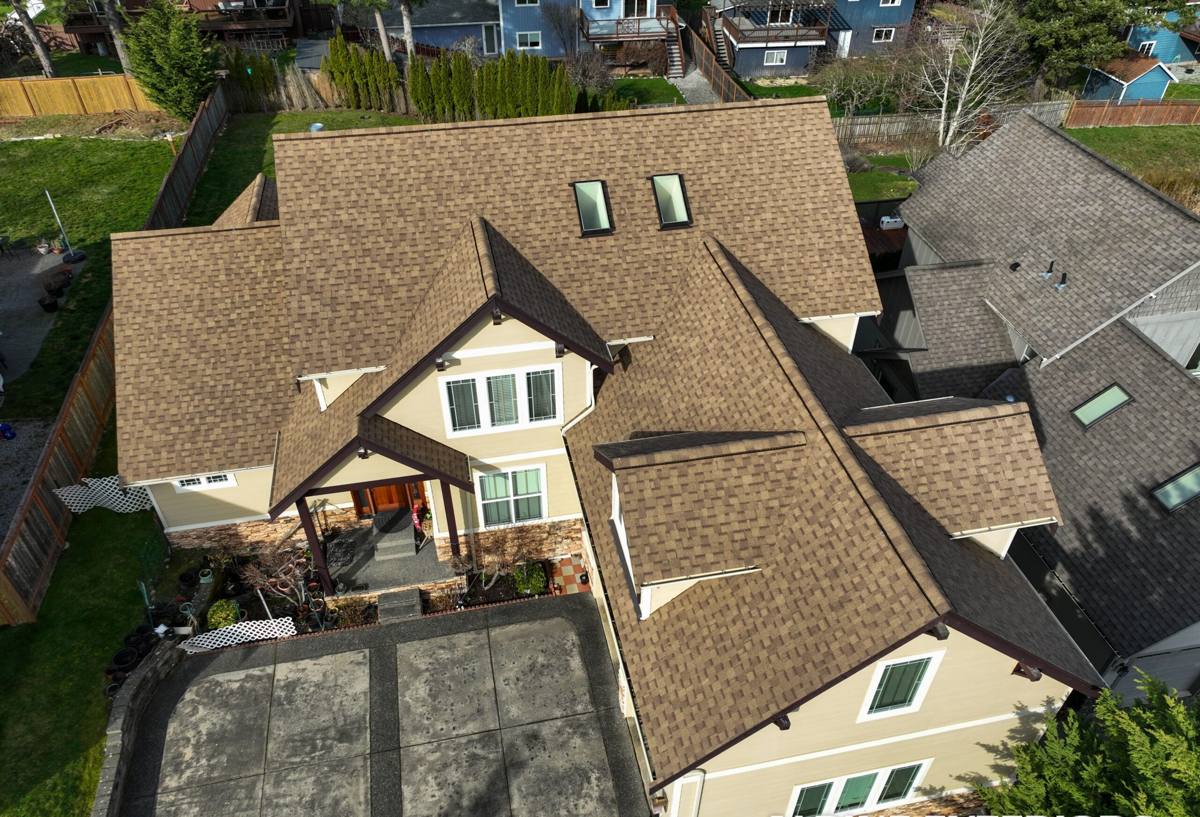
What Actually Damages Lynden Roofs
Moss and Trapped Moisture
Moss doesn't just sit on a roof looking bad. It holds water against the shingle surface long after the rest of the roof has dried out, and as it spreads it works its way under shingle tabs and lifts edges that are supposed to stay sealed against each other. Shaded slopes, valleys, and anything under overhanging trees hold onto that moisture the longest, and those are consistently the sections where we find the earliest repair-worthy damage.
Wind-Driven Valley Rain
Rain moving up the Nooksack valley doesn't always arrive straight down. Wind pushes it sideways into roof valleys, up under shingle tabs, and around penetrations like vent pipes and chimneys. That's a different, harder load than a simple rainfall total suggests, and it's exactly where flashing that's slightly out of position or underlayment that's past its service life tends to let water through first.
Flashing and Detail Failures
In our repair work, the shingles themselves are rarely the actual point of failure. Leaks trace back to flashing far more often — around chimneys, at wall-to-roof transitions, in valleys, and at any pipe or vent penetration. Flashing that's lifted, cracked at the sealant line, or was never lapped correctly in the first place is one of the most common single causes of a callback, and it's often a quick, contained repair once it's correctly identified.
Granule Loss and Aging Shingles
Asphalt shingles shed their protective granules as they age, and the rate speeds up on a roof that stays damp more often than it fully dries. Granule loss shows up first as bald-looking patches and as grit collecting in gutters, and it means the shingle underneath has less UV and moisture protection than it did originally. Caught early, this is a monitoring situation. Left alone through another wet season, it turns into cracked or curling shingles that need actual repair.
Cosmetic Wear vs. a Roof Problem That Needs Attention Now
Not everything that looks bad on a roof is urgent, and not everything urgent looks dramatic from the ground. Telling the two apart correctly is the actual point of a repair estimate.
| What You're Seeing | Usually Cosmetic | Often Needs Repair Soon |
|---|---|---|
| Light moss on a shaded slope | Yes, if shingles underneath are still flat and intact | If moss has visibly lifted shingle edges |
| Granules collecting in the gutter | Some granule loss is normal with age | Heavy, sudden loss or bald patches on the shingle face |
| A few missing shingles after wind | Rarely, unless it's a single isolated tab | Usually — exposed underlayment fails fast if left |
| Discoloration or streaking | Often algae staining, mostly cosmetic | If paired with soft spots or curling |
| Water stain on an interior ceiling | No | Yes — active or past leak, needs tracing now |
| Flashing that looks lifted or rusted | No | Yes — common leak point, worth prompt attention |
The cosmetic column can usually wait for a scheduled visit. The right-hand column is worth a call sooner rather than later, especially heading into the wetter months, because water finds the smallest gap and the damage underneath a roof deck is almost always further along than what's visible from outside.
How We Diagnose a Roof Before Recommending Repair
A repair estimate that's actually useful starts with a real look at the roof, not a guess based on age or a quick glance from the driveway. That typically includes:
- Walking the roof surface to check shingle condition, granule loss, and moss or algae spread slope by slope
- Inspecting flashing at every valley, chimney, vent pipe, and roof-to-wall transition, since that's where most leaks in this climate start
- Checking the attic or roof deck from underneath for water staining, daylight, or damp insulation that points to an active leak location
- Probing any soft-feeling area of the deck to see whether the damage is limited to the surface or has reached the wood underneath
- Reviewing gutter and downspout condition, since backed-up water at the eaves is a common cause of edge and fascia damage that gets blamed on the roof itself
- Checking ventilation, since trapped moisture under the deck accelerates rot and moss growth from underneath at the same time weather works on the roof from above
We walk through what we find in plain terms — what needs attention now, what can be monitored, and what's simply cosmetic — before we recommend any scope of work.
Repair or Replace: How That Decision Actually Gets Made
Most roof problems in Lynden are a repair, not a reason to replace the whole roof, and we don't default to recommending the bigger job. The honest factors that actually drive this call:
- How much of the roof is affected. A localized leak at one valley or chimney on an otherwise sound roof is usually a straightforward, contained repair.
- Age relative to the roof's expected life. A roof several years past its rated lifespan with moss damage spread across multiple slopes is often better addressed with replacement than another round of patching.
- Condition of the deck underneath. Isolated soft spots can be repaired and sistered in. Widespread deck moisture damage usually means the surface repair won't hold for long regardless of the shingles used.
- How many prior repairs the roof has already had. A roof that's been patched repeatedly in the same area is telling you something about a recurring cause that a fourth patch won't fix.
We'll explain what category a given roof falls into and why, including when replacement is genuinely the more sensible option, rather than steering toward whichever job is bigger.
What a Correct Roof Repair Involves
Matching Materials to What's Already There
A repair means working with the shingle type, profile, and often the color that's already on the roof. Exact color matches get harder the longer a roof has been weathering in the sun, and some shingle lines get discontinued entirely. We'll tell you upfront if an exact match isn't realistic rather than after the work is done, and talk through whether a close match, a full slope replacement, or a different visible location for the repair makes more sense.
Flashing Repaired to the Same Standard as New Work
Since flashing is where most of our repair calls actually originate, we don't treat it as a minor add-on to a shingle patch. Valley, chimney, and penetration flashing gets rebuilt and lapped correctly, with new sealant where needed, rather than a bead of caulk over the old metal. That distinction is usually the difference between a repair that holds for years and one that needs redoing next wet season.
Addressing the Cause, Not Just the Symptom
A cracked shingle or a stained ceiling is a symptom. Trapped moisture from poor ventilation, a gutter that's been backing up, or a flashing detail that was never sealed correctly is usually the actual cause. Replacing only the visible damage without correcting what caused it tends to bring the same problem back, often in the same spot.
Moss and Debris Removal Without Damaging the Roof
Moss needs to come off, but scraping or pressure-washing it aggressively can strip granules and shorten a shingle's remaining life faster than the moss itself would have. We remove growth and debris using methods that don't damage the surface underneath, and where it makes sense, we'll talk about zinc or copper strip installation at the ridge to slow regrowth on chronically shaded slopes.
Maintenance That Extends a Repair's Lifespan
- Clear gutters and downspouts before the fall rains arrive, since backed-up water at the eaves is one of the most common causes of repeat repair calls
- Trim back tree limbs that keep a roof section shaded and damp longer than the rest of the roof
- Have moss removed before it spreads across a whole slope, not after shingle edges have already lifted
- Walk the attic once or twice a year to check for staining, damp insulation, or daylight around vent pipes and chimneys
- Address a repair as soon as it's found rather than waiting through another wet season, since flashing and deck damage rarely improve on their own
- Keep an eye on any area that's been repaired before, since a spot that's failed once is worth watching more closely than the rest of the roof
Why It Matters That We Already Work Lynden
A crew that repairs roofs across this valley through every season knows which slopes in a place like Lynden hold moss longest because of tree cover and orientation, how much wind-driven rain a given valley or wall transition actually sees, and which flashing details are worth the extra time so a repair doesn't come back in two years. That's different from knowledge that comes from a data sheet or a one-time visit. It also means understanding the difference between an inland valley roof and a waterfront roof, and not applying the same fix to both just because they're both asphalt shingle.
That local familiarity also shows up in the estimate itself — a more accurate first read on what a roof actually needs, with fewer surprises once the work is underway, because the inspection accounted for how this specific climate behaves rather than following a generic checklist.
Get a Free, No-Pressure Estimate
Whether you're dealing with a specific leak, storm damage, moss that's gotten out of hand, or you just want a straight read on where your Lynden roof stands, we're glad to take a look and tell you honestly what it needs — including if the answer is "not much yet." Reach out using the form below to schedule a free, no-pressure estimate.