 Bellingham
 Why Puget-Area Decks Wear Out Faster Than the Rest of the House
If you own a home in the Puget area near Bellingham, you already know your deck takes a beating that the siding and roof don't see in quite the same way. It sits low, it's horizontal, and it's exposed to standing water, foot traffic, and direct weather from every angle. Add in the salt-tinged air that rolls in off the water, driving rain that doesn't just fall but blows sideways into ledger boards and fastener heads, and a moss season that can run from early fall through late spring, and you have a structure that ages on a completely different clock than the rest of your house.
Most deck failures we see in this area aren't dramatic. They're slow — a soft spot near a post base, a railing that's started to flex, fasteners bleeding rust through the boards. By the time it's obvious, the damage has usually been building for a season or two. Catching it early is the difference between a repair and a rebuild.
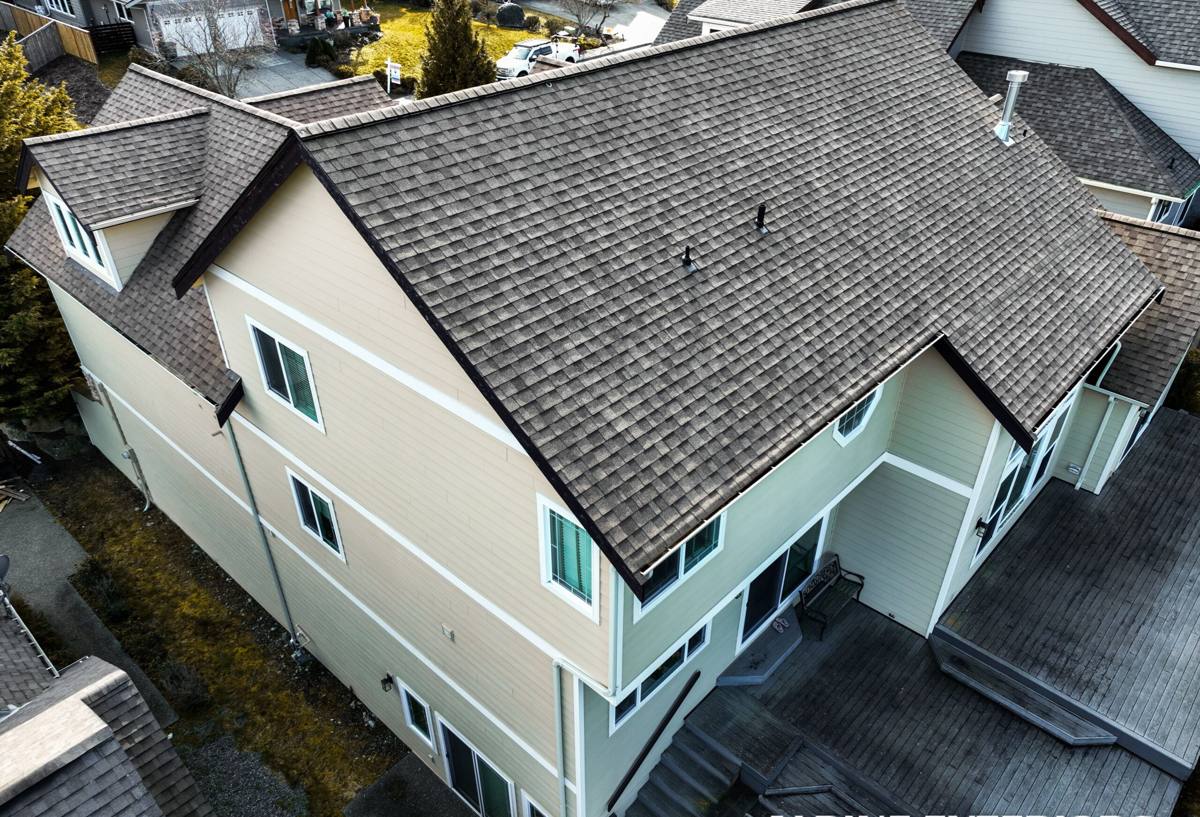
What Whatcom County Weather Does to a Deck
Three things drive almost every deck repair call we get in the Puget area, and they compound each other:
- Salt air: Even homes set back from the water pick up airborne salt that accelerates corrosion on fasteners, hardware, and metal flashing. Once a fastener starts rusting, it weakens from the inside long before you see a visible problem on the surface.
- Driving rain: Rain here rarely falls straight down. Wind-driven rain gets pushed under railings, into end grain, and behind ledger boards where it doesn't dry out between storms. Wood that stays damp for weeks at a time is wood that rots.
- Extended moss season: Shaded, north-facing, or tree-covered decks in and around Puget can hold moss for most of the year. Moss doesn't just look bad — it traps moisture directly against the decking surface and accelerates softwood decay underneath it.
None of these three things is unusual on its own. What's unusual is how long the combined wet season runs here compared to most of the country, which means decks in this region need a repair standard built for sustained moisture exposure, not just occasional rain.
Signs Your Deck Needs Repair, Not Just a Cleaning
A power wash and a fresh coat of sealant can hide a lot of problems for a season, but they don't fix them. Here's what tells us a deck needs actual repair work rather than routine maintenance:
- Boards that feel spongy, springy, or noticeably softer than the boards around them
- Rust streaking below fastener heads or hardware
- Railings or posts that move when you push on them by hand
- Gaps opening up where the deck meets the house (ledger board separation)
- Persistent moss or algae that comes back within weeks of cleaning
- Visible daylight or soft wood where a post meets its footing
- Stair stringers that flex or feel uneven underfoot
Any one of these on its own might be minor. Two or three together usually means moisture has been getting into the structure for a while, and it's worth having someone look underneath before it's a safety issue rather than a maintenance issue.
What a Correct Deck Repair Actually Involves
Structural framing first
Before anything cosmetic happens, we check the framing — joists, beams, posts, and footings. A deck can look fine on top and still have a compromised structure underneath. This is where most of the real risk lives, and it's the part that gets skipped when a repair is done too fast or too cheap.
Decking boards and fasteners
We replace boards that are soft, split, or cupping rather than just flipping or resurfacing them. Fasteners matter as much as the boards themselves — using the wrong grade of screw or nail in a salt-air environment is how a "repaired" deck starts bleeding rust again within a year.
Railings and guards
Railing systems take constant hand pressure and lateral wind load. A railing that wiggles isn't just annoying, it's often a sign the post attachment has failed. This is a life-safety item, not a cosmetic one, and we treat it that way.
Flashing and the ledger connection
The point where the deck attaches to the house is the single most common source of hidden rot we find in this region. Proper flashing keeps water from tracking behind the ledger board and into the house framing itself — this is often the most important, least visible part of a correct repair.
Repair vs. Replace: How We Help You Decide
Not every deck with problems needs to come down. The table below covers the factors we actually weigh when we're standing on your deck deciding what makes sense.
| Factor | Repair Likely Makes Sense | Replacement Likely Makes Sense |
|---|---|---|
| Framing condition | Solid, dry, isolated soft spots | Widespread rot in joists, beams, or posts |
| Age of structure | Under 15-20 years, built to code | Older, undersized, or non-compliant framing |
| Extent of damage | Localized to a few boards or one area | Damage spread across multiple systems |
| Ledger/flashing condition | Intact, properly flashed | Failed flashing with house-side water intrusion |
| Footings and posts | Sound, properly set | Undersized, shifting, or rotted at grade |
| Budget goal | Extend usable life affordably | Reset the clock, upgrade materials |
Most decks we're called out to in the Puget area fall into the repair category — targeted work on the areas actually failing, leaving the sound structure alone. Full replacement is the right call less often than people expect, but when the framing itself is compromised, patching around it isn't a real fix.
Our Deck Repair Process
- On-site inspection: We get under the deck, not just on top of it. Framing, footings, and the ledger connection get checked before we talk about surface repairs.
- Honest scope: We tell you what's actually failing versus what's cosmetic, and what happens if each item is left alone.
- Written estimate: Clear line items, no vague allowances, so you know what you're paying for and why.
- Repair work: Structural fixes first, then decking, railings, and finish work — in that order, every time.
- Weather-appropriate finish: Sealants and coatings chosen for our wet season, not a generic national product line.
- Walkthrough: We show you what was done and what to watch for going forward, including moss-prone areas that will need periodic attention.
Materials: Wood, Composite, and What We Actually Recommend
There's no universally "best" decking material — there's a best material for your specific deck, its exposure, and your maintenance appetite. Pressure-treated lumber is affordable and repairable board-by-board, but it needs regular sealing to perform well through our wet season. Cedar looks great and resists rot naturally, but it's softer and shows wear faster underfoot. Composite decking cuts down on maintenance and resists moss better than bare wood, but it's a bigger upfront cost, and not every composite product handles our freeze-thaw and moisture cycle equally well — installation sensitivity and proper ventilation underneath matter more with composite than with wood.
Our standard is to match the material to what the deck actually needs rather than pushing whatever's easiest to install. For a repair, that often means matching existing lumber so new boards weather in evenly. For a larger rebuild, it's a real conversation about your maintenance tolerance and budget, not a sales pitch for the highest-margin product.
A Maintenance Checklist for Puget Homeowners
Between repairs, a little seasonal attention goes a long way in this climate. Homeowners who stay ahead of these items tend to get years more life out of a deck before major repair is needed:
- Sweep leaves and debris off the deck surface regularly through fall — trapped debris holds moisture against the boards
- Treat moss and algae as soon as it appears rather than waiting for spring cleaning
- Check railings and stair posts by hand for movement a couple times a year
- Look under the deck after heavy rain for standing water or damp framing
- Reseal or re-stain wood decking on the manufacturer's recommended cycle — don't stretch it because it "still looks fine" on top
- Keep gutters and downspouts near the deck clear so runoff isn't dumping directly onto it
- Trim back vegetation that's shading the deck and slowing it from drying out between storms
Why It Matters to Hire a Crew That Already Works in Puget
Deck repair isn't a one-size-fits-all trade. A contractor who mostly works drier inland areas may not think twice about ledger flashing detail or fastener grade — and in a lot of the country, it genuinely doesn't matter as much. Here, it does. A crew that already works the Puget area and greater Bellingham knows which fasteners hold up against salt air, which spots on a typical lot stay shaded and moss-prone longest, and how to flash a ledger board so water doesn't end up in your house framing instead of your yard. That local pattern recognition is what keeps a repair from becoming a repeat repair in two years.
If your deck has soft spots, a wobbly railing, moss that won't quit, or you just want an honest opinion on repair versus replacement, we're glad to take a look. Reach out for a free, no-pressure estimate using the form below — we'll walk the deck with you and tell you straight what it needs.