 Bellingham
 Siding in the Puget Area Has a Specific Job to Do
Homes in and around the Puget area of Bellingham sit close enough to Bellingham Bay and the greater Puget Sound that salt-laden air is a constant, low-grade stressor on exterior building materials. Add in Whatcom County's long stretch of driving, wind-pushed rain and a moss season that can run most of the year on shaded or north-facing walls, and you have a climate that is genuinely harder on siding than most of the country deals with. This isn't a page about siding in general — it's about what James Hardie fiber cement siding needs to look like, and be installed like, on a home in this specific pocket of Bellingham.
A lot of siding failures we get called out to inspect aren't failures of the product itself. They're failures of a product that was never engineered for, or installed for, this kind of weather. That distinction matters a lot when you're deciding what to put on your house and who you hire to put it there.
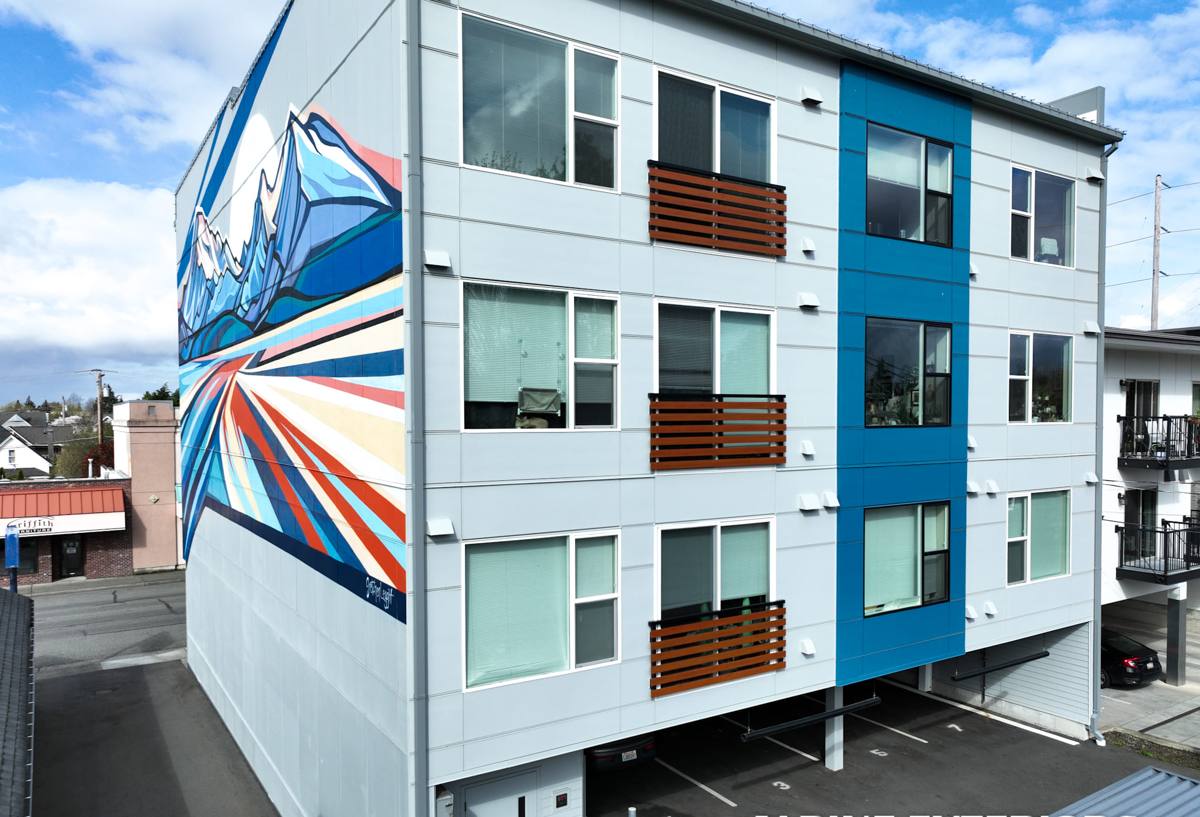
What Salt Air, Rain, and Moss Actually Do to a Wall
Salt air and metal fasteners
Airborne salt accelerates corrosion on anything metal — nail heads, flashing, trim fasteners. On a home a short distance from the water, an exterior that relies on standard fasteners or thin, unprotected flashing will show rust streaks and fastener failure years before it would inland. This is a material-selection issue as much as an installation issue.
Driving rain and wall assembly
Rain in this region doesn't just fall straight down — wind pushes it sideways into laps, seams, and trim joints. A siding assembly that isn't detailed to shed and drain that water, not just block it, will eventually let moisture behind the cladding. Once that happens, the problem stops being cosmetic and starts being structural.
Moss, algae, and shaded walls
Bellingham's tree cover and long damp season give moss and algae a long runway, especially on north- and west-facing walls that don't get much direct sun. Porous or absorbent siding materials hold moisture longer and give organic growth something to root into. Siding that stays drier, faster, after a storm has a real advantage here.
Why We Standardized on James Hardie for This Climate
James Hardie fiber cement is engineered in regional formulations, and the HZ5 line is built for exactly this kind of climate — wetter, cooler, higher humidity. It's non-combustible, doesn't absorb water the way wood-based or wood-composite siding products do, and the ColorPlus factory finish is baked on under controlled conditions rather than field-applied, which matters when you're trying to get consistent, long-lasting color performance in a place that doesn't get a lot of dry install days. We install Hardie because it's the product we can put our name behind for this specific set of conditions, not because it's the only siding on the market.
Product lines that fit Puget-area homes
- HardiePlank lap siding — the most common choice for full re-sides; available in smooth and cedar-textured finishes, sheds water well when lapped and flashed correctly.
- HardiePanel vertical siding — often used on accent walls, gables, or modern-style homes; needs careful joint detailing since vertical seams see more direct rain exposure.
- HardieShingle — a straight-edge or staggered shingle profile for homes going for a more traditional Pacific Northwest look, without the moisture absorption of real wood shingles.
- HardieTrim — engineered trim boards for corners, window and door casings, and fascia; matters more than people expect because trim end-cuts and joints are where water intrusion usually starts.
What a Correct Install Looks Like Here
Fiber cement siding is only as good as the assembly behind it. In a climate with this much wind-driven rain, the details that don't show once the job is done are the ones that determine whether it lasts.
| Detail | Why It Matters in This Climate | What We Do |
|---|---|---|
| Rainscreen gap behind siding | Lets any moisture that gets past the cladding drain and dry instead of sitting against the sheathing | Furring or a drainage mat, per Hardie's wet-climate installation guidance |
| Flashing at windows, doors, and penetrations | These are the highest-risk points for wind-driven rain intrusion | Properly lapped, sealed flashing installed before siding goes on, not caulked over after |
| Fastener corrosion resistance | Salt air corrodes standard fasteners faster near the water | Corrosion-resistant fasteners specified per Hardie's fastening requirements |
| Kick-out flashing at roof-wall intersections | Without it, roof runoff dumps directly into the wall assembly | Installed at every roof-to-wall termination, not just where code inspectors happen to look |
| Caulk and sealant joints | Poor-quality or misapplied sealant fails first in a wet climate, and failure is invisible until there's damage behind it | Sealant used only where Hardie's install spec calls for it — not as a substitute for proper flashing |
| Bottom clearance and drainage | Standing water at grade or on lower decks feeds moss and accelerates deterioration | Minimum clearances maintained from grade, decks, and roofing per manufacturer spec |
Our Process for a Puget-Area Job
1. Walk the exterior first
Before we talk product or price, we look at sun exposure, shading, wind exposure relative to the water, existing moisture damage, and how the current siding has actually performed. A wall that's held up fine on the south side of a house often tells a different story than the north side.
2. Check what's underneath
On a re-side, we're not just swapping the outer layer. We check sheathing condition, existing flashing, and whether a drainage plane needs to be added or corrected before new siding goes on. Covering a moisture problem with new siding doesn't fix it — it hides it.
3. Spec the assembly, not just the product
We confirm HZ5 product selection, fastener type, flashing details, and rainscreen approach based on that specific wall's exposure — a heavily shaded, water-facing wall gets treated differently than a sheltered, south-facing one.
4. Install to Hardie's published specifications
Nail placement, gapping, clearances, and flashing sequence follow Hardie's installation manual, not shortcuts that speed up the schedule but shorten the lifespan.
5. Final walkthrough
We go over the finished job with the homeowner, including what routine maintenance actually looks like for this climate — not a generic checklist, but what this house specifically needs.
Maintenance That Actually Matters in a Salt-Air, Moss-Prone Climate
James Hardie siding is low-maintenance, not no-maintenance. In this environment, a little attention goes a long way toward protecting the investment.
- Rinse salt residue and grime off the exterior once or twice a year, especially on walls facing open water or prevailing wind
- Keep gutters and downspouts clear so roof runoff isn't dumping onto siding or pooling at the base of walls
- Trim back vegetation and tree limbs that keep a wall shaded and damp longer than it needs to be
- Inspect caulking at trim joints and penetrations every couple of years — sealant is a wear item, siding isn't
- Address moss or algae growth early with a gentle wash rather than pressure-washing, which can force water behind laps and trim
- Watch for any soft spots, staining, or bubbling paint near grade level, decks, or roof intersections — these are early signs of a moisture path that needs attention
Why a Crew That Already Works This Area Matters
Installing Hardie correctly on a home a few blocks from the water is a different job than installing it on a dry inland lot, even within the same city. A crew that regularly works the Puget area of Bellingham has already seen how wind and rain move across these lots, which orientations take the worst weathering, and where local permitting and inspection expectations land for fiber cement re-sides. That experience shows up in the small decisions — where extra flashing gets added, how a rainscreen gap is detailed at a tricky roofline, which fastener spec actually holds up near the water — that a generic install crew working from a national playbook can miss.
It also means less guesswork on your end. You're not the test case for how this product performs in this climate; we've already installed it, maintained relationships with the product line, and adjusted our approach based on what actually holds up here versus what looks fine on paper.
Get a Straight Answer for Your Home
If you're weighing a re-side in the Puget area and want to know what your specific walls actually need — not a generic estimate — we're glad to take a look. The estimate is free, there's no pressure, and you'll get a straight answer about what correct James Hardie installation looks like for your home's exposure and condition.