 Bellingham
 Siding Repair in Barkley: A Different Climate Challenge
Barkley sits close enough to Bellingham Bay and the broader Puget Sound airflow that its homes take on a specific mix of weather stress: salt-tinged marine air, wind-driven rain that comes in sideways off the water, and a moss season that can stretch from October well into spring. None of that is unique to Barkley alone, but it's a real and constant load on exterior siding, and it shapes what a proper repair needs to look like here. A patch job that would hold up fine in a dry inland climate can fail within a season or two in Whatcom County if it doesn't account for how this area actually behaves.
This page covers siding repair specifically for Barkley homes — what typically goes wrong, how to tell a cosmetic issue from a structural one, what a correct repair involves, and why local experience matters as much as the repair itself.
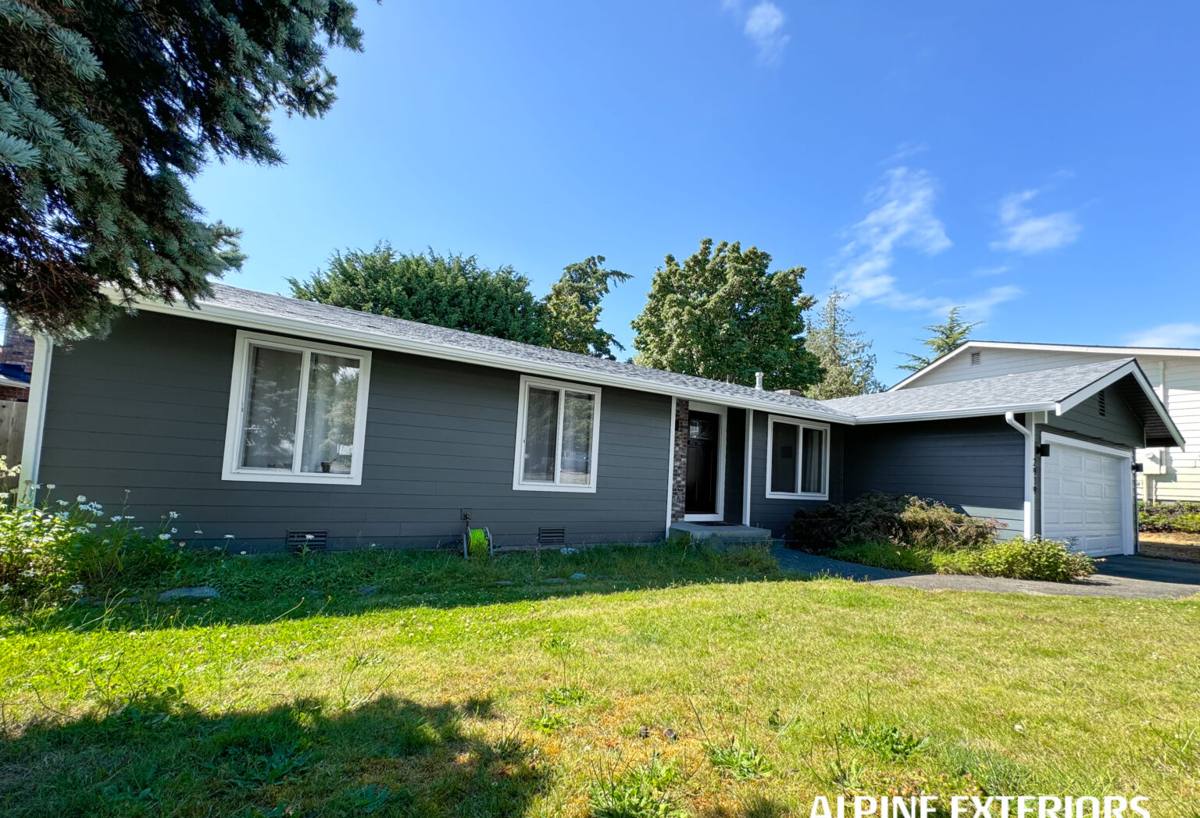
How Bellingham's Climate Wears Down Siding in Barkley
Salt Air and Coastal Moisture
Homes closer to Bellingham Bay deal with airborne salt that accelerates corrosion on fasteners, flashing, and any exposed metal trim. Over time this shows up as rust streaking, loosened nails, and premature breakdown of caulk and sealants that were never rated for a marine-influenced environment.
Driving Rain and Wind-Driven Wetting
Whatcom County doesn't just get a lot of rain — it gets a lot of rain pushed sideways by wind off the water. That matters because siding is designed primarily to shed water running downward, not water being forced up under laps and behind trim. Wind-driven rain finds every weak seam, and repeated wetting-and-drying cycles are what eventually rot wood substrates and swell composite panels that weren't installed with the right clearances.
The Long Moss Season
Shaded north- and east-facing walls, overhanging trees, and the region's damp, mild winters give moss and algae months at a time to establish themselves on siding surfaces. Beyond the cosmetic green-black staining, moss holds moisture directly against the siding surface far longer than open air would, which is exactly the condition that breaks down paint finishes and, on wood-based products, softens the substrate underneath.
Signs Your Barkley Home Needs Siding Repair
Most siding problems don't announce themselves as an emergency — they show up as small visual cues first. Homeowners who catch these early usually end up with a repair instead of a much larger project.
- Soft or spongy spots when you press on a panel or board, especially near the bottom courses
- Persistent dark or greenish staining that comes back quickly after cleaning
- Visible gaps, cracks, or buckling in panels, especially after a windstorm
- Peeling or bubbling paint, particularly on south- and west-facing walls that take the most sun-to-rain cycling
- Caulk that has pulled away, cracked, or gone brittle at trim boards, corners, and window edges
- Rust streaking below nail heads or metal flashing
- Interior signs — a musty smell, discolored drywall, or bubbling paint on an exterior-facing wall — that suggest moisture has already gotten past the siding
Common Repair Issues We See on Barkley Siding
Barkley has a mix of housing ages and siding materials, so repair calls vary. A few patterns show up consistently in this climate:
Trim and corner failures. These are the first places water gets in because they rely on caulk and flashing rather than the siding's own water-shedding design. Once that seal fails, moisture works its way behind the cladding before it's ever visible from outside.
Moss and algae staining that keeps returning. A one-time cleaning rarely solves this if the underlying moisture source — poor drainage, overhanging shade, a clogged gutter dumping water onto a wall — isn't addressed at the same time.
Warped, cracked, or delaminating panels. This is especially common on older wood-based or engineered wood siding that has taken on repeated moisture cycles over the years. Fiber cement products handle this kind of cycling far better, which is part of why we've standardized on it.
Impact damage. Storms, falling branches, and accidental impacts crack or dent individual panels. These are usually straightforward repairs, but matching the replacement piece correctly is where the job is won or lost.
Repair or Replace? How We Help You Decide
Not every damaged section needs a full re-side, and we don't push replacement when a targeted repair will genuinely hold up. The honest answer depends on how widespread the damage is, what's causing it, and how much useful life the rest of the siding has left.
| Factor | Repair usually makes sense | Replacement is the better call |
|---|---|---|
| Extent of damage | Isolated to one or a few panels/sections | Spread across multiple walls or the whole home |
| Underlying material | Sound siding with a localized failure point | Widespread rot, delamination, or repeated past repairs |
| Moisture history | Single identifiable cause (one bad seal, one impact) | Chronic moisture intrusion behind large sections |
| Age of siding | Well within expected service life | At or past the end of its practical lifespan |
| Color/material match | Close, workable match available | No reasonable match exists; patchwork would look obvious |
When a home is genuinely a repair candidate, we say so. When the damage points to a bigger underlying problem, we'll walk you through why and what a full re-side with James Hardie fiber cement would look like — but that's a recommendation, not a default.
What a Correct Siding Repair Actually Involves
Diagnosing the Real Cause
Cutting out a damaged panel and nailing in a new one isn't a repair if the reason it failed in the first place — bad flashing, a missing drip cap, siding installed too close to grade or a deck surface — is left in place. We trace the water path before we touch the siding itself.
Matching Materials and Finish
A repair that's visually obvious from the sidewalk isn't a good repair. Wherever possible, we match panel profile, exposure, and finish so the repaired section reads as part of the wall, not a patch on it. On James Hardie ColorPlus siding, this is more reliable than on repainted or field-finished materials, because the factory finish is consistent panel to panel.
Sealing and Flashing Details
Correct repair work restores proper flashing and drainage paths, not just caulk over the gap. Caulk is a backup seal, not the primary defense — if a repair depends entirely on a bead of sealant to keep water out, it's going to fail again in this climate.
Our Siding Repair Process
- On-site assessment. We inspect the damaged area and the surrounding siding, checking for moisture intrusion beyond what's visible on the surface.
- Root-cause diagnosis. We identify why the failure happened — impact, flashing failure, chronic moisture, material breakdown — so the repair actually solves the problem.
- Honest scope recommendation. We tell you plainly whether this is a repair or whether the damage indicates a larger issue worth addressing now.
- Material sourcing and matching. We source replacement material to match existing panels as closely as possible, or discuss options if an exact match isn't realistic.
- Repair and re-sealing. We replace the damaged section, correct any flashing or drainage issues found, and finish with proper sealing details.
- Final walkthrough. We review the completed work with you before considering the job done.
Why We Rebuild With James Hardie When Repair Isn't Enough
When damage is extensive enough that repair no longer makes sense, we only install James Hardie fiber cement siding — we don't offer vinyl, LP SmartSide, or other engineered wood or fiber cement alternatives. That's a deliberate standard, not a sales default, and it's especially relevant in a climate like Bellingham's.
Fiber cement is non-combustible and doesn't absorb and swell with moisture the way wood-based products can, which matters directly in a climate defined by long wet seasons and prolonged moss exposure. James Hardie's HZ5 product line is engineered specifically for climates that see significant moisture and freeze-thaw cycling, and the factory-applied ColorPlus finish is baked on under controlled conditions rather than field-applied, which means better long-term color retention and a stronger bond than site-applied paint. It also carries a strong transferable warranty, which matters to homeowners thinking about resale. We won't tell you every other product is worthless — each has genuine strengths — but we've made a professional judgment that Hardie is what holds up best to what this specific climate does to a house over years, not just the first season.
Why Hiring a Crew That Already Works in Barkley Matters
Siding repair is diagnostic work as much as it is installation work, and local exposure conditions change the diagnosis. A crew that regularly works Bellingham and Whatcom County homes recognizes the difference between ordinary weathering and the early signs of chronic moisture intrusion that this climate produces. They also know which wall orientations tend to take the worst of the driving rain and moss buildup in this specific area, which shortens the time it takes to find the actual cause of a problem instead of just patching the symptom.
There's also a practical scheduling reality: Whatcom County's weather window for exterior repair work is narrower than in drier climates, and a crew that plans around that reliably shows up and finishes rather than leaving a project half-done through a wet stretch.
Protecting Your Investment: Ongoing Maintenance
A well-executed repair still needs basic upkeep to get its full useful life out of it, especially in a climate this demanding on exterior surfaces.
- Keep gutters clear so water isn't dumping directly onto siding or pooling at the base of a wall
- Trim back vegetation that shades siding and traps moisture against it
- Rinse moss- and algae-prone walls periodically rather than waiting for heavy buildup
- Re-caulk trim and penetration points on a normal maintenance cycle — don't wait for visible gaps
- Walk the exterior after major windstorms to catch impact damage early
- Address small issues (a lifted panel, a cracked caulk line) promptly rather than letting them sit through a wet season
Get an Honest Assessment for Your Barkley Home
If you're seeing moss buildup, cracked panels, or signs of moisture behind your siding, it's worth having someone look at it before a small problem becomes a bigger one. We'll give you a straightforward read on whether your home needs a repair or something more, with no pressure either way. Reach out for a free estimate and we'll take it from there.