 Bellingham
 Siding Replacement Built for South Hill's Climate
South Hill sits up on the rise south of downtown Bellingham, and that elevation cuts both ways. Homes up here often catch better light and views than the flats below, but they also take a harder hit from the weather rolling in off Bellingham Bay and the Salish Sea. Wind-driven rain, salt-laden air, and the long, damp moss season that defines a Whatcom County winter all land on these houses with more force than they do a few blocks down toward the water's edge, and the siding is the first thing that has to absorb it.
Older siding materials in this neighborhood — original cedar lap, T1-11 panels, aging vinyl — were rarely installed with today's water-management detailing, and decades of that exposure show up as soft trim, streaked paint, moss creeping up from the ground line, and soffit staining that never quite goes away no matter how often it's cleaned. Replacing siding here isn't just a cosmetic refresh; it's a chance to correct the water path around the whole house before the sheathing underneath starts paying the price.
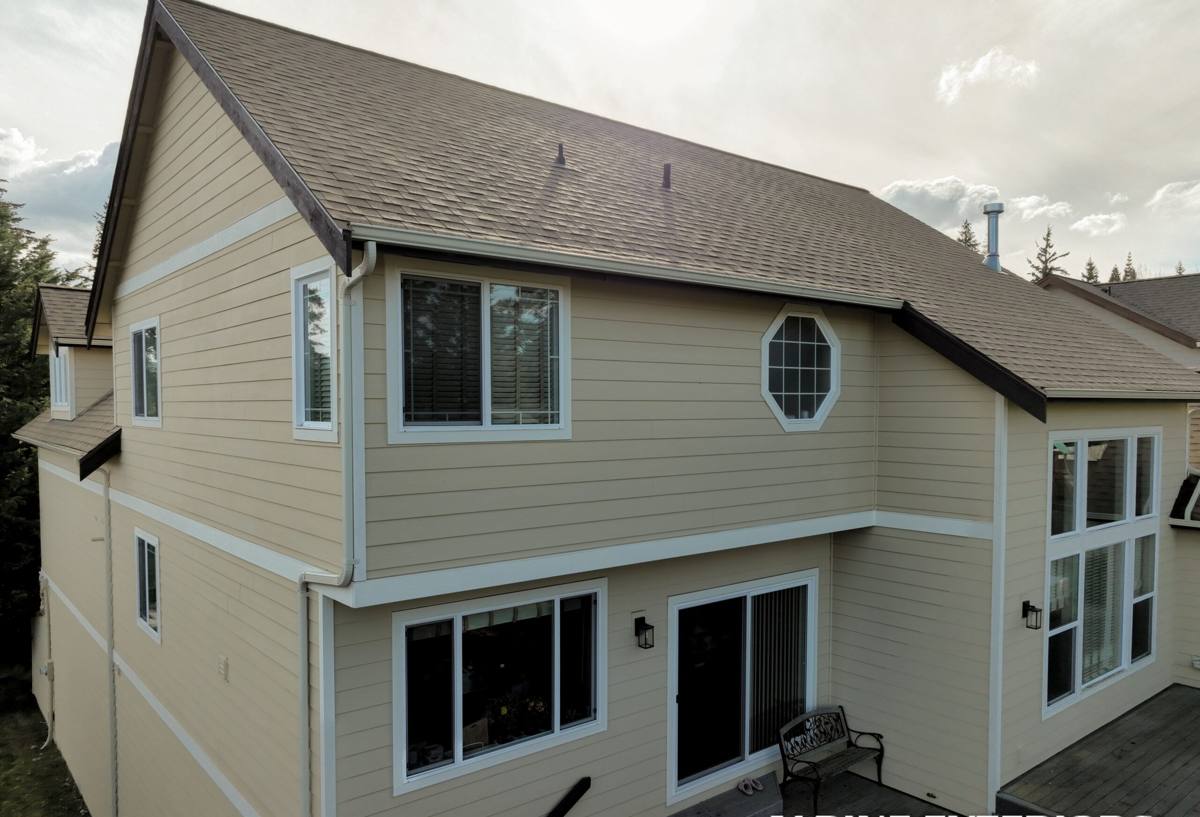
Signs a South Hill Home Needs Siding Replacement
Because South Hill's older housing stock spans several building eras, the wear patterns vary — but the underlying cause is almost always moisture that had nowhere good to go. Before assuming a section can just be patched, walk the exterior and look for these warning signs:
- Soft or spongy spots when you press on lap siding or trim, especially near ground level and under windows
- Moss or black-green streaking that returns within a season of being cleaned
- Paint that's bubbling, peeling in sheets, or failing faster on the north and west-facing walls
- Visible gaps, warping, or cupping in wood or composite panels
- Cracked or chalky vinyl that's become brittle in cold weather
- Rising utility bills alongside drafts near exterior walls
- Interior drywall or trim staining on an exterior wall, a sign moisture has already worked its way through
Any one of these on its own might be a minor repair. Two or three together, especially on a home more than 15–20 years past its last full re-side, usually mean the underlying water barrier has failed and patch repairs will just chase the problem around the house.
Why Hillside Exposure Accelerates Wear
Homes set higher on South Hill are more exposed to sustained wind than sheltered lots closer to sea level, which pushes rain sideways into laps, seams, and trim joints that were only ever designed to shed water moving straight down. That same wind carries salt off the bay, which speeds up corrosion on fasteners and metal flashing and leaves a fine residue that holds moisture against the siding surface longer than it should sit there.
What a Correct Siding Replacement Actually Involves
A siding replacement done right is a full building-envelope job, not just swapping old boards for new ones. Skipping any of the steps below is exactly how a ten-year-old re-side ends up with the same rot problems as the original siding.
- Full tear-off and inspection — removing the old siding down to the sheathing so it can actually be checked for rot, soft spots, or prior water damage instead of guessing from the outside
- Sheathing repair — replacing any compromised OSB or plywood found underneath before anything new goes back on
- Weather-resistive barrier — installing a correctly lapped house wrap or building paper that actually drains water down and out rather than trapping it
- Flashing at every penetration — windows, doors, hose bibs, light fixtures, and vents all need proper flashing and sealant, not just caulk smeared over the gap
- Rainscreen or furring where called for — a small air gap behind the siding lets any moisture that does get in dry out instead of sitting against the wall
- Correct fastening and lap spacing — following the manufacturer's nailing pattern and clearance specs, which is where a lot of shortcut installs go wrong
- Trim, caulking, and finish work — the details that determine whether the house looks finished and sheds water at every joint
Every one of those steps matters more on an exposed hillside lot than it does in a sheltered valley location, because there's simply more wind-driven water trying to find a way in.
Comparing Siding Materials for a South Hill Home
Homeowners in this neighborhood often ask us to explain why we point them toward one material over another. Here's an honest side-by-side of how common options actually perform under Bellingham's coastal, moss-prone conditions:
| Material | Moisture Behavior | Maintenance | Typical Lifespan Here |
|---|---|---|---|
| Vinyl | Doesn't rot, but seams and J-channel let water track behind it; can crack in freeze-thaw cycles | Low, but repainting isn't possible if it fades or cracks | 15–25 years |
| Cedar/wood | Attractive but absorbs moisture readily; needs a sound finish to hold up to driving rain | High — regular refinishing and moss treatment | 10–20 years without diligent upkeep |
| LP SmartSide (engineered wood) | Better than raw wood but still wood-based; edges and cut ends are vulnerable if not fully sealed | Moderate — repainting and edge sealing over time | 20–30 years with proper maintenance |
| James Hardie fiber cement | Doesn't absorb water like wood, resists moss growth, factory finish sheds rain rather than soaking it in | Low — occasional rinse, no refinishing needed for the length of the ColorPlus warranty | 30+ years |
None of these products is without trade-offs, and we're upfront that fiber cement costs more upfront than vinyl and takes more installation skill than engineered wood panels. But for a hillside home catching the full brunt of Whatcom County's wet season, the moisture performance and low upkeep are what tip the decision for most South Hill homeowners.
Why We Install Only James Hardie Fiber Cement
We made the decision to standardize on James Hardie siding, and we don't install vinyl, LP SmartSide, Cemplank, Allura, primed spruce, or bare cedar. That's not a knock on every homeowner who has one of those products on their house now — it's a statement about what we're willing to warranty our workmanship against for the long term on homes exposed to this climate.
Fiber cement is non-combustible, which matters as much for peace of mind as for insurance considerations. Hardie's HZ5 product line is engineered specifically for wetter, cooler climates like ours, with a formulation designed to resist moisture damage and moss growth better than standard product lines built for drier regions. The factory-applied ColorPlus finish is baked on under controlled conditions, which gives it more consistent coverage and better fade resistance than field-applied paint — and it comes backed by a substantial, transferable warranty that follows the house if it sells.
We won't pretend fiber cement is the right call for every situation. It's heavier to install, requires specific fastening and cutting techniques, and costs more than vinyl or basic wood panel products. But on a lot exposed to salt air and driving rain, those installation demands are exactly why the payoff is worth it — a wall assembly that's still doing its job two and three decades down the road.
What Affects the Cost of Siding Replacement on South Hill
Every home is different, and we won't quote a number without seeing the house, but these are the factors that most commonly move the price up or down on South Hill projects specifically:
| Factor | Why It Matters |
|---|---|
| Home age and original siding type | Older homes may have hidden sheathing damage that isn't visible until tear-off begins |
| Number of stories and roof lines | Steeper hillside lots and multi-story facades take more staging and labor time |
| Access and site layout | Narrow driveways, retaining walls, and sloped yards common on hillside lots can slow material staging |
| Amount of trim and architectural detail | Window casings, corner boards, and fascia detail add labor beyond flat wall coverage |
| Extent of rot or water damage found | Sheathing and framing repairs discovered during tear-off are priced separately from the base job |
| Siding profile and color | Custom ColorPlus colors and specialty profiles (shingle-style, board-and-batten) run higher than standard lap |
Our Process for South Hill Homeowners
Working on hillside lots has taught us to plan the logistics before the crew ever shows up with material. Our process for a South Hill siding replacement typically looks like this:
- An in-person estimate and exterior walkthrough, checking trim, flashing, and known trouble spots specific to the home's age and siding type
- A written scope covering tear-off, sheathing repair allowances, weather barrier, flashing, and finish details — no vague line items
- Site setup that accounts for hillside access, slope, and protecting landscaping during material staging
- Full tear-off with an on-the-spot inspection of sheathing before anything is closed back up
- Installation to Hardie's fastening and clearance specifications, not shortcuts that void the manufacturer warranty
- A final walkthrough with the homeowner before we consider the job finished
Why Hiring a Crew That Already Works South Hill Matters
South Hill's mix of older homes, hillside grades, and coastal exposure means a crew that mainly works flat, newer subdivisions can miss things that are second nature to a crew that's already dealt with this neighborhood's quirks — how far moss creeps up a north wall by February, where wind-driven rain tends to find old flashing, how much extra care a steep lot needs during material staging. A crew that already knows the terrain plans the job better and catches problems earlier, before they turn into change orders.
If your siding is showing its age, or you just want an honest opinion on whether it's a repair or a replacement, we're happy to take a look. Reach out for a free, no-pressure estimate using the form below.