 Bellingham
 South Hill's Siding Climate: Salt Air, Driving Rain, and a Long Moss Season
South Hill sits up and away from the water, but it doesn't escape Bellingham Bay's influence. Homes here catch salt-tinged air moving in off the bay, take driving rain straight off the water during winter storms, and sit under tree canopy for much of the year that keeps siding damp long after a storm passes. That combination is hard on exterior materials. Salt air accelerates corrosion on fasteners and trim. Driving rain finds every gap in flashing and caulking. And shade plus moisture is exactly what moss, algae, and mildew need to take hold on a wall.
None of this is unique to one street or one style of house. It's a neighborhood-wide condition, and it's the reason siding material and installation quality matter more here than they would in a drier, more sheltered part of Whatcom County. Fiber cement siding, installed correctly, is built to handle this. Vinyl, primed wood, and some of the lower-tier composite products are not — not because they're bad products in general, but because they weren't engineered for this specific mix of salt, rain, and shade.
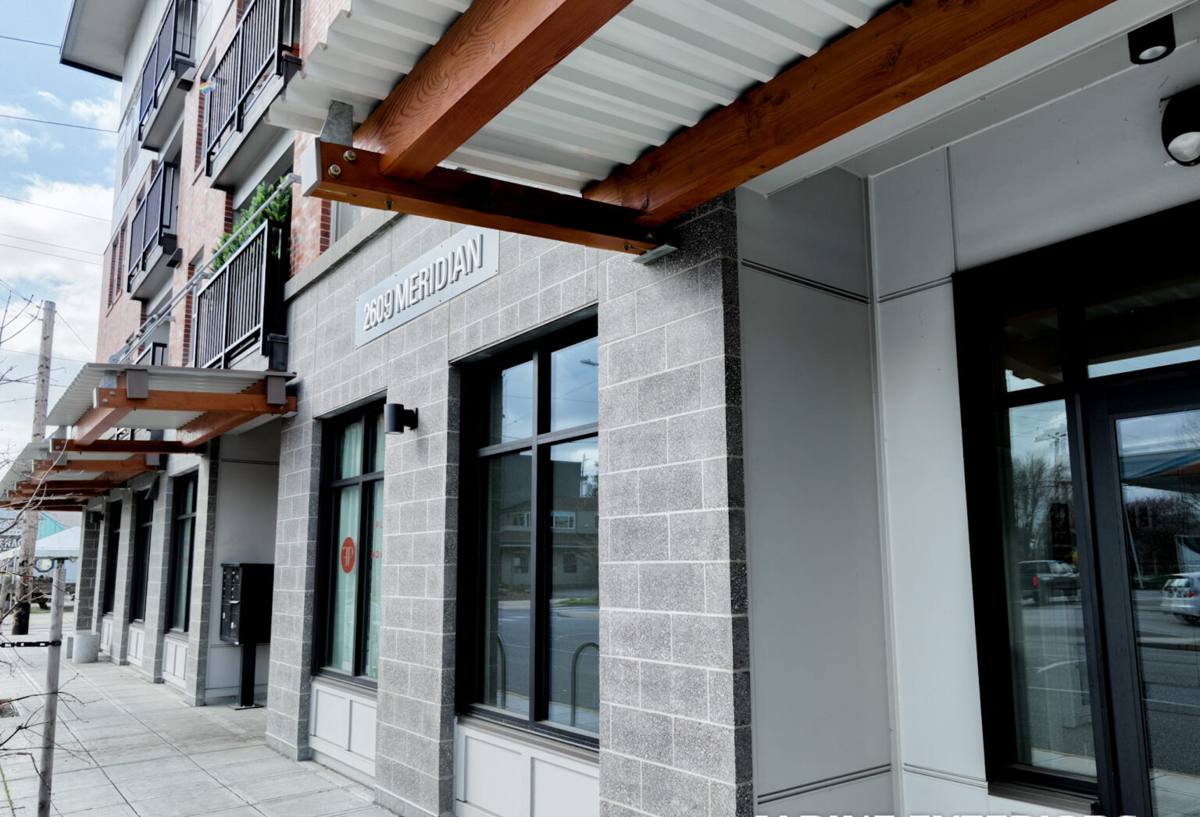
Why Fiber Cement Fits South Hill's Housing Stock
South Hill has a mix of older homes with real architectural character alongside newer infill construction, and both benefit from fiber cement for different reasons.
Older and Character Homes
Homes with existing trim detail, wood siding profiles, or a historic look need a replacement material that holds paint-matched or factory-matched color without warping, cupping, or telegraphing seams the way old wood siding does once it's been patched and repainted a few times. Fiber cement mills into lap, shingle, and panel profiles that read as traditional siding, not a plastic substitute.
Newer Construction
Newer builds on the hill are often more exposed to wind and rain during storm events simply because of elevation and less mature landscaping. These homes need a rain-resistant assembly from day one, not a material that's forgiving of a sloppy install. Fiber cement gives that margin — but only when it's installed with the moisture management details this climate demands, which we cover below.
What a Correct Fiber Cement Job Requires Here
Fiber cement siding fails prematurely almost never because of the board itself — it fails because of what's behind it or around it. In a salt-air, high-rainfall neighborhood like South Hill, these details aren't optional extras. They're the job.
- Rainscreen gap: A drainage space between the siding and the weather-resistive barrier lets any water that gets past the siding drain and dry instead of sitting against the wall sheathing.
- Correct flashing at every penetration: Windows, doors, hose bibs, light fixtures, and vents all need flashing that sheds water down and out, not sideways into the wall assembly.
- Proper fastener spec: In a salt-air environment, fastener corrosion resistance matters more than it does further inland. We use fasteners rated for the exposure, not whatever is cheapest.
- Manufacturer-spec gaps and clearances: Board-to-board gaps, ground clearance, and clearance at roof lines follow James Hardie's published install specs — skipping these is the single most common cause of moisture problems in fiber cement siding.
- Caulking only where it belongs: Caulk is a backup, not a primary water barrier. Over-reliance on caulk instead of flashing is a shortcut that fails once the caulk ages, which happens faster in constant damp.
This is also where a lot of fiber cement installations go wrong industry-wide — not because the crew used the wrong siding, but because they installed it like vinyl or wood lap without adjusting for fiber cement's specific requirements.
The James Hardie System We Install
We install James Hardie fiber cement exclusively. We don't offer LP SmartSide, vinyl, Cemplank, Allura, or primed wood siding as alternatives, and we're upfront about why: those products each carry real trade-offs in moisture behavior, maintenance burden, or long-term appearance that we don't think hold up well in a marine climate like Whatcom County's. James Hardie is what we've standardized on because the product line, the factory finish, and the warranty structure line up with what South Hill's climate actually demands.
| Feature | What It Means for South Hill |
|---|---|
| HZ5 climate-engineered formulation | Built for wet, freeze-prone marine climates rather than a generic national spec |
| Non-combustible fiber cement core | Doesn't rely on paint film alone to resist moisture and doesn't warp like wood |
| ColorPlus factory finish | Baked-on finish resists fading and holds up to salt air better than field-applied paint |
| Engineered-for-climate profiles | Lap, shingle, and panel options that match traditional South Hill home styles |
| Transferable limited warranty | Protects the investment if the home changes hands, which matters for resale on the hill |
ColorPlus finishes in particular matter in this neighborhood. A factory-cured finish resists the fading and chalking that field-applied paint shows first under UV and salt exposure, which means fewer repaint cycles over the life of the siding.
Our Process, Start to Finish
The process is the same whether the job is a full re-side or a partial replacement after storm or moisture damage.
- On-site assessment: We look at the existing siding, sheathing condition, and any signs of past moisture intrusion around windows, roof lines, and grade level — issues that are common on older South Hill homes with decades of wood siding history.
- Tear-off and sheathing check: We remove existing siding down to the sheathing and address any rot or damage found before anything new goes up. Covering a moisture problem instead of fixing it is how re-sides fail early.
- Weather-resistive barrier and rainscreen install: This is the layer that actually keeps water out long-term, and it goes in before a single piece of Hardie board is hung.
- Flashing at every penetration: Windows, doors, and fixtures get flashed to shed water outward, matched to this climate's rain load.
- Hardie board installation to spec: Gaps, fastener pattern, and clearances follow James Hardie's published requirements, not shortcuts.
- Trim, caulk, and paint touch-up: Final detailing at seams and transitions, using caulk as a backup layer rather than a primary barrier.
- Walkthrough: We go over the finished work with the homeowner before calling the job done.
What Drives Cost on a South Hill Siding Job
Every home is different, and we won't quote a number without seeing the house, but these are the factors that most affect the estimate on a typical South Hill project.
| Factor | Why It Matters |
|---|---|
| Home size and wall complexity | More corners, gables, and dormers mean more cutting, flashing, and labor time |
| Current siding removal | Multiple layers of old siding or hidden rot add tear-off and repair time |
| Sheathing repair needed | Storm-driven moisture intrusion sometimes means replacing sections of sheathing before new siding goes on |
| Product line and profile | Lap, shingle, and panel Hardie profiles carry different material costs |
| Access and site conditions | Slope, tree cover, and setback on hillside lots can affect staging and labor time |
Living With Fiber Cement Siding in a Moss-Prone Neighborhood
Fiber cement doesn't rot or absorb water the way wood does, but no siding is maintenance-free in a shaded, damp neighborhood like South Hill. A little routine care keeps it looking right and protects the warranty.
- Rinse siding down once or twice a year, especially on shaded, north-facing walls where moss and algae take hold fastest.
- Keep gutters clear so overflow doesn't run down the siding face repeatedly in one spot.
- Trim back vegetation that's shading a wall and keeping it damp longer than the rest of the house.
- Check caulking at trim and penetrations every couple of years and have it renewed if it's cracking or pulling away.
- Address any impact damage promptly — a cracked board is a moisture entry point once the factory finish is broken.
Why Hiring a Crew That Already Works South Hill Matters
Siding installation isn't identical everywhere in Whatcom County, and it isn't identical everywhere in Bellingham either. A crew that regularly works South Hill has already seen how the hill's elevation and exposure drive wind-driven rain against walls, how quickly north-facing and shaded sections grow moss, and where older homes in this specific area tend to have hidden moisture issues behind original siding. That familiarity shows up in the details — where extra flashing attention goes, which wall orientations need the most careful sealing, and what to expect once tear-off starts. It's the difference between a crew following a generic install checklist and a crew that's installed Hardie siding on this exact terrain before.
If you're weighing a full re-side or need to address a section of siding showing wear, we're happy to take a look and give you a straight, no-pressure estimate — no obligation, and no pressure to sign anything on the spot. Use the form below to get started.