 Bellingham
 Why South Hill Roofs Wear Differently
South Hill sits up above downtown Bellingham, close enough to the bay to catch salt-laden wind off the water and shaded in enough spots by mature tree canopy that moss gets a running start every fall. That combination — elevation, wind exposure, and tree cover — is a different set of stresses than a flat, open-lot roof gets in other parts of Whatcom County. Add in the neighborhood's mix of older homes with original framing and newer builds with tighter attic spaces, and you get roofs that can look fine from the street while quietly failing underneath.
We're not guessing at what Bellingham roofs need. We work on South Hill regularly, and the pattern repeats: shingles that granulate early from constant damp-dry cycling, moss lifting tabs at the edges, and valleys that hold water longer than they should because the original flashing wasn't built for this much rain volume. A roof replacement done right here accounts for all of that — not just the shingle on top, but everything underneath it.
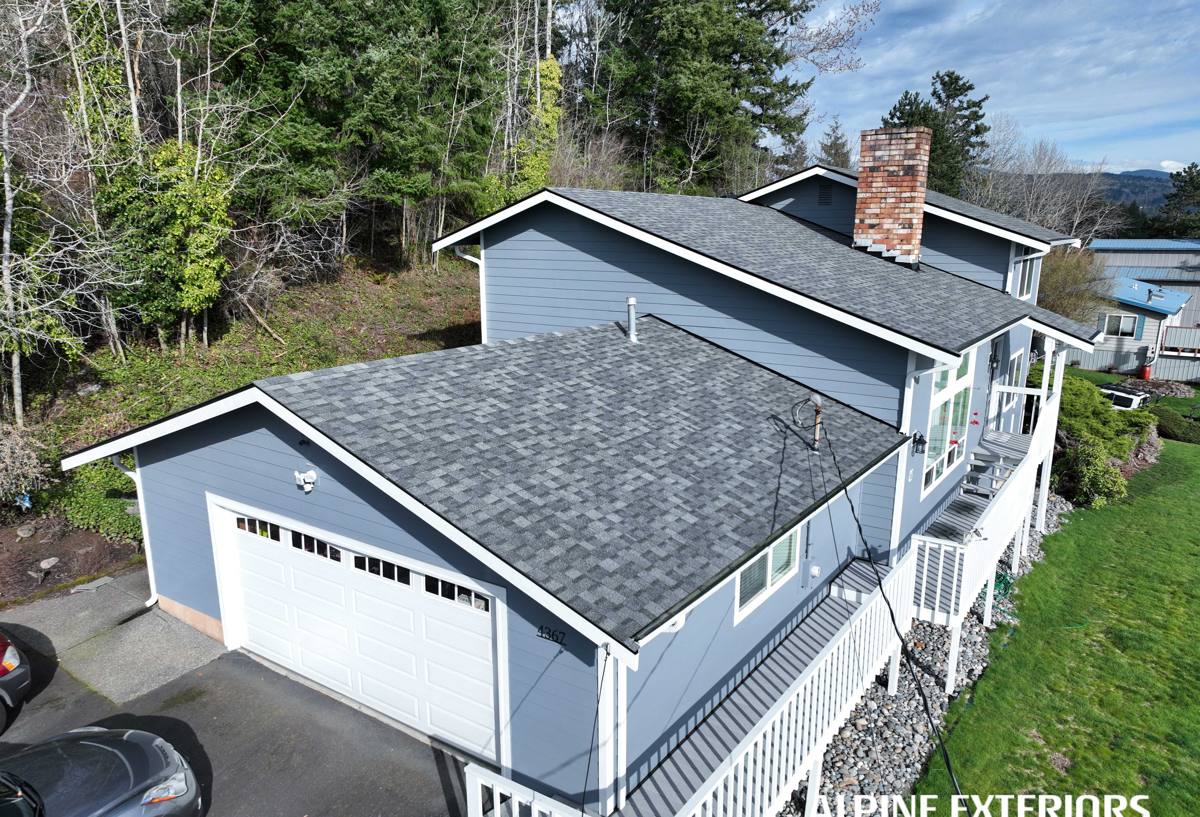
Signs a South Hill Roof Has Reached Replacement, Not Repair
Most roofs give warning signs well before a leak shows up inside the house. On South Hill, we look for a specific set of clues tied to the local climate:
- Moss growth that comes back within a season or two of cleaning, especially on north-facing slopes or under tree cover
- Granule loss heavy enough that gutters fill with grit after every rain
- Curling, cupping, or cracked shingles, particularly on slopes that get the most wind off the bay
- Soft or spongy decking felt underfoot during inspection, a sign moisture has worked past the shingle layer
- Daylight visible through the attic roof boards, or damp insulation near the ridge
- Flashing around chimneys, skylights, and valleys that's rusted, lifted, or was never properly step-flashed to begin with
- A roof past 20-25 years old on asphalt shingle, even if it "looks okay" from the ground
Any one of these can sometimes be handled with a repair. Two or three together, especially on a roof already past its expected lifespan, usually means repair costs start stacking up toward what a full replacement would run — and a patched-together roof still has all the same aging material everywhere you didn't touch.
What a Correct Replacement Involves on a South Hill Home
Full Tear-Off, Not a Layer-Over
We remove the existing roofing down to the deck rather than layering new shingles over old. Layering hides deck damage, traps moisture, and voids most manufacturer warranties outright. On a climate like ours, where the deck itself can be quietly rotting under a moss-covered roof, skipping the tear-off means skipping the one step that actually tells you what's going on underneath.
Deck Inspection and Repair
Once the old roofing is off, we inspect the sheathing for soft spots, delamination, or rot — common where moss has held moisture against the roof for years. Any bad sections get replaced before anything new goes down. This is the step that gets skipped by crews trying to move fast, and it's the one that determines whether the new roof actually lasts.
Underlayment Built for Wet Winters
We use synthetic underlayment across the field and self-adhered ice-and-water membrane at the eaves, valleys, and any roof penetration — the spots most likely to see standing water or wind-driven rain during a Whatcom County storm. This is a step some lower-bid jobs shortcut, and it's exactly the wrong place to save money in a climate that gets this much sustained rainfall.
Flashing and Ventilation
Chimneys, skylights, sidewalls, and valleys all get new step and counter-flashing rather than reused or caulked-over old metal. We also check and correct attic ventilation — intake at the eaves, exhaust at the ridge — because poor airflow is one of the biggest drivers of both moss growth and premature shingle aging in this region.
Material Options and How They Hold Up Locally
There's no single "best" roofing material for every South Hill home — it depends on your roof's pitch, sun exposure, tree cover, and budget. Here's how the common options actually compare under our local conditions:
| Material | Moss / Moisture Resistance | Wind & Salt Air Durability | Typical Lifespan |
|---|---|---|---|
| Standard 3-tab asphalt shingle | Fair — needs regular moss treatment | Moderate; lower wind rating than architectural | 15-20 years |
| Architectural (laminate) asphalt shingle | Good — thicker profile sheds moisture better | Good; most carry higher wind ratings | 25-30 years |
| Standing seam metal | Excellent — moss struggles to hold on smooth metal | Excellent, when properly coated for coastal exposure | 40-50+ years |
| Cedar shake | Poor without diligent maintenance — retains moisture | Fair; needs regular treatment near salt air | 20-30 years with upkeep |
Architectural asphalt shingle is what we recommend most often on South Hill homes — it strikes the best balance of moss resistance, cost, and appearance for a neighborhood with this much tree cover. Metal roofing is worth a serious look on homes with heavy shade or steep, hard-to-maintain pitches, since it largely takes moss out of the equation. We're honest with clients about cedar shake: it can look great, but it demands a maintenance commitment that most homeowners underestimate in a climate this wet, and we'll walk you through that trade-off rather than talk you into it.
Moss Season and Attic Ventilation — The Two Things Most Roofs Here Get Wrong
Bellingham's long, mild, wet stretch from fall through spring is exactly the environment moss and algae need to establish themselves — and once moss gets a foothold, it holds moisture against the shingle surface and accelerates wear from underneath, not just on top. Zinc or copper strips near the ridge, proper gutter maintenance, and keeping overhanging branches trimmed back all help, but the real long-term fix starts with the roofing system itself: tighter-fitting shingles, a smoother surface where possible, and underlayment that doesn't care if moss sits on top of it for a season.
Ventilation is the other half of that equation. An attic that can't breathe traps warm, moist air against the underside of the roof deck, which speeds up both moss growth from the outside and condensation damage from the inside. We check net free ventilation area on every replacement and correct it when it's undersized — a common issue on older South Hill homes that were framed before current ventilation standards existed.
How Our Process Works
- On-site assessment — we walk the roof and attic, check the deck where accessible, and note the specific wear patterns your roof is showing.
- Written proposal — a clear scope covering tear-off, deck repair allowance, underlayment, flashing, ventilation corrections, and material choice, with pricing you can actually compare against other bids.
- Scheduling around the weather — we plan tear-off days for realistic dry windows and stage materials so your home isn't left exposed longer than necessary.
- Tear-off and deck repair — full removal, deck inspection, and any needed sheathing replacement before anything new goes on.
- Installation — underlayment, flashing, ventilation, and roofing material installed to manufacturer specification, not shortcuts.
- Final walkthrough and cleanup — magnetic sweep for stray nails, debris hauled off, and a walkthrough so you know exactly what was done.
Why a Crew That Already Works South Hill Matters
South Hill's terrain isn't flat and uniform — steep lots, tight driveway access, and mature trees close to the house all affect how a crew stages a tear-off safely and efficiently. A crew that's worked the neighborhood before knows to plan for that access before the dumpster and materials show up, not after. We also know what Whatcom County permitting expects for a reroof and how to time work around the wetter months so a job doesn't drag on with a tarped roof waiting for a dry stretch.
Just as important is knowing what "normal" looks like for this specific area. A roof that's showing moderate moss and granule loss at 15 years might be right on schedule for a shaded South Hill lot near the water — that's useful context when you're deciding whether to repair now or plan a replacement for next season, and it's the kind of judgment call that comes from doing this work locally and repeatedly, not from a general estimate.
Before You Get Bids: A Practical Checklist
- Get a written scope that specifies full tear-off, not a "may layer over" option
- Confirm ice-and-water membrane is included at eaves and valleys, not just the field underlayment
- Ask how deck repair is priced if rot is found — a flat allowance or a per-sheet rate, spelled out in advance
- Confirm attic ventilation will be assessed and corrected if it's undersized
- Check that flashing is being replaced, not reused or caulked over
- Ask for proof of current WA contractor licensing and insurance
- Get the manufacturer warranty terms in writing, and understand what voids them
If your South Hill roof is showing its age, or you'd just like a straight answer about whether repair or replacement makes more sense for your home, we're glad to take a look. Fill out the form below for a free, no-pressure estimate — no obligation, just an honest assessment from a crew that knows this neighborhood.