 Bellingham
 Siding Replacement for Sunnyland Homes
Sunnyland is one of Bellingham's established residential neighborhoods, with a housing stock that spans decades of Pacific Northwest building styles — postwar ramblers, mid-century additions, and newer infill homes sitting side by side. What almost all of them share is exposure to the same relentless combination of moisture, shade, and salt-tinged air that defines exterior wear in this part of Whatcom County. If you're noticing paint failure, soft spots, or siding that just looks tired no matter how many times it's been repainted, you're not imagining it — you're looking at what decades of Bellingham weather does to the wrong siding material.
This page is about one thing: doing a siding replacement correctly on a Sunnyland home, with a product built to actually hold up here. We install exclusively James Hardie fiber cement siding, and we'll explain why that matters below — not as a sales pitch, but as a straightforward comparison of what different materials do when they spend twenty or thirty years in this climate.
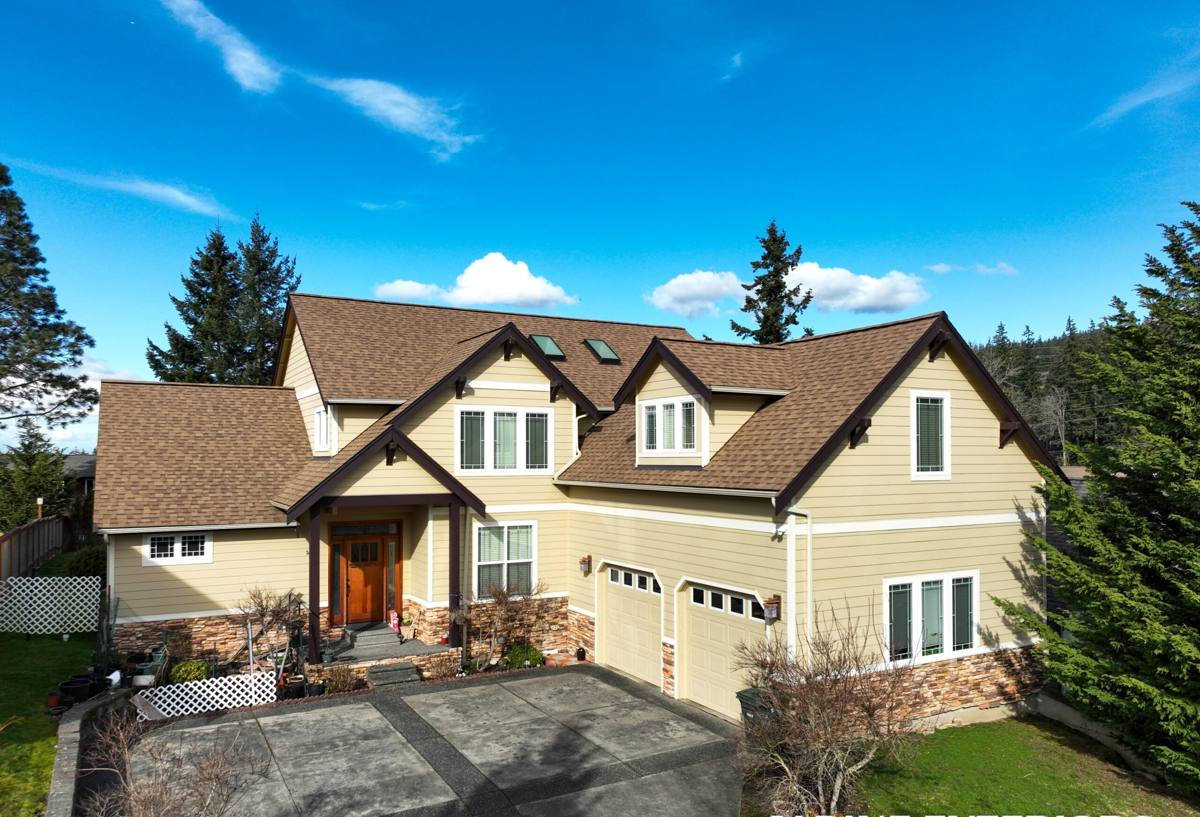
What Bellingham's Climate Does to Siding
Bellingham sits on Bellingham Bay, and Sunnyland is close enough to the water and low enough in elevation that salt-laden air is a real factor on exterior materials — not just at the waterfront, but for blocks inland whenever onshore winds pick up. Add to that the region's long, wet fall-through-spring stretch of driving rain, frequent wind-driven storms off the Sound, and the shaded, damp conditions that let moss and algae take hold on north-facing walls and anything under tree cover. Put those three things together and you get a climate that's tough on any siding material that isn't specifically engineered to handle sustained moisture exposure.
The Three Stressors That Matter Most Here
- Salt air: accelerates corrosion of fasteners and trim, and speeds up finish breakdown on painted surfaces.
- Driving rain: Bellingham's storms often come in sideways off the water, pushing moisture into laps, seams, and butt joints that a calmer climate would never test.
- Moss season: shaded, tree-lined streets and long wet stretches mean moss and algae growth on siding is a near-constant maintenance issue for much of the year, not just a fall problem.
None of these stressors are unique to Sunnyland, but the neighborhood's mix of mature tree canopy, proximity to the bay, and older housing stock means a lot of homes here are carrying siding that was never built for this combination of conditions in the first place.
Signs Your Sunnyland Home Needs a Siding Replacement
Repainting can mask problems for a while, but it doesn't fix what's happening underneath. Here's what actually signals it's time to replace rather than patch:
- Paint that's peeling, bubbling, or failing within a couple years of a repaint — usually a sign moisture is trapped behind the siding, not just weathering on the surface
- Soft, spongy, or crumbling siding when you press on it, especially near the bottom courses and around window and door trim
- Visible cupping, warping, or delamination of siding panels or boards
- Persistent moss or algae staining that comes back within months of cleaning
- Gaps opening up at seams, corners, or where siding meets trim
- Rising energy bills that track with drafts you can feel near exterior walls
- Visible rot at the bottom edge of boards or around penetrations like hose bibs and vents
Any one of these on its own might be a spot repair. Several at once, especially spread across different walls of the house, usually means the siding system as a whole has reached the end of its useful life.
Why We Only Install James Hardie Fiber Cement
We don't install vinyl, LP SmartSide, primed wood, or cedar siding, and we're upfront about why. Each of those products has legitimate uses and reasonable arguments in its favor — but none of them, in our professional judgment, hold up as well as James Hardie fiber cement does against the specific combination of salt air, driving rain, and moss exposure that Sunnyland homes deal with year after year.
How the Comparison Actually Breaks Down
| Factor | Vinyl / Engineered Wood | James Hardie Fiber Cement |
|---|---|---|
| Moisture behavior | Wood-based products can swell, delaminate, or take on rot if moisture gets behind the surface layer; vinyl can trap moisture behind it with no drying capacity | Fiber cement doesn't absorb moisture the way wood fiber does, and doesn't rot |
| Salt air / coastal exposure | Fasteners and finish layers are more vulnerable to accelerated breakdown | Engineered for coastal and marine-influenced climates; HZ5 product line specifically addresses this |
| Finish durability | Field-applied paint on wood products needs recoating on a shorter cycle; vinyl color is baked in but fades and can't be refreshed easily | Factory-applied ColorPlus finish is baked on under controlled conditions, with a much longer warranted lifespan |
| Fire performance | Combustible | Non-combustible fiber cement composition |
| Long-term maintenance | Recurring repainting or caulking cycles on wood; vinyl can crack or warp with age and temperature swings | Lower recurring maintenance when installed and finished correctly |
Vinyl siding is inexpensive and low-maintenance in mild climates, but it's a petroleum-based product that can warp under temperature swings, and it doesn't offer the impact resistance or design flexibility of fiber cement. Engineered wood products like LP SmartSide use treated wood strand technology that resists moisture better than untreated wood, but they're still a wood-fiber product at the core, and any breach in the factory coating gives moisture a path in. Primed wood and cedar are beautiful materials with a long tradition in the Pacific Northwest, but they demand a maintenance commitment — recoating, caulking, spot repairs — that most homeowners underestimate until they're several years into ownership.
James Hardie fiber cement is cement, sand, and cellulose fiber — it doesn't feed moss the way organic wood fiber can, it doesn't rot, and it's engineered specifically for climate zones like ours through the HZ10 product line, which is what we install throughout Whatcom County. It costs more upfront than vinyl and is comparable to or less than high-end wood siding installed and maintained over its life. For a house that's going to sit under Bellingham's rain and salt air for the next thirty years, we think that trade-off is the right one.
What a Correct Siding Replacement Actually Involves
Siding replacement is not just pulling off old material and nailing up new panels. Done correctly, it's a full building-envelope job, and skipping steps is exactly how homeowners end up with moisture problems again within a decade.
The Work Behind the Wall
- Full tear-off and inspection: removing old siding exposes the sheathing underneath, where hidden rot, water staining, or insect damage often shows up — this is frequently the first time a homeowner sees the real condition of their walls.
- Sheathing repair: any compromised OSB or plywood gets replaced before anything new goes up. Installing new siding over damaged sheathing just seals the problem in.
- Weather-resistive barrier: a correctly lapped and taped house wrap or building paper goes on next, giving the wall a drainage plane so any moisture that does get past the siding has somewhere to go.
- Flashing at every penetration: windows, doors, hose bibs, vents, and any other wall penetration need proper flashing integrated with the weather barrier — this is one of the most commonly rushed steps on lower-quality installs, and it's where driving rain finds its way in.
- Rainscreen or drainage gap where called for: a small air gap behind the siding lets moisture drain and the wall assembly dry, which matters more in a wet climate like ours than in drier regions.
- Siding installation to manufacturer spec: correct fastener type and placement, proper joint treatment, and clearances at grade, roofline, and trim — all specified by James Hardie and required to keep the product warranty valid.
- Trim, caulking, and touch-up: finish work at corners, window and door trim, and any factory-cut edges that need field-applied touch-up paint.
Every one of these steps matters more in Bellingham than it would in a drier climate, because driving rain finds every gap a crew leaves behind, and a wall assembly that can't dry out stays wet through most of the winter.
Our Process on a Sunnyland Project
We approach every siding replacement the same methodical way, whether it's a small rambler or a larger two-story home:
Step by Step
- On-site assessment: we walk the exterior with you, look at problem areas you've already noticed, and check for issues you might not have — moss buildup on shaded walls, soft spots near grade, trim condition.
- Written estimate: a clear scope of work and pricing, with the James Hardie product line and profile recommended for your home and its exposure.
- Tear-off and sheathing inspection: old material comes off and we document what we find before anything is covered back up.
- Weather barrier and flashing installation: the part of the job that determines whether the house stays dry for the next thirty years, done to manufacturer and code specification.
- Hardie siding installation: installed to James Hardie's published fastening and clearance requirements, which is what keeps the manufacturer warranty intact.
- Final walkthrough: we go over the finished work with you before calling the job done.
Choosing a Product Line and Finish for a Sunnyland Home
James Hardie offers several siding profiles — lap siding, shingle-style panels, board-and-batten — and a range of ColorPlus factory finishes. For homes in our climate zone, we work from the HZ10 product line, engineered for wetter, more temperature-variable regions like Whatcom County. Color choice matters too: darker ColorPlus finishes hold up well against UV and moss staining is easier to keep off a well-sealed, correctly installed wall regardless of color, but lighter, matte finishes can show algae streaking sooner on shaded, north-facing walls common in tree-covered neighborhoods like Sunnyland. We'll walk through the realistic trade-offs for your specific lot and sun exposure rather than just handing you a color chart.
Cost Factors for a Sunnyland Siding Replacement
Every home is different, and we don't quote prices without seeing the house, but the factors that actually move the number are consistent:
| Factor | Why It Affects Cost |
|---|---|
| Sheathing condition | Hidden rot or water damage discovered during tear-off requires repair before new siding goes on |
| Home size and wall complexity | More corners, dormers, and trim details mean more labor and material cuts |
| Siding profile and finish | Lap, shingle, and board-and-batten profiles carry different material and labor costs |
| Story height and access | Two-story walls and steep grade around the house affect staging and labor time |
| Existing trim and window flashing | Whether trim is being replaced or reused, and how much re-flashing is needed at openings |
| Removal and disposal | Volume and type of old siding material being hauled away |
The honest range for a full James Hardie siding replacement on a typical single-family home runs into the tens of thousands of dollars depending on these factors — we'll give you a real number after we've actually looked at your walls, not a number pulled from a national average that has nothing to do with your house.
Why a Crew That Already Works Sunnyland Matters
Siding replacement isn't just about the product — it's about a crew that understands how this specific climate behaves against a wall assembly over time. A contractor who works Bellingham and Whatcom County regularly knows which walls in a neighborhood like Sunnyland take the worst of the driving rain, where moss builds up fastest, and how much drainage detail a given lot's tree cover and shade pattern actually calls for. That's the kind of judgment that doesn't show up on a spec sheet, and it's the difference between a siding job that looks good on installation day and one that's still performing well after fifteen Bellingham winters.
It also means a crew that's accountable locally — not a traveling outfit that's moved on to the next region by the time a warranty issue shows up. We stand behind our installation work because we're going to be in this same neighborhood next year and the year after that.
Ready to Talk About Your Siding?
If your Sunnyland home is showing signs of siding failure, or you're just tired of the maintenance cycle, we're glad to come take a look. We'll give you a straightforward, no-pressure assessment of what your home actually needs and a written estimate for a James Hardie siding replacement built for this climate. Use the form below to request a free estimate.