 Bellingham
 Siding in York Has to Answer to a Specific Climate
York sits close enough to the water and to Bellingham's marine weather patterns that siding here takes a different kind of beating than siding fifty miles inland. It's not one dramatic storm that causes the damage — it's the accumulation. Salt-laden air moves through the neighborhood on a regular basis, driving rain comes in sideways more often than most homeowners realize, and a long, damp moss season sets in every fall and doesn't fully let go until late spring. Any siding product installed on a York home has to be evaluated against all three of those conditions at once, not just one of them.
This page is specifically about James Hardie fiber cement siding on York homes — what the local climate demands from it, what a correct installation actually looks like, and why the crew doing the work matters as much as the product itself.
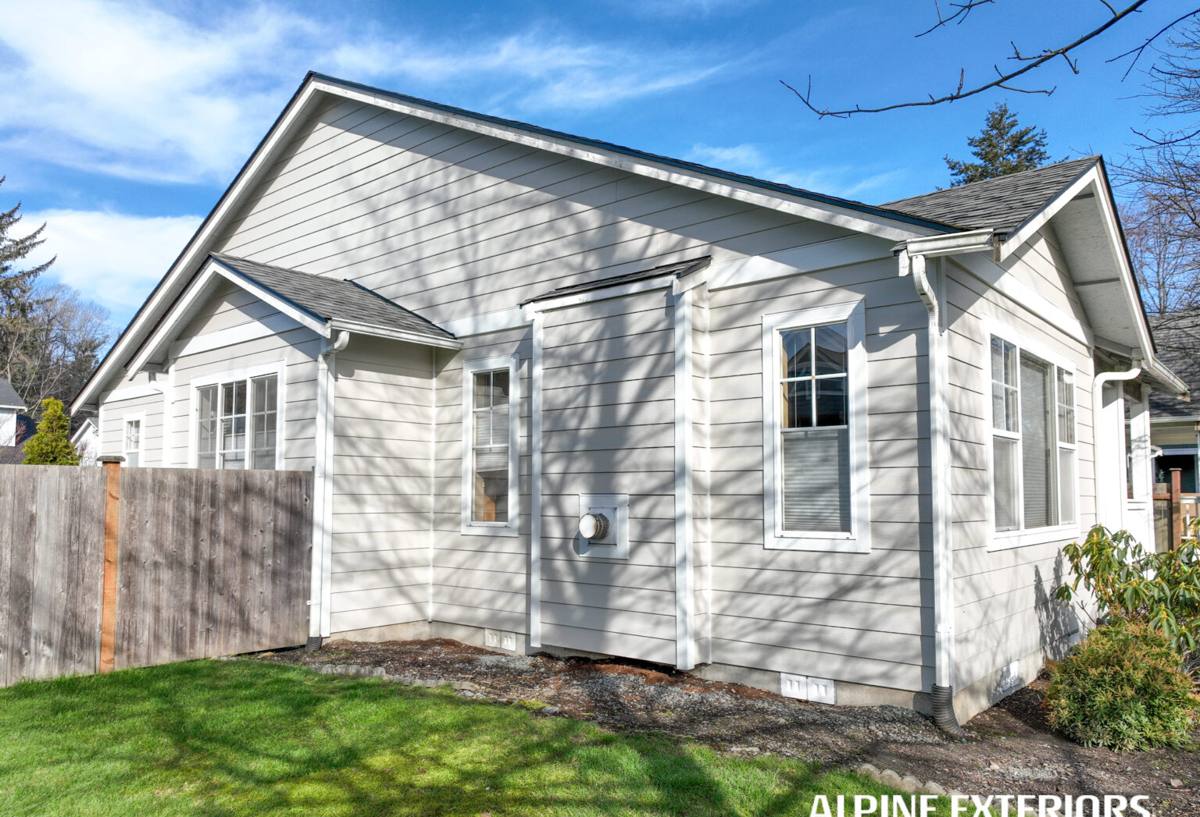
What Salt Air, Driving Rain, and Moss Season Actually Do to a House
Salt Air
Airborne salt is corrosive to fasteners, flashing, and any exposed metal trim. It also degrades paint films over time, particularly on products that rely on a field-applied finish rather than a factory-cured one. Siding near the water needs a finish system built to resist that corrosion, and hardware that won't quietly rust behind the panels where nobody sees it until a problem shows up.
Driving Rain
Wind-driven rain doesn't just hit a wall — it gets pushed into every gap, seam, and fastener penetration it can find. On a house without a proper drainage plane behind the siding, that moisture has nowhere to go and works its way into the sheathing. Over a few winters, that's how rot starts, usually in places you can't see from the ground.
Moss Season
Whatcom County's damp, shaded conditions are close to ideal for moss and algae growth on north-facing and shaded walls. Moss holds moisture against a surface far longer than open air would, which matters more for some siding materials than others. It's also a maintenance issue — a product that stains or breaks down under prolonged dampness will need more attention over its life than one that doesn't.
Why We Standardized on James Hardie for This Climate
We install James Hardie fiber cement exclusively — not vinyl, not LP SmartSide, not cedar, not primed spruce, not other fiber cement brands. That's not a marketing position, it's a decision based on what holds up under the exact conditions York deals with every year.
Fiber cement is non-combustible and dimensionally stable, meaning it doesn't expand and contract with moisture the way wood-based products do. James Hardie's HZ5 product line is engineered specifically for climates with significant moisture exposure, and its ColorPlus finish is a factory-applied, baked-on coating rather than a field-applied paint job — which matters directly for salt air exposure, since factory finishes hold up better against coastal corrosion and UV breakdown than paint applied on-site after installation.
We're not going to tell you every other product on the market is junk — most have legitimate uses in the right setting. But for a York home dealing with salt air, driving rain, and a long moss season, the trade-offs of vinyl (seam gaps, heat distortion, shorter realistic lifespan), LP SmartSide (engineered wood core that's more moisture-sensitive than fiber cement), and cedar or primed spruce (ongoing repainting and rot vulnerability) aren't ones we're willing to put our name behind. James Hardie, installed correctly, is the product we trust for this environment.
What a Correct James Hardie Install Involves Here
Drainage Plane and Rainscreen Gap
Given how much driving rain York sees, the water-resistive barrier and rainscreen detailing behind the siding aren't optional extras — they're the difference between siding that sheds incidental moisture and siding that traps it against the sheathing. A proper install creates a drainage gap that lets any water that gets past the panels drain back out instead of sitting against the wall.
Fastening and Hardware
Given salt air's effect on metal, fastener selection matters. Corrosion-resistant nails or screws, installed at the manufacturer's specified pattern and depth, keep panels secure without splitting or over-driving — both of which create entry points for moisture.
Flashing and Trim Details
Windows, doors, roof-wall intersections, and butt joints are where most siding failures actually start, regardless of the product. Correct flashing — installed in the right sequence, lapped the right direction — keeps wind-driven rain from working its way behind the siding at these transition points.
Factory Finish Integrity
ColorPlus panels are pre-finished, so field cuts need to be sealed with the matching touch-up product to maintain the factory warranty and keep raw edges from wicking moisture. Skipping this step is a common shortcut that undermines the whole system.
Choosing the Right Hardie Product Line for a York Home
James Hardie makes several plank profiles and panel systems, and the right choice depends on the home's style and exposure, not just personal preference. For a York property, we typically walk through:
| Product Line | Best Fit | Why It Matters Here |
|---|---|---|
| HZ5 Plank Lap Siding | Standard walls, most home styles | Engineered for high-moisture, coastal-influenced climates like this one |
| Board & Batten Panels | Modern or farmhouse-style facades | Vertical drainage detailing matters more here than on lap siding |
| Shingle-Style Panels | Accent gables, dormers | Adds texture without the maintenance burden of real cedar shingles |
| Trim & Fascia Boards | Window/door surrounds, corners | Corrosion-resistant profile pairs with siding for consistent protection |
Color selection matters too — darker ColorPlus tones can help disguise the early stages of moss and algae staining between cleanings on shaded elevations, while lighter tones show it sooner but read cleaner overall. We'll talk through the trade-offs based on where the house sits and which walls get the most shade.
Our Process, Start to Finish
Walkthrough and Assessment
We start by walking the exterior with you, looking at existing siding condition, trim, flashing, and any signs of past moisture intrusion. This is also when we talk through product line and color options for your specific home.
Tear-Off and Sheathing Check
Old siding comes off and we inspect the sheathing underneath before anything new goes up. If there's hidden rot or moisture damage from years of driving rain finding its way in, we address it before covering it back up — not after.
Weather Barrier and Rainscreen Installation
This is the layer most homeowners never see and most lower-cost installs shortcut. Given York's rain exposure, we don't skip it.
Siding, Trim, and Flashing Installation
Panels, trim, and flashing go in to manufacturer spec, with attention to fastener pattern, joint sealing, and factory-finish touch-up at every cut edge.
Final Walkthrough
We go over the finished job with you, point out anything you should know for long-term care, and make sure everything matches what was discussed at the estimate.
What Affects Cost on a York Siding Project
| Factor | Why It Affects Cost |
|---|---|
| Tear-off and disposal of existing siding | More layers or heavier old material (like real wood or old fiber cement) takes longer to remove |
| Hidden sheathing repair | Rot from past moisture intrusion has to be fixed before new siding goes on |
| Home size and story count | More square footage and higher walls mean more material and labor |
| Trim and architectural detail | Gables, dormers, and multiple trim profiles add installation time |
| Product line and color | Panel style and ColorPlus finish selection affect material pricing |
We give straightforward, honest ranges during the estimate once we've actually seen the house — not a number pulled out of thin air over the phone.
Why a Crew That Already Works York Matters
A siding crew that regularly works in and around Bellingham and Whatcom County already understands the moisture and moss patterns specific to this area — which elevations tend to hold dampness longest, how driving rain typically hits a given lot orientation, and what flashing details actually get tested by this weather over time. That familiarity shows up in the details: where extra flashing attention gets paid, which drainage details get prioritized, and how a job gets sequenced around a wet forecast instead of rushed through it. It's the difference between a generic install and one that's actually built for where the house sits.
Keeping Your Siding Performing Long-Term
James Hardie siding is low-maintenance compared to wood or vinyl, but "low-maintenance" isn't "no-maintenance," especially in this climate. A simple seasonal routine goes a long way:
- Rinse siding annually, focusing on shaded and north-facing walls where moss and algae build up fastest
- Check caulking around windows, doors, and trim joints for cracking or gaps once a year
- Keep gutters clear so overflow doesn't run down the face of the siding repeatedly
- Trim back vegetation and tree cover that keeps walls shaded and damp longer than they need to be
- Inspect touch-up paint on any field cuts periodically to make sure factory-finish protection is intact
- Address any small chips or damage promptly rather than letting exposed edges sit through a wet season
None of this is complicated, but skipping it is how avoidable problems turn into expensive ones in a climate like this.
If you're considering new siding for a home in York, we're happy to come take a look and walk you through what we'd recommend and why — no pressure, no obligation. Use the form below to request a free estimate.