 Bellingham
 Why Siding Installation in York Has to Account for More Than Curb Appeal
York is one of Bellingham's older, well-established neighborhoods, and that means a lot of the homes here were built and re-sided under building codes and material standards that predate what we know today about Whatcom County's marine climate. Close to Bellingham Bay, York homes deal with a specific combination of stresses: salt-laden air moving in off the water, long stretches of driving, wind-pushed rain that hits siding at an angle instead of falling straight down, and a moss and mildew season that can run most of the year in shaded, north-facing exposures. Any one of those is manageable. Together, they're exactly the conditions that expose weak siding installation and marginal materials over time.
This isn't a generic "siding replacement" page. It's specifically about what siding installation needs to do for a York home, given this exact set of conditions, and why the way a job is installed matters just as much as what material goes on the wall.
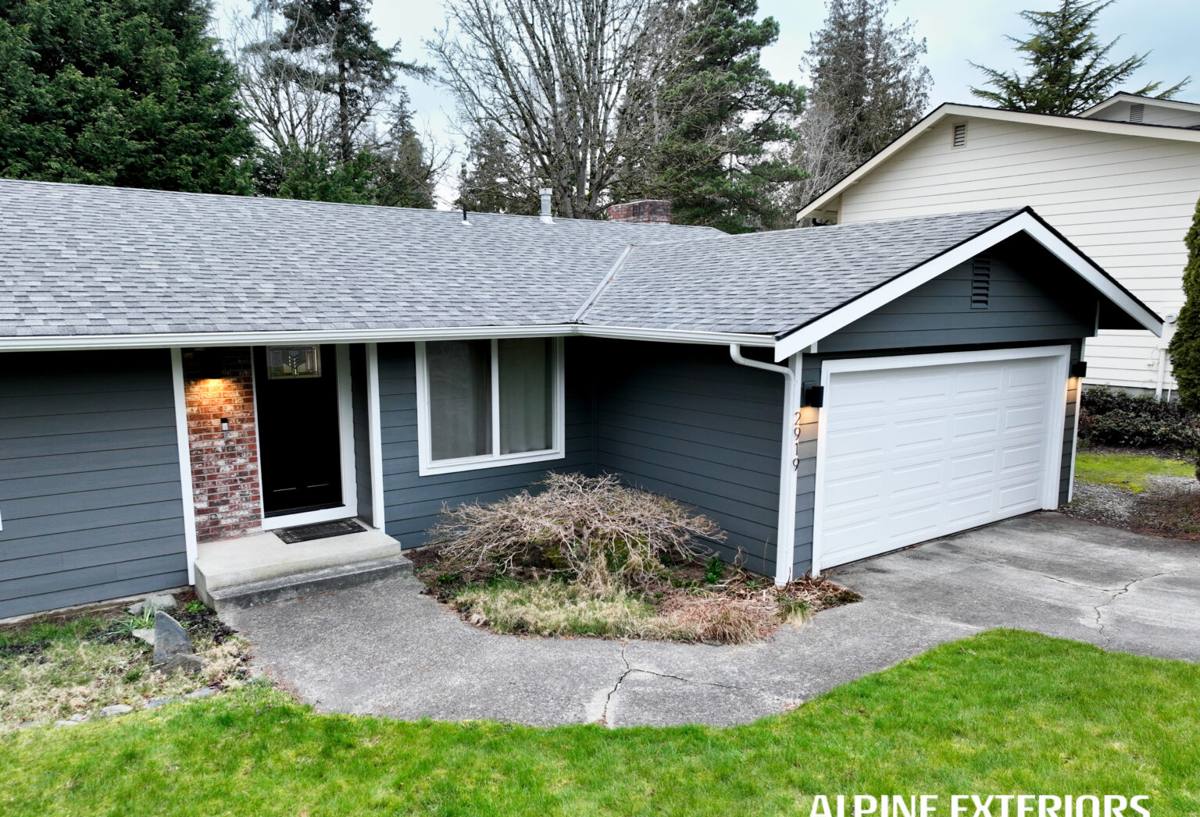
What Salt Air, Driving Rain, and Moss Actually Do to Siding
Salt Air
Airborne salt is corrosive to metal fasteners, flashing, and trim, and it accelerates the breakdown of lower-grade coatings and finishes. Siding that isn't factory-finished for coastal exposure can chalk, fade, or lose adhesion faster near the bay than it would ten or fifteen miles inland.
Driving Rain
Wind-driven rain doesn't behave like a normal downpour. It gets pushed up under laps, into seams, and behind trim and corner boards that would stay dry in calmer weather. Siding installation in this kind of environment lives or dies on the water management details behind the siding, not just the siding itself.
Moss and Mildew Season
Bellingham's long wet season, combined with mature tree cover common in older neighborhoods like York, keeps siding damp for extended periods, especially on north and west walls. Moss holds moisture against the surface, and any siding material that absorbs water or swells when wet will degrade faster under that constant dampness than one engineered to shed it.
What a Correct Installation Involves
Homeowners rarely see the parts of a siding job that actually determine whether it lasts. The visible plank or panel is the last five percent of the work. The parts that matter most happen underneath it.
- A continuous, correctly lapped water-resistive barrier (house wrap) installed shingle-style so water is always directed outward and down, never trapped behind the siding
- Properly flashed windows, doors, and any wall penetrations, with flashing that ties into the water-resistive barrier rather than just being caulked over
- Correct starter strip and first-course height so the bottom edge of the siding sheds water away from the foundation
- Rain-screen or drainage gap detailing where the wall assembly calls for it, so moisture that does get behind the cladding has somewhere to go
- Fasteners driven at the manufacturer's specified location and depth — not just "close enough" — since over-driven or misplaced nails are one of the most common causes of early siding failure
- Corner boards, trim, and caulk joints sized and placed to shed water rather than collect it
Skip or shortcut any one of these, and the siding itself almost doesn't matter — water will eventually find its way behind it, and in a climate like York's, "eventually" tends to arrive sooner than homeowners expect.
Why We Only Install James Hardie Fiber Cement
We made a decision, as a company, to install one siding system: James Hardie fiber cement, in its HZ5 formulation engineered for climates like the Pacific Northwest. We don't install vinyl, LP SmartSide, or other fiber cement brands, and we don't install unfinished wood siding like cedar or primed spruce. That's not a marketing position — it's a practical one, based on what actually holds up under salt air, sustained moisture, and moss exposure over decades rather than years.
Fiber cement is non-combustible, doesn't expand and contract with moisture the way wood-based products do, and holds paint and color far longer than wood substrates because it doesn't swell, warp, or rot at the core. James Hardie's ColorPlus factory finish is baked on under controlled conditions, which gives it more consistent, durable color retention than field-applied paint — a real advantage in a climate where siding stays damp for long stretches and gets more UV and salt exposure near the water. Hardie also backs its products with a strong, transferable limited warranty, which matters if a York home changes hands down the road.
None of this means other products are worthless — vinyl and engineered wood siding both have a place in the market and can perform reasonably well in the right conditions with the right maintenance. We simply concluded, after years of doing this work in exactly this climate, that fiber cement gives York homeowners the best combination of durability, appearance, and long-term value, and we'd rather install one system well than several systems adequately.
Comparing Siding Options for a York Home
| Factor | James Hardie Fiber Cement | Vinyl | Engineered Wood (e.g. LP SmartSide) |
|---|---|---|---|
| Moisture behavior in a marine climate | Dimensionally stable; doesn't swell or rot | Won't rot, but can warp/buckle with heat and impact | Wood-based core is more moisture-sensitive over time |
| Salt air / coastal exposure | Factory-finished, engineered for coastal conditions | Can fade and become brittle over years of UV/salt exposure | Finish and edges need diligent maintenance near the bay |
| Fire resistance | Non-combustible | Combustible; can melt or deform near heat sources | Wood-based; combustible |
| Moss and mildew resistance | Doesn't feed mold/mildew growth the way wood fiber can | Resists moss growth on the surface but traps moisture behind it if installed poorly | Wood fiber content can be more susceptible if the finish is compromised |
| Long-term maintenance | Occasional wash and repaint on the schedule Hardie recommends | Low maintenance but limited repair options if damaged | Requires more consistent upkeep of caulking and finish |
Our Process, Start to Finish
- Walkthrough and assessment — we look at the current siding, water-resistive barrier condition where accessible, trim, window flashing, and any existing moisture damage, paying particular attention to north and west walls and any areas with heavy moss or shade.
- Written estimate — a clear scope covering removal, any sheathing repair, house wrap, flashing details, the Hardie product line and ColorPlus color, and trim work, so there are no surprise change orders mid-project.
- Tear-off and inspection — once old siding comes off, we inspect the sheathing underneath for rot or hidden damage, which is common on older York homes with decades of prior siding history.
- Water management installation — house wrap, flashing, and drainage detailing go in correctly before a single piece of visible siding is hung.
- Hardie installation — planks or panels installed to manufacturer fastening and clearance specs, including proper ground and roofline clearances that matter in a wet climate.
- Trim, caulking, and final details — corner boards, window and door trim, and caulk joints finished to shed water, not just look clean.
- Final walkthrough — we go over the finished work with the homeowner before calling the job complete.
Signs Your Current Siding Is Already Failing
York homes with older siding — whether original wood, aging vinyl, or a prior fiber cement job that wasn't installed to spec — tend to show similar warning signs before the damage becomes structural.
- Persistent moss or dark streaking that returns quickly after cleaning, especially on shaded walls
- Soft or spongy spots when you press on the siding or trim
- Visible gaps, warping, or buckling panels, particularly after a stretch of wind and rain
- Paint that's peeling or bubbling rather than just fading evenly
- Interior signs like peeling paint, musty smells, or discoloration on walls that back up to exterior siding
- Nail heads visibly popping or rust streaks bleeding through the finish
Any of these on their own might be minor. Several together, especially on a wall that faces prevailing weather, usually means water has been getting behind the siding for a while.
Maintaining Hardie Siding in York's Climate
James Hardie siding is low-maintenance compared to wood, but "low-maintenance" isn't "no-maintenance," particularly this close to the water. A periodic gentle wash to remove salt residue, pollen, and early moss growth goes a long way toward keeping ColorPlus finishes looking right for the long haul. Keeping gutters clear and downspouts directed away from the foundation matters more here than in drier parts of the state, since sustained ground moisture is what feeds moss growth up the base of a wall. Trimming back vegetation that shades and dampens siding — a common condition on older, tree-lined York lots — also helps the wall dry out between rain events instead of staying wet for weeks at a stretch.
A Quick Seasonal Checklist
- Check and clear gutters before the fall rains set in
- Rinse siding annually, focusing on north and west exposures where moss tends to establish first
- Inspect caulk joints around windows and trim each year for cracking or separation
- Trim back branches and shrubs holding moisture against the wall
- Have any soft spots or recurring stains checked promptly rather than waiting for the next paint cycle
Why Hiring a Crew That Already Works in York Matters
Siding installation isn't a one-size-fits-all trade, and the details that matter change block by block along Bellingham Bay. A crew that regularly works in York already knows which walls in this neighborhood take the worst of the wind-driven rain, how much moss pressure to expect on the shaded side of an older lot, and how existing homes here were typically built and previously sided, which shapes what we look for once tear-off starts. That local pattern recognition doesn't replace a careful inspection of your specific home, but it does mean fewer surprises and a scope of work that's realistic from the first estimate rather than revised repeatedly once the walls are open.
If you're weighing a siding project on a York home, we're happy to walk the property, look at what's there now, and put together a straightforward, no-pressure estimate for a James Hardie installation built for this exact climate — no obligation, just a clear look at what your home actually needs.