 Bellingham
 Storm Damage Roof Repair Built for York's Weather
Homes in the York neighborhood sit close enough to the water and the tree canopy that roofs here take a different kind of beating than roofs a few miles inland. Wind off Bellingham Bay drives rain sideways under shingle edges, salt air accelerates corrosion on flashing and fasteners, and the shade from mature trees keeps roof surfaces damp long after a storm has passed. That combination is exactly why storm damage on a York roof rarely looks like storm damage anywhere else — and why a repair that isn't matched to those conditions tends to fail again within a year or two.
This page covers what we look for, what a correct repair actually involves, and how our process works when a York homeowner calls us after a windstorm, a falling branch, or just a roof that's been quietly losing the fight against moss and moisture for a few seasons.
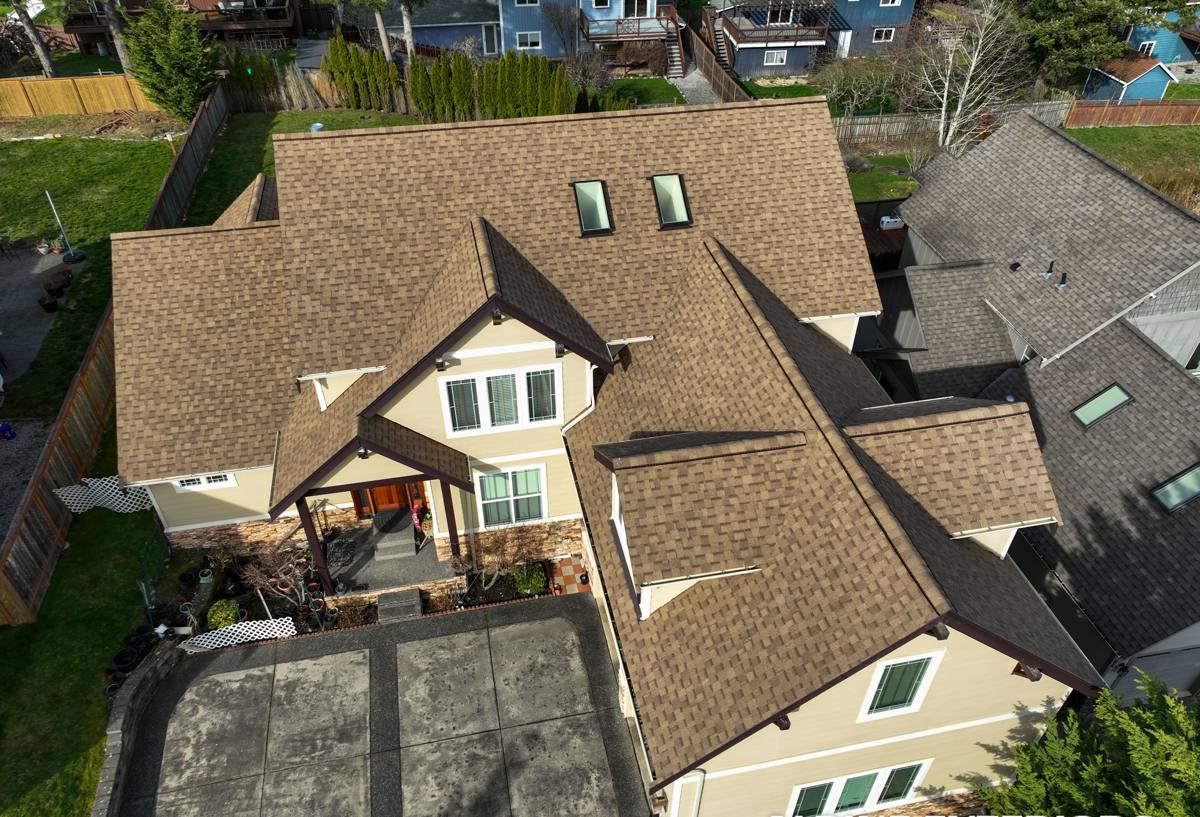
Why York Roofs Take a Different Kind of Damage
Wind-Driven Rain and Salt Air
Whatcom County storms usually come in off the water with a strong westerly or southwesterly push. That wind doesn't just add pressure — it drives rain up under shingle tabs and around flashing laps that were designed for water running downhill, not sideways. Add in the salt content of the air near the bay, and you get faster corrosion on nail heads, flashing seams, and any exposed metal fastener. A roof that looks fine from the ground can have dozens of lifted or corroded fastener points after a hard blow.
Moss Season Is Long Here
Bellingham's moss season isn't a two-month nuisance — it's close to year-round, especially on north-facing slopes and anywhere tree cover keeps a roof shaded. Moss doesn't just look bad. It holds moisture against the shingle surface, works its way under tabs as it grows, and can lift roofing material enough that wind gets a foothold it wouldn't otherwise have. A lot of "storm damage" we find in York started as moss damage that a storm simply finished off.
Falling Debris
Mature trees are part of what makes this neighborhood attractive, but they're also the single biggest source of storm damage calls we get here — branches and whole limbs coming down during high wind or heavy wet snow. Impact damage can range from a few cracked or missing shingles to punctured decking, and the extent isn't always obvious without getting on the roof.
What a Storm-Damaged Roof Actually Needs
The right repair depends on what's actually wrong, not just what's visible from the driveway. We break it down into a few categories:
- Surface damage — missing, cracked, or lifted shingles with the decking underneath still sound
- Flashing failure — corroded or displaced flashing around chimneys, vents, skylights, and valleys, often the actual source of a leak even when shingles look intact
- Moss-related lifting — shingles pushed up or separated by moss growth, which needs treatment and cleaning in addition to shingle repair or replacement
- Impact damage — punctures, cracked decking, or displaced sections from falling debris, which sometimes requires opening up a section of roof to check the sheathing
- Underlayment saturation — water that's gotten past the shingle layer and soaked the underlayment or decking, which won't show up until you pull material back
A repair that only addresses what's visible on top — without checking flashing condition and decking underneath — is the most common reason storm repairs don't hold up through the next season.
Our Storm Damage Repair Process
1. Assessment
We start with a full roof inspection, not just a look at the obvious damage. That means checking flashing at every penetration, looking for moss encroachment even in areas that weren't part of the original complaint, and — where there's been impact damage — checking decking condition from the attic side when possible.
2. Documentation
We document what we find with photos and a written scope, which matters most if you're filing an insurance claim. Clear documentation of pre-existing moss damage versus fresh storm damage also protects you — insurers sometimes try to draw that line, and having it done right the first time avoids disputes later.
3. Repair Scope and Estimate
We give you a straightforward estimate that separates what's necessary now from what's worth watching. Not every issue we find needs to be fixed in the same visit, and we'll tell you honestly which is which.
4. The Repair
Work includes shingle replacement matched as closely as possible to your existing roof, flashing repair or replacement using corrosion-resistant materials appropriate for a salt-air environment, moss treatment and removal where it contributed to the damage, and decking repair if the impact or water intrusion went that deep.
5. Follow-Up Check
Especially after a major windstorm, we recommend a follow-up look after the next hard rain to confirm the repair is holding under real conditions, not just passing a dry-day inspection.
Repair vs. Replacement: How We Decide
| Factor | Repair usually makes sense | Replacement should be considered |
|---|---|---|
| Roof age | Under 12-15 years, most of its expected life left | Nearing or past the end of its rated life |
| Extent of damage | Isolated to one section or a handful of spots | Widespread across multiple slopes |
| Decking condition | Sound, no rot or soft spots | Soft, delaminating, or repeatedly wet |
| Moss history | Recent, hasn't caused widespread lifting | Long-term, shingles brittle or granule loss is heavy |
| Flashing condition | Localized corrosion, easily replaced in sections | Corrosion widespread across most penetrations |
Most storm calls in York end up being repairs, not full replacements — but we'll tell you plainly if a repair is just delaying a replacement you'll need in a year or two anyway. That's a judgment call we'd rather make honestly than sell you a patch that doesn't last.
Materials That Hold Up in This Climate
We're deliberate about flashing and fastener materials here specifically because of the salt air. Standard galvanized fasteners corrode faster near the bay than they would further inland, so we favor corrosion-resistant flashing and fastener options rated for coastal exposure. It costs a little more up front, but a flashing failure two years after a repair costs a lot more than that difference. We'll walk through the material choice with you rather than assume you want the cheapest option — some homeowners are fine trading a bit of longevity for lower upfront cost on a roof they know they'll replace before too long, and that's a legitimate call as long as it's made with the trade-off in view.
Insurance and Storm Damage Claims
Most wind and impact damage from a named storm event is covered under standard homeowner policies, though coverage for moss-related deterioration usually isn't, since insurers treat that as a maintenance issue rather than sudden damage. This is another reason accurate documentation matters — a clear, dated inspection report helps separate storm-caused damage from pre-existing wear when a claim is being reviewed. We're happy to provide documentation you can hand to your adjuster; we don't handle the claim itself, but we make sure the paperwork on our end supports your case.
What to Check After a Storm
- Look for shingle granules collecting in gutters or at downspout outlets — a sign of accelerated wear or wind stripping
- Check for daylight or water stains in the attic near roof penetrations and valleys
- Look for lifted or missing shingles from the ground with binoculars rather than climbing up yourself
- Note any large branches that came down near the roofline, even if you don't see obvious damage
- Watch for musty smells or new stains on ceilings in the days after a storm, since some leaks take time to show up
- If moss has been established for more than a season or two, treat it as a contributing risk factor, not just a cosmetic issue
If you see any of these, it's worth getting a professional look before the next storm compounds the problem — a small flashing repair now is a lot cheaper than a decking replacement after a second or third round of water intrusion.
Why a Crew That Knows York Matters
A roofer unfamiliar with this specific microclimate can misdiagnose the cause of damage — treating wind-lifted shingles as a one-time event when moss growth was the underlying reason they lifted in the first place, or using standard fasteners that won't hold up to the salt air here. Working regularly in Bellingham and across Whatcom County means we've seen how York roofs specifically age: which slopes hold moss longest, which flashing details tend to fail first in wind-driven rain, and which repairs actually last through a full winter storm season rather than just through the next dry stretch. That local pattern recognition is the difference between a repair that solves the problem and one that just delays it.
If you've got storm damage, a persistent leak, or just want an honest look at a roof that's been through a few too many Whatcom County winters, we're happy to come take a look. The estimate is free, there's no pressure, and you'll get a straight answer about what actually needs fixing — use the form below to get started.