 Bellingham
 Asphalt Shingle Roofing in Puget: Built for This Part of Bellingham's Weather
Puget is one of the areas we work in regularly around Bellingham, and like most of Whatcom County it sits inside a marine climate that doesn't give a roof many easy years. Moist air moves in off the water, rain tends to arrive at an angle instead of falling straight down, and mild year-round temperatures mean moss has a long season to establish itself on any roof plane that stays shaded or damp. Asphalt shingle roofing is still the most common choice for homes in this area, and for good reason — it's a proven, cost-effective system when it's specified and installed correctly for the conditions it actually has to survive. The trouble is that "correctly for the conditions" is doing a lot of work in that sentence, and it's the part that gets skipped more often than homeowners realize.
We install and repair asphalt shingle roofs throughout Puget and the surrounding Bellingham area, and we treat this climate as a design input, not an afterthought. That means paying attention to salt-tinged marine air, wind-driven rain, and a moss season that can stretch across most of the calendar year, before a single shingle goes down.
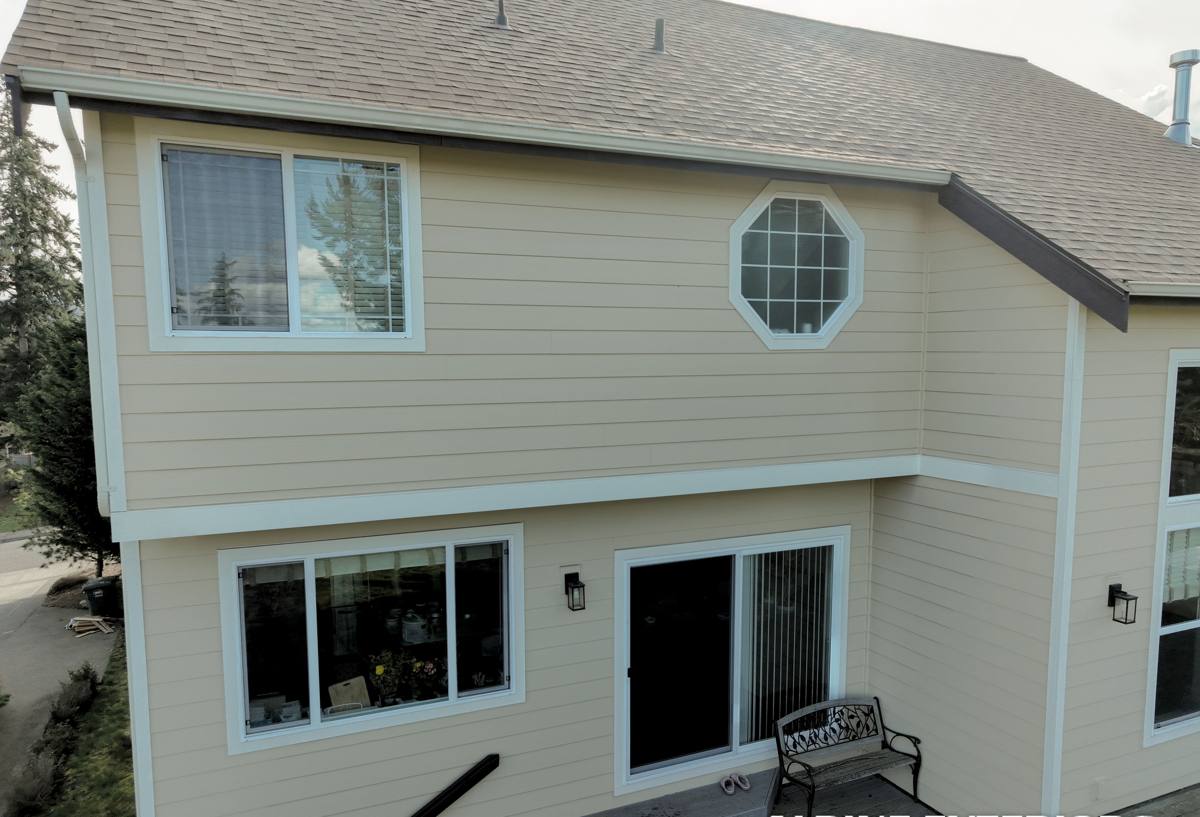
What Puget's Climate Does to an Asphalt Shingle Roof
Salt Air and Marine Exposure
Homes in and around Bellingham sit close enough to the water that salt-tinged marine air is a steady presence, not just an occasional storm condition. On a roof, that exposure works quietly on metal components — flashing, valley metal, fasteners, and vent stacks — accelerating corrosion in lower-grade materials faster than an inland climate would. It's rarely dramatic. It's a slow wearing-down that tends to show up as rust streaks or a failed flashing seam years before most homeowners would think to look for it.
Wind-Driven Rain
Rain in this part of Whatcom County doesn't just fall, it gets pushed. Wind off the water drives rain sideways into roof valleys, around chimneys and vent penetrations, and up under shingle tabs and flashing laps that a calmer climate's install standards wouldn't need to account for. A roofing system that would perform fine somewhere drier and less windy can still leak here, specifically because the water is arriving from an angle the underlayment and flashing weren't detailed to handle.
A Long Moss and Algae Season
Mild temperatures, consistent dampness, and tree cover on many Puget lots add up to a moss and algae season that runs far longer than most homeowners expect. Standard asphalt shingle granules give moss and algae something to hold onto, and once it takes hold on a north-facing or shaded slope, it holds moisture against the shingle surface even between rain events. Left unmanaged, that moisture cycle shortens the shingle's real service life well below what the product is rated for.
Choosing the Right Asphalt Shingle for This Climate
Not all asphalt shingles are built the same, and the differences matter more here than they would in a drier region. We typically work with product lines from major manufacturers like GAF, CertainTeed, and Owens Corning, and the choice usually comes down to wind rating, algae resistance, and how the shingle is engineered to shed water rather than just its price point.
| Shingle Type | Moss & Algae Behavior | Wind Rating | Realistic Lifespan Here |
|---|---|---|---|
| Standard three-tab | No algae-resistant granules; moss establishes faster on shaded slopes | Lower, typically 60-70 mph rated | 15-20 years |
| Architectural / laminated | Often available with algae-resistant granule options; sheds water better due to layered profile | Higher, commonly 110-130 mph rated | 25-30 years |
| Impact-resistant architectural | Same algae-resistant options as standard architectural, plus reinforced mat | Highest of the asphalt options | 25-30 years, often with stronger warranty terms |
For most Puget homes, an architectural shingle with algae-resistant granules is the practical middle ground between upfront cost and how well the roof actually holds up to a long wet season. Standard three-tab shingles are less expensive, but on a shaded or north-facing roof plane in this climate, that cost difference tends to show up again a decade or more sooner in the form of moss removal and earlier replacement.
What a Correct Asphalt Shingle Installation Requires
The shingle itself is only part of what determines how a roof performs. Most of the leaks and premature failures we see on tear-offs trace back to what was skipped underneath the shingles, not the shingles themselves. On every roof we install, that means:
- Synthetic underlayment rated for sustained moisture exposure, not a bare minimum-code product
- Ice-and-water shield at eaves, valleys, and other spots where water and debris naturally collect
- Properly lapped and sealed flashing at every valley, chimney, vent pipe, and roof-to-wall transition
- Balanced attic and roof deck ventilation so moisture can escape instead of condensing under the deck
- Corrosion-resistant fasteners and metal components suited to a marine climate, not standard-grade hardware
- Correct nailing pattern and shingle exposure per manufacturer spec, which also protects the warranty
None of this adds much to the overall cost of a roofing job relative to the shingles themselves, but skipping any of it is exactly what turns a roof rated for twenty-five years into one that needs attention in twelve or fifteen.
How Our Process Works
We start with an on-site inspection and an honest read on the existing roof's condition, not a phone estimate based on square footage alone. From there we walk you through material options with real trade-offs, not just a single recommendation. On installation day, tear-off exposes the deck so we can check for hidden moisture damage before anything new goes down, and every flashing detail gets the same attention as the shingles on top of it. We'll also walk the finished roof with you before we consider the job done.
Signs a Puget Roof Needs Attention
- Moss buildup on shaded or north-facing slopes that returns quickly after cleaning
- Granules collecting in gutters or at the base of downspouts
- Curling, cupping, or missing shingles, especially after a windstorm
- Water staining on interior ceilings near exterior walls or around chimneys
- Daylight visible through the roof deck when viewed from inside the attic
- Flashing that looks lifted, rusted, or missing sealant around vents and valleys
- A roof approaching or past its rated lifespan with no recent inspection on record
Any one of these is worth a professional look before the next wet season sets in. Caught early, most of these are a repair. Left alone, several of them compound into a full tear-off.
Repair or Replace? How We Help You Decide
Not every roofing issue in Puget calls for a full replacement, and we don't default to recommending one. We look at the roof's age, how much of the surface is actually affected, whether the deck underneath has moisture damage, and how many repairs the roof has already had. A localized leak on an otherwise sound roof is usually a straightforward repair. A roof nearing or past the end of its rated life, with moss-related damage spread across multiple slopes or soft spots in the deck, is usually more honestly addressed with a replacement than another round of patchwork that just delays the same decision. We'll explain what we find in plain terms and let you make the call with real information.
Why a Local Crew Matters for Roofing in Puget
A crew that works this part of Bellingham regularly sees how salt air, wind-driven rain, and a long moss season actually behave on real roofs over years, not just how a product performs on a spec sheet. That translates into practical decisions on install day: which roof orientations in Puget need extra ice-and-water shield because of tree shade, how much flashing attention a given valley actually needs, and which details are worth the extra time so you're not dealing with a callback two winters later. It also means someone who already understands how this area's exposure differs from a more sheltered, inland part of the county, rather than applying one generic approach to every roof.
Roofing Alongside Siding, Windows, and Decks
Roof problems in Puget rarely start and end with the shingles. A roof-to-wall flashing detail that's failed, a valley dumping water toward a wall assembly, or a deck ledger trapping moisture against the house can all show up as damage well beyond the roofline. Because we also work on siding, windows, and decks, we can look at a Puget property as one connected exterior system and trace a problem back to where it actually started, instead of replacing a roof over a leak path that's still active underneath.
Get a Free, No-Pressure Estimate
If your Puget home needs a roof inspection, a repair, or you're weighing a full asphalt shingle replacement, we're glad to take a look and give you a straightforward, honest read on what it actually needs. Reach out using the form below to schedule a free estimate.