 Bellingham
 Roofing in a Neighborhood That Never Fully Dries Out
Silver Beach sits in one of the wetter, greener pockets of Bellingham, and that's exactly why its roofs behave differently than roofs a few miles inland. Between the driving rain that comes off the water, the salt-laden air, and the shade thrown by mature trees on many lots, shingles here rarely get a long, uninterrupted stretch to dry out. That combination shortens the useful life of a roof that isn't installed with this specific climate in mind, and it's the reason a "good enough" asphalt shingle job in a drier part of the country can fail early in Whatcom County.
An asphalt shingle roof done right for Silver Beach isn't a different product than what you'd see anywhere else — it's the same shingle, installed with more attention to the details that matter when a roof spends half the year damp: ventilation, underlayment, flashing, and moss control. Get those right and a quality shingle roof will hold up well. Skip them, and you'll be dealing with moss mats, granule loss, and soft decking years before you should be.
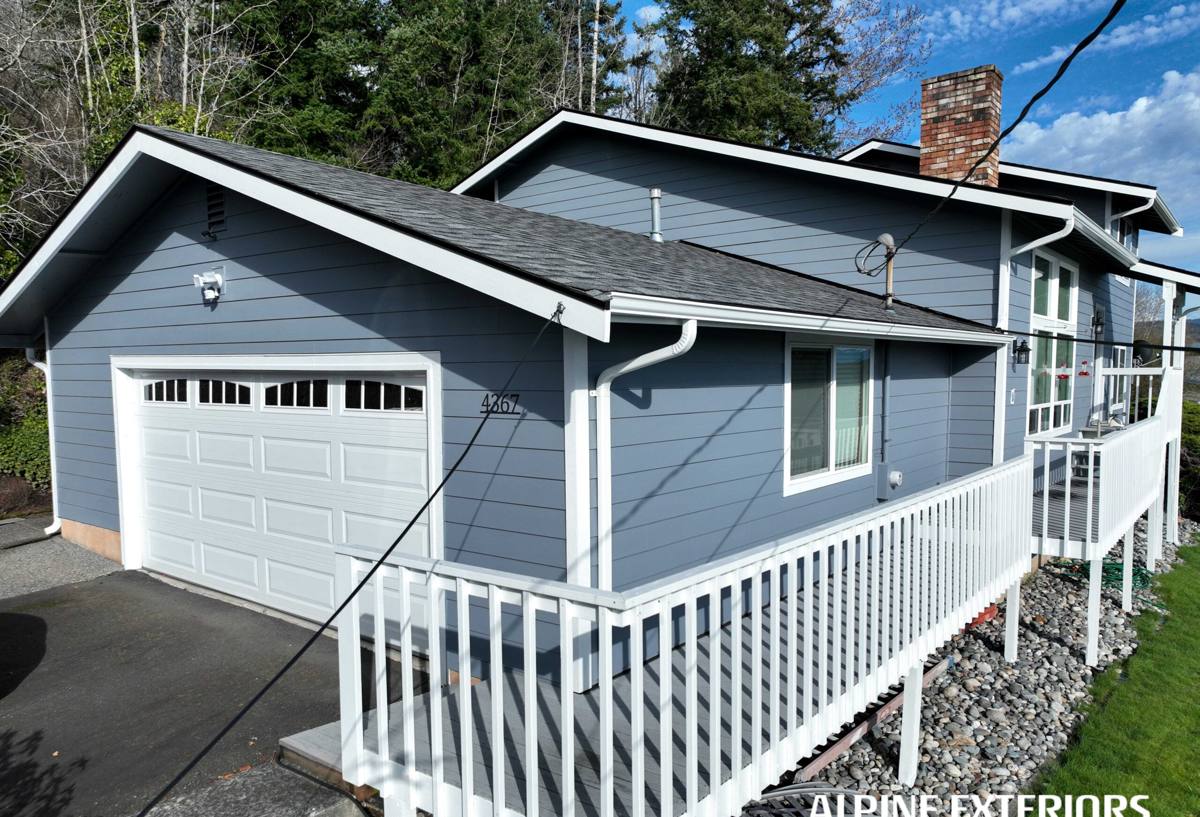
Signs a Silver Beach Roof Needs Attention
Most asphalt shingle roofs don't fail all at once — they give warning signs first. If you're seeing any of the following, it's worth having someone look before a small problem becomes a bigger, wetter one:
- Granules collecting in gutters or at the base of downspouts
- Shingle edges that are curling, cupping, or lifting, especially on south- and west-facing slopes
- Thick moss mats or dark streaking, most common on shaded, north-facing sections
- Soft or spongy spots underfoot when walking the roof
- Daylight visible through the roof deck from inside the attic
- Ceiling stains or discoloration near chimneys, skylights, or valleys
- A roof that's 18-20+ years old and has never had a full ventilation check
None of these automatically mean a full tear-off is needed, but they're all worth a straight answer from someone who isn't trying to sell you a roof you don't need yet.
What a Correct Asphalt Shingle Installation Involves
The shingles themselves get most of the attention, but in a climate like ours, what's underneath and around them matters just as much — arguably more — for how long the roof actually lasts.
Tear-Off and Deck Inspection
We remove the old roofing down to the deck rather than layering over it. That's the only way to actually see what's happening underneath — soft plywood, old leaks, or trapped moisture don't show up until the shingles are off. Any damaged sheathing gets replaced before anything new goes down; installing a new roof over a compromised deck just hides the problem for a while.
Underlayment and Water-Resistant Barrier
A synthetic underlayment goes down as the roof's secondary line of defense, and self-adhered waterproof membrane goes in at the eaves, valleys, and other vulnerable points where wind-driven rain is most likely to find a way in. In a neighborhood that gets sustained, sideways rain off the water, this layer is doing real work, not just meeting code minimums.
Ventilation
Balanced ventilation — intake at the soffits, exhaust at the ridge — keeps the attic space at roughly outdoor temperature and moisture level. Without it, warm, moist air from inside the house gets trapped against the underside of the roof deck, which accelerates rot and helps shingles fail from below, not just from weather above. Many older Bellingham-area homes were built before this was standard practice, so a ventilation check is part of any roof we quote.
Flashing and Valleys
Step flashing at walls and chimneys, proper valley metal, and kickout flashing where a roofline meets a wall are what stop water from finding its way behind siding and trim during heavy, sustained rain. This is one of the most common places we find shortcuts on older or poorly maintained roofs, and it's usually the source of leaks that have nothing to do with the shingles themselves.
Choosing a Shingle for a Wet, Mossy Climate
Not every asphalt shingle is worth using in a climate like Whatcom County's. Here's how the common tiers compare for a home in a shaded, moisture-heavy setting like Silver Beach:
| Shingle Type | Typical Lifespan | Moss/Algae Resistance | Best Fit |
|---|---|---|---|
| Standard 3-tab | Shorter end of the range | Low unless algae-resistant granules are specified | Budget-conscious projects, less shaded roof faces |
| Standard architectural (dimensional) | Mid-range | Moderate, better than 3-tab due to thicker profile | Most homes; good balance of cost and durability |
| Algae-resistant (AR) architectural | Mid-to-long range | Higher — copper/zinc-infused granules resist streaking | Shaded lots, north-facing slopes, tree cover |
| Premium/designer architectural | Long end of the range | High, typically paired with enhanced warranties | Homeowners prioritizing longevity and appearance |
For most Silver Beach properties, especially those with tree cover or shaded roof faces, we lean toward algae-resistant architectural shingles as the practical starting point rather than the upgrade — the extra cost up front is usually smaller than the cost of dealing with moss and streaking a few years earlier than necessary.
Moss and Algae: Prevention Built Into the Job
Moss and algae aren't cosmetic problems here — moss holds moisture against the shingle surface and can work its way under shingle edges over time, and algae streaking, while mostly visual, is a sign that spores are established. A few things we build into the job rather than treat as optional extras:
- Zinc or copper strips at the ridge, which release trace metal ions with each rain to slow moss and algae regrowth
- Algae-resistant shingles on shaded or north-facing sections
- Trimming back overhanging branches where possible to reduce shade and debris buildup
One thing we won't do is pressure wash a shingle roof to remove moss — it strips the protective granules and shortens the roof's life faster than the moss itself would. Gentle, low-pressure cleaning and soft brushing are the honest way to handle moss removal on shingles; anything more aggressive trades a short-term clean look for real long-term damage.
Our Process, Start to Finish
- On-site inspection and estimate — we look at the whole system: shingles, decking, ventilation, and flashing, not just what's visible from the ground.
- Material selection — we walk through shingle tiers and options based on your roof's sun/shade exposure and your budget, without steering you toward the most expensive option by default.
- Scheduling and property protection — landscaping, siding, and outdoor living spaces get protected before tear-off begins.
- Tear-off and deck inspection — old material comes off, the deck is inspected, and any repairs are discussed with you before proceeding.
- Installation — underlayment, flashing, ventilation components, and shingles go in following manufacturer specifications, not just local minimums.
- Cleanup and magnet sweep — the property is cleared of debris and swept for stray nails and fasteners.
- Final walkthrough — we review the finished roof with you before calling the job done.
What Actually Drives the Cost
Every roof is different, and we won't quote a number without seeing the actual roof, but these are the factors that move the price up or down most:
| Factor | Why It Matters |
|---|---|
| Roof size and number of facets | More area and more complexity (valleys, hips, dormers) means more labor and material |
| Pitch and accessibility | Steep or hard-to-access roofs take longer and require more safety setup |
| Number of existing layers | Removing multiple layers of old roofing adds tear-off time and disposal cost |
| Deck condition | Rotted or soft sheathing needs replacement before new roofing goes down |
| Ventilation upgrades needed | Adding or correcting intake/exhaust venting is often worthwhile but adds scope |
| Shingle tier chosen | Standard, algae-resistant, and premium products carry different material costs |
As a general rule, asphalt shingle roofing tends to fall in a broad mid-range compared to other roofing materials — more than basic 3-tab minimums, less than metal or tile — but the only way to know your actual number is a walk-through of your specific roof.
Why Local Experience in Silver Beach Actually Matters
A roofing crew that regularly works Silver Beach and the surrounding Bellingham neighborhoods has already seen how this specific stretch of Whatcom County treats a roof — which slopes tend to hold moss longest, where wind-driven rain causes the most trouble around flashing, and how tree cover on a given street affects material choice. That's not something you can fully replicate from a general inspection checklist; it comes from doing the work here repeatedly.
Local experience also means faster response if something needs a second look after the job is done, and a crew that's familiar with the permitting and inspection expectations that apply to roofing work in the City of Bellingham and unincorporated Whatcom County. When you're trusting someone with the thing standing between your home and a genuinely wet climate, that familiarity is worth something.
If your Silver Beach home needs a roof inspection, repair, or full replacement, we're happy to take a look and give you a straight, no-pressure estimate — just fill out the form below to get started.