 Bellingham
 Storm Damage Roofing in Barkley: What Makes This Neighborhood Different
Barkley sits close enough to Bellingham Bay and the Strait of Georgia that its roofs take a specific kind of beating. It's not one big catastrophic storm that does the damage around here — it's the cumulative effect of wind-driven rain off the water, long stretches of overcast humidity, and a moss season that runs longer than most homeowners realize. A roof in Barkley can look fine from the driveway and still be quietly failing at the seams, the flashing, and the fastener lines where wind has worked things loose over several winters.
When we get called out to a storm-damaged roof in this part of Bellingham, the damage is rarely a single dramatic event. More often it's a windstorm that lifted a run of shingles just enough to break the seal, followed by weeks of driving rain finding that gap before anyone notices a stain on the ceiling. Understanding that pattern is the whole reason storm damage repair needs to be handled by someone who knows what Whatcom County weather actually does to a roof over time, not just what a single storm report says happened.
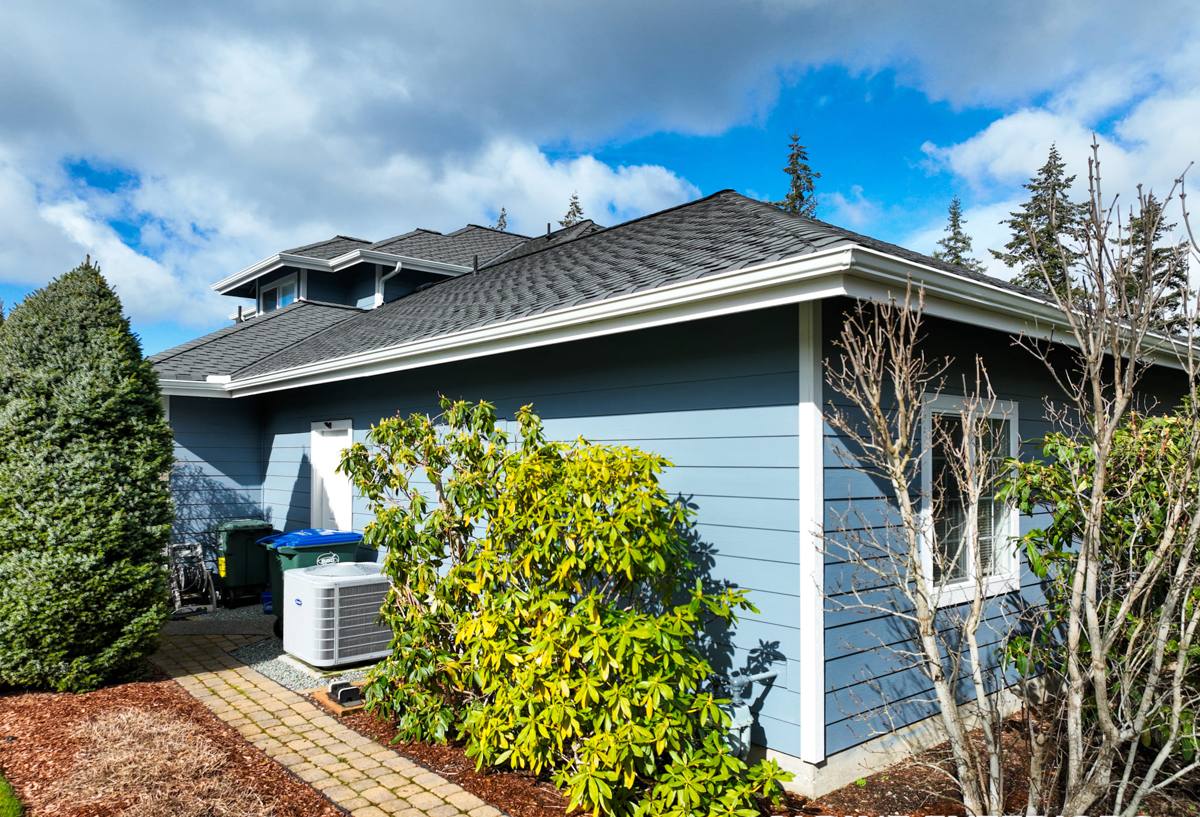
How Local Climate Drives the Damage We See
Wind Off the Water
Barkley isn't directly on the waterfront, but it's close enough that storm systems moving in off the Strait still carry real gusts, especially during fall and winter frontal passages. Wind doesn't need to be hurricane-force to do damage — sustained gusts in the 40-50 mph range, which this area sees several times a winter, are enough to lift shingle tabs, peel back ridge cap, and stress ridge vents that were installed without enough fastener depth.
Driving Rain and Wind-Driven Moisture
Bellingham rain is rarely straight-down rain. Storms here tend to come in at an angle, which means water gets pushed sideways under shingle edges, around chimney flashing, and into any gap that a calm-weather roof would shed just fine. This is why storm damage repair in Barkley has to account for wind direction and duration, not just total rainfall — a roof can survive a heavy but calm rain and still leak badly in a lighter storm that comes in sideways for six hours.
Moss and Organic Growth
Whatcom County's moss season is long — realistically fall through spring, with growth slowing but rarely stopping entirely. Moss holds moisture against the roof surface, works its way under shingle tabs as it grows, and lifts material physically over time. A storm that would otherwise cause minor, cosmetic damage can turn into a real leak when it hits a section of roof where moss has already loosened the shingle bond. Moss damage and storm damage are often the same repair call around here — the storm just exposes what the moss already started.
Salt Air Corrosion
Homes in and around Barkley that sit within reach of bay air see faster corrosion on exposed metal — flashing, fasteners, gutter hardware, and vent stacks. Corroded fasteners back out or fail under wind load well before an inland roof's would, which is one reason a storm can cause more damage here than the same wind event would cause 15 miles inland.
What a Correct Storm Damage Repair Actually Involves
A lot of storm repair work we get called to fix is a previous quick patch that addressed the visible symptom and not the underlying cause. Doing it right means working through the roof system in order, not just replacing what's obviously torn or missing.
- Full-slope inspection, not just the damaged spot — wind damage is rarely isolated to one shingle; we check the whole slope for lifted seals and stress cracking nearby
- Flashing check at every penetration — chimneys, vent stacks, skylights, and wall-to-roof transitions are the most common places storm-driven rain actually gets in
- Underlayment condition — if water has been getting under the shingles for a while, the underlayment may already be compromised even if the deck looks dry
- Decking inspection where leaks have occurred — soft or delaminated sheathing needs to be replaced, not covered over
- Fastener pattern review — under-driven or corroded nails are a leading cause of repeat wind damage in this area
- Gutter and drainage check — a storm that overwhelms clogged or undersized gutters can cause water intrusion that looks like roof damage but starts at the edge
Skipping any of these steps is how a homeowner ends up paying for the same repair twice — once right after the storm, and again a year later when the real cause resurfaces.
Our Process for Barkley Storm Damage Calls
1. Assessment First
We start with a straightforward roof and attic inspection — no pressure, no upsell script. We're looking for the actual entry point of water, not just the spot where a stain showed up inside, since those are often several feet apart.
2. Clear Explanation of What We Find
You get a plain description of what's damaged, what's still sound, and what caused it — wind, moss, age, a prior installation shortcut, or some combination. If the damage looks like it may be covered by insurance, we'll document it clearly enough to support that conversation, but that decision and process is between you and your insurer.
3. Repair Scope, Not Upsell Scope
Storm damage repair means fixing what the storm damaged — and flagging, separately, anything else we find that's a genuine near-term concern. We don't pad a repair into a full replacement recommendation unless the roof's actual condition calls for it.
4. The Repair Itself
Matching materials as closely as possible, correcting the underlying issue (not just replacing the visible shingle), and rechecking flashing and fastening on the repaired section so it holds through the next storm, not just until the next inspection.
5. Follow-Up
After a significant storm repair, we're glad to do a quick follow-up check, particularly heading into the next wet stretch, so you're not wondering whether the fix held.
Comparing Repair Approaches
| Approach | What It Actually Fixes | Risk If Underlying Cause Is Skipped |
|---|---|---|
| Surface patch only (visible shingle swap) | Cosmetic damage, missing shingles | Leak returns if flashing or underlayment was also compromised |
| Patch + flashing/underlayment check | Actual water entry point, not just symptom | Low, assuming decking underneath is sound |
| Full slope repair with fastener and deck review | Root cause across the whole affected section | Lowest — addresses wind, moisture, and material condition together |
| Full roof replacement | Everything, including undamaged sections | Only worth it when age or overall condition justifies it — not every storm call needs this |
Most storm damage calls in Barkley fall into the second or third row of that table. Jumping straight to a full replacement is sometimes the right call, but only when the roof's overall condition — age, prior repairs, widespread moss damage — actually warrants it, not as a default response to one storm.
What This Kind of Repair Tends to Cost
Costs vary a lot based on how much of the roof is affected, whether decking needs replacement, and how accessible the roof is, so we won't quote a number without seeing it. In general terms: a contained repair addressing a section of lifted or missing shingles with sound decking underneath is a relatively modest job. Repairs that involve replacing damaged decking, extensive flashing work, or a larger affected area cost more, largely because of the added labor and material. We'll always walk you through what's driving the cost before any work starts, and separate "must fix now" from "worth keeping an eye on."
Signs Your Barkley Roof May Have Storm Damage
- Shingle tabs that look lifted, curled, or slightly out of line after a windy night
- Granules collecting in gutters or at downspout outlets, especially right after a storm
- A new stain on a ceiling or in the attic that appeared after a specific weather event
- Visible gaps at ridge cap or along roof edges
- Flashing that looks bent, lifted, or separated from the surface it's sealing
- Moss buildup in the same area where you're now seeing a leak — the two are often connected
- Daylight visible through the roof deck when viewed from inside the attic
None of these alone means you have a major problem, but any of them is worth a look, especially after Whatcom County's more active storm stretches in late fall and winter.
Why a Crew That Already Works Barkley Matters
Storm damage repair is one of the areas where local familiarity genuinely changes the outcome. A crew that regularly works roofs in this part of Bellingham has a working sense of how the area's wind patterns, rain angles, and moss growth interact with different roof ages and material types — and they've likely already seen how a given storm affected other roofs nearby, which speeds up an accurate diagnosis. That's different from a crew driving in from out of the area with no frame of reference for what's normal wear versus storm-caused damage in this specific microclimate.
There's also a practical timing benefit. After a significant storm moves through Whatcom County, demand for roof inspections spikes, and outside crews often aren't positioned to respond quickly. A local crew can typically get eyes on a suspected leak faster, which matters — the longer water sits against decking and insulation, the more the repair scope grows.
A Few Honest Notes on Materials and Trade-Offs
We match repair materials to what's already on your roof wherever possible, since mixing shingle profiles or colors on a partial repair can look inconsistent and, in some cases, affect how well the sections shed water together. If your existing roofing is old enough that an exact match isn't available, we'll walk you through the closest reasonable option and be upfront about the visual trade-off rather than pretending it won't be noticeable. Our standard on flashing is to use corrosion-resistant materials appropriate for this area's salt-air exposure — it costs a bit more upfront than a generic option, but it holds up meaningfully longer here than it would inland, and re-flashing a roof is not a repair you want to redo every few years.
Ready When You Are
If a recent storm has you wondering about your roof, or you've noticed a new stain, missing shingles, or lifted flashing, we're happy to take a look. The estimate is free, there's no pressure attached to it, and you'll get a straightforward read on what's actually going on. Fill out the form below and we'll get in touch to schedule a time.