 Bellingham
 Deck Building in Blaine's Coastal Climate
Blaine sits right on the water at the top of Whatcom County, which means a deck here deals with conditions most inland builders never have to plan for. Salt-laden air rolls in off Semiahmoo Bay and the Strait of Georgia, driving rain comes in sideways more often than straight down, and a long, damp moss season settles into anything that doesn't drain and dry properly. A deck built to a generic spec sheet might look fine for a year or two, then start showing corrosion streaks, soft spots, and green film in places a homeowner in a drier climate would never see.
We build decks for this specific stretch of Whatcom County, and that changes real decisions — which fasteners we use, how we flash the ledger board, how we frame for drainage, and which decking materials we'll actually stand behind. This page walks through what a Blaine deck needs to hold up, what a correct build involves, and how we handle the job from first look to final walkthrough.
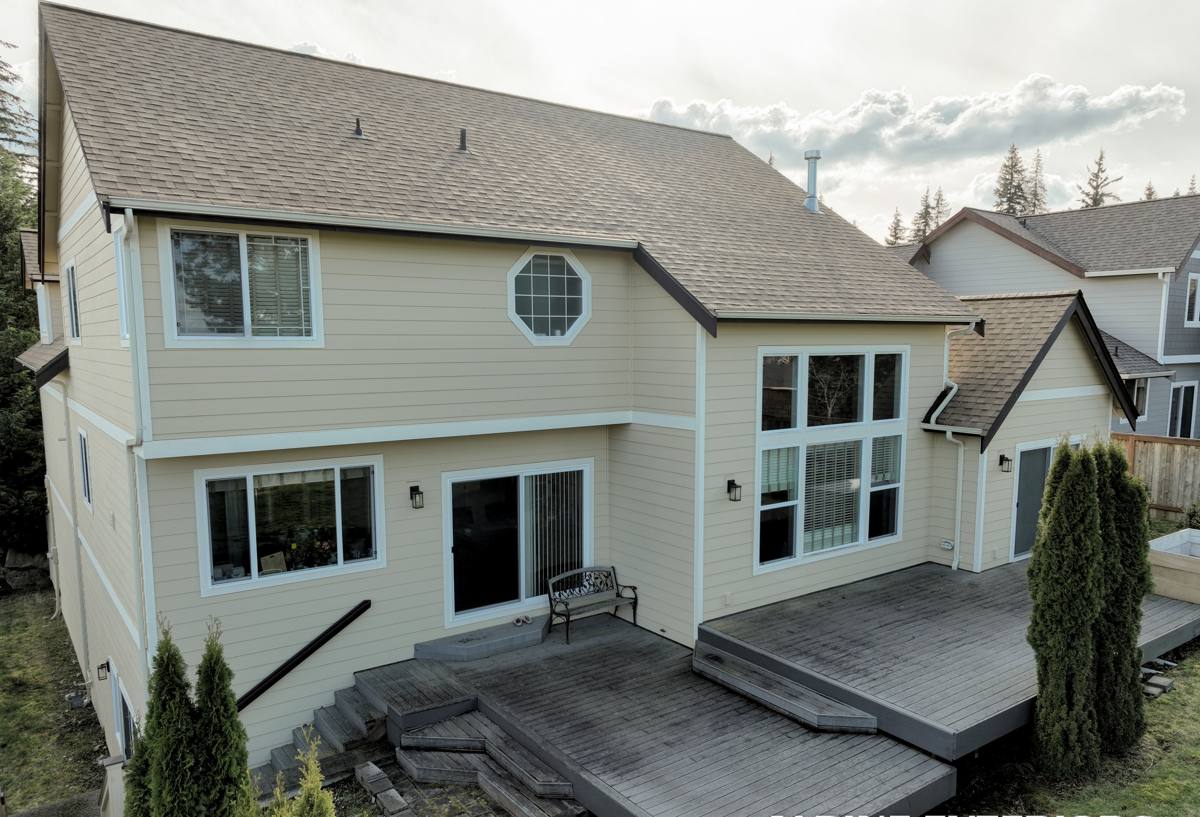
What Salt Air, Rain, and Moss Actually Do to a Deck
It helps to understand the specific ways this climate attacks a structure, because it explains almost every decision that follows.
Salt Air and Metal Corrosion
Airborne salt accelerates corrosion on any exposed metal — nails, screws, joist hangers, bolts, railing brackets. Standard galvanized hardware that would last decades further inland can start rusting within a few seasons this close to the water. Once a fastener corrodes, it loses grip strength, and a deck's structural integrity depends on every one of those connections holding.
Driving Rain and Water Intrusion
Rain that comes in at an angle finds its way into gaps a straight-down rain never would — behind ledger boards, under poorly lapped flashing, into end-grain cuts that weren't sealed. Once water gets behind a ledger board or into a joist end, it doesn't dry out quickly in this climate, and that's where rot starts.
Moss and Prolonged Dampness
Whatcom County's damp season runs long, and any deck surface, understructure, or shaded corner that stays wet for extended stretches becomes a candidate for moss and algae growth. Beyond the cosmetic issue, moss holds moisture against the wood or composite surface and can make boards genuinely slippery underfoot.
Getting the Foundation Right
Everything above ground depends on what's below it. Footings need to be sized and set to local frost depth and soil conditions, and Blaine's clay-heavy, often saturated soils don't drain the way sandy or gravelly soil does elsewhere in the county. We check the soil condition on-site rather than assuming a standard footing depth will work everywhere in town.
Drainage Under and Around the Deck
A deck built low to the ground, or over unimproved soil, can trap standing water underneath it after a heavy rain event — and Blaine gets plenty of those. We grade and, where needed, add drainage measures under the structure so water has somewhere to go instead of sitting against footings and framing all winter.
Ledger Board Attachment
The ledger board — where the deck attaches to the house — is the single most common source of deck failure and water damage nationally, and the risk only goes up in a wet, wind-driven-rain climate. It has to be properly flashed, fastened with corrosion-resistant hardware, and separated from the house sheathing with a water-resistant barrier so water can't track behind it into the wall.
Choosing Decking Materials That Hold Up Here
There's no single "best" decking material for every homeower — it depends on budget, maintenance appetite, and how close the deck sits to the water. Here's how the common options actually perform in Blaine's conditions, based on the trade-offs we see and discuss honestly with clients rather than pushing whatever has the best margin.
| Material | Moisture Behavior | Salt Air Resistance | Maintenance | Relative Cost |
|---|---|---|---|---|
| Pressure-treated pine/fir | Prone to swelling, checking, and warping if not sealed regularly | Fair — needs vigilant fastener protection | High — annual sealing recommended | Lowest |
| Cedar | Naturally moisture- and rot-resistant, but still needs sealing to hold color and stay tight-grained | Good, but fasteners and hardware still need to be corrosion-rated | Moderate to high | Mid |
| Composite decking | Doesn't absorb water or rot, but lower-quality boards can show mold/algae on the surface in shaded, damp spots | Very good — no metal to corrode in the board itself | Low — periodic cleaning | Mid to high |
| PVC/capped composite | Fully sealed surface, best moisture performance of the group | Excellent | Lowest | Highest |
We'll steer most Blaine clients away from bare pressure-treated boards as a finished surface unless budget is the deciding factor, simply because the sealing schedule needed to keep it performing in this climate is a real ongoing burden — not because the material itself is bad. Composite and capped composite decking generally make more sense here specifically because the surface doesn't depend on a maintenance schedule to stay ahead of the moss and moisture.
Fasteners, Flashing, and the Details That Actually Prevent Rot
Most deck failures we see in this area trace back to a handful of overlooked details, not the headline decisions like decking material. This is where a deck actually earns its lifespan.
Corrosion-Resistant Hardware
We use stainless steel or high-grade coated fasteners and structural connectors rated for coastal and treated-lumber exposure — standard electro-galvanized hardware is a poor fit for a property this close to the water, and mismatching fastener metal to lumber treatment chemicals is its own corrosion risk we make sure to avoid.
Flashing and Water Diversion
Proper flashing at the ledger, at any point the deck meets a wall, and over any beam or post that's exposed to weather is non-negotiable in a driving-rain climate. Flashing has to be lapped correctly, sealed at penetrations, and installed before the decking goes down — it's much harder to fix after the fact.
Joist Protection
Joist tape or a comparable water-resistant cap over the top of each joist keeps rain from soaking into the exposed cut ends and top edges where most rot actually starts, long before it becomes visible from below.
Design Considerations for Waterfront and Near-Water Properties
A lot of Blaine properties sit with real wind exposure off the bay or strait, which affects more than comfort.
- Railing and post connections need to handle real wind load, not just code-minimum lateral loads assumed for a sheltered inland lot
- Elevated decks and stairs need secure, corrosion-rated hardware at every connection point, since these see the most direct wind-driven rain
- Board spacing and orientation can be adjusted to help a deck surface shed water and dry faster between rain events
- Shaded, low-airflow corners — common on decks tucked against a house or fence line — are the first places moss takes hold, so we think about airflow in the layout, not just the view
Permits and Whatcom County Requirements
Most deck construction in Blaine requires a permit through the appropriate local building authority, and elevated decks, structural attachment to the house, and any electrical work for outdoor lighting typically trigger inspection requirements. Requirements can vary depending on deck height, size, and whether the property falls near shoreline setback considerations common along this part of Whatcom County. We handle the permit process as part of the job so homeowners aren't left navigating it alone, and we build to pass inspection the first time rather than treating code minimums as optional.
Our Deck-Building Process
- On-site assessment — we look at soil, drainage, sun/shade exposure, wind exposure, and how the deck will tie into the house before recommending a design or material
- Design and material selection — an honest conversation about budget versus maintenance, with real trade-offs laid out rather than upsold
- Permitting — we prepare and submit the necessary paperwork with the local building authority
- Footings and framing — set to proper depth for local soil, with drainage measures where the site needs them
- Ledger flashing and structural connections — done first, before decking, using corrosion-rated hardware throughout
- Decking and railing installation — installed with attention to spacing, drainage, and fastener compatibility with the chosen material
- Final walkthrough and inspection — we confirm the work with the homeowner and the inspector, not just each other
Keeping a Blaine Deck Performing Long-Term
Even a correctly built deck benefits from a little seasonal attention in this climate. This is the checklist we give clients:
- Sweep debris and standing organic matter off the deck surface before it can hold moisture and feed moss growth
- Rinse salt residue off railings and hardware periodically, especially after storms with onshore wind
- Check that gaps between boards stay clear so water keeps draining through rather than pooling
- Inspect fasteners and connectors annually for early rust or looseness, and address it before it spreads
- Reseal wood decking on the manufacturer's recommended schedule — skipping a year in this climate shows up fast
- Trim back vegetation that's shading the deck and keeping it damp longer than the rest of the yard
Why Hire a Crew That Already Works in Blaine
A deck built to a generic regional standard, without accounting for salt air, driving rain, and a long moss season, tends to show its weaknesses within a few years — corroding hardware, soft ledger boards, slick moss-covered surfaces. We work in Blaine and the surrounding Whatcom County coastline regularly, so the material and hardware choices on this page aren't theoretical for us — they're what we've found actually holds up on properties exposed to this exact combination of conditions. That local knowledge shows up in footing depth, fastener grade, flashing detail, and layout decisions that a builder unfamiliar with this stretch of coastline might not think to prioritize.
If you're planning a new deck or replacing one that's showing its age, we're glad to take a look and talk through what makes sense for your property and budget. Reach out for a free, no-pressure estimate using the form below.