 Bellingham
 Why Birch Bay Decks Wear Out Faster Than Homeowners Expect
Birch Bay sits right on the water, and that location cuts both ways. The views are part of why people live here, but the same marine exposure that makes the setting special is hard on an outdoor deck. Salt-laden air corrodes fasteners and metal connectors from the inside out, long before the surface boards show obvious damage. Driving rain off the Strait drives moisture sideways into ledger boards, railings, and joints that were never designed to shed water from that angle. And Whatcom County's long, wet shoulder seasons mean a deck here spends more months of the year damp than dry.
Add a moss season that can stretch from fall through spring, and you get a surface that stays wet longer, grows slick faster, and hides rot underneath a green film that looks cosmetic but often isn't. A deck built to a generic national spec, without those local conditions in mind, tends to show structural problems years before a comparable deck inland would.
What This Means for a Replacement, Not Just a Repair
When a deck reaches the point where boards are cupping, framing is soft, or railings flex, patch repairs usually just delay the same failure in a different spot. A proper replacement in Birch Bay has to account for the moisture load and salt exposure from the ground up — not just swap old boards for new ones on the same substructure.
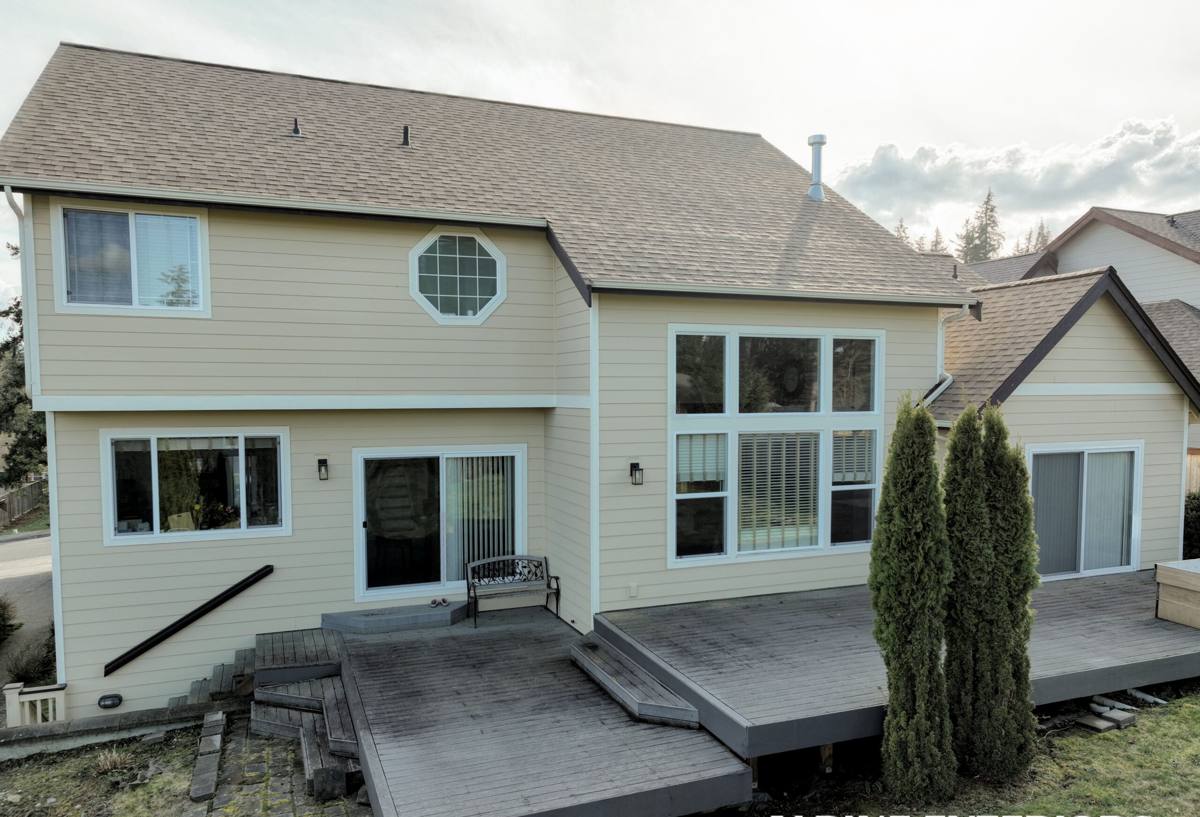
Signs a Birch Bay Deck Needs Full Replacement
- Soft or spongy spots underfoot, especially near the house or at board edges
- Fasteners that are rusted, streaking the wood with orange stains, or backing out on their own
- Persistent moss or algae that returns within weeks of cleaning
- Gaps opening between boards, or boards cupping so water pools instead of draining
- Railings or stair stringers that feel loose or move under normal use
- Visible rot, splitting, or delamination at the ledger board where the deck meets the house
- A deck older than 15–20 years that has never had the framing inspected, only the surface
Any one of these on its own might be a repair. Two or three together, especially involving the framing or ledger, usually mean the deck has passed the point where board-by-board patching makes sense.
What a Correct Deck Replacement Actually Involves
A full replacement is more than pulling up decking and nailing down new boards. In a marine climate like Birch Bay's, the parts homeowners can't see matter more than the parts they can.
Ledger Attachment and Flashing
The ledger board — where the deck bolts to the house — is the single most common failure point on coastal decks, because it's the hardest spot for water to escape once it gets behind the siding. A correct install uses proper flashing detail so rain sheds away from the house rather than tracking behind the ledger and rotting the rim joist. This is also the point where a deck project and a siding project overlap, since flashing done wrong here can damage the wall assembly it's attached to.
Framing and Fasteners
Given the salt exposure, fastener choice matters more here than it would 50 miles inland. Standard hot-dip galvanized hardware corrodes faster near the water; stainless steel or coastal-rated connectors cost more up front but hold up where standard hardware won't. The same goes for joist hangers, post bases, and structural screws — all of it should be rated for the exposure it's actually going to see, not just what code minimums require.
Footings and Post Bases
Ground contact near the bay tends to stay wetter longer, which affects how posts should be set and protected at the base. Post bases that hold the wood off the concrete and let water drain away from end grain reduce the rot risk that's common with older decks where posts were set directly into or against wet footings.
Drainage Under the Deck
On lower decks close to grade, water that can't get out from underneath just sits there and keeps everything damp — framing, the underside of decking, and any storage space below. Grading and drainage under the structure is easy to overlook but makes a real difference in how long the new deck lasts.
Decking Material Options for a Bay-Front Climate
There's no single "best" decking material for every Birch Bay home — it depends on budget, maintenance appetite, and how close the deck sits to the water. Here's how the common options actually compare in this climate, without the marketing gloss.
| Material | How It Handles Salt Air & Moisture | Maintenance | Typical Lifespan Here |
|---|---|---|---|
| Pressure-treated wood | Handles moisture reasonably well if sealed regularly; salt air accelerates fastener corrosion more than the wood itself | Annual cleaning and re-sealing to control moss and graying | 10–15 years before major repair |
| Cedar | Naturally rot-resistant but softer; still needs protection from constant damp and moss | Periodic staining/sealing; moss removal in wet months | 15–20 years with upkeep |
| Composite decking | Doesn't rot or splinter; some early-generation composites held moisture and grew mold in shaded, damp spots — modern capped composites handle it far better | Occasional washing; no staining or sealing | 25+ years, varies by product warranty |
| PVC decking | Fully synthetic, doesn't absorb moisture, very resistant to salt exposure | Lowest maintenance of the group | 25+ years, varies by product warranty |
We don't push one material on every job. A wood deck maintained on a real schedule can look great for years; a composite or PVC deck trades a higher material cost for a lot less upkeep. What we won't do is install a decking product in a way that ignores how it actually behaves in wet, salty conditions — that's a maintenance headache and a warranty problem waiting to happen, regardless of which brand it is.
Our Deck Replacement Process
- On-site assessment — we look past the surface boards at the ledger, framing, footings, and railing connections to see what's actually driving the damage
- Honest scope discussion — repair vs. full replacement, material options, and what each realistically costs and requires in upkeep
- Demo and disposal — full removal of the old structure, checking the rim joist and house connection for hidden damage once it's exposed
- Framing and flashing rebuild — new ledger flashing, coastal-appropriate fasteners, and footings/post bases sized for the deck's actual use
- Decking installation — per the manufacturer's spacing and fastening spec, which matters more in a wet climate than people expect
- Railing and stair work — rebuilt to current code requirements, not just matched to what was there before
- Final walkthrough — going over care and maintenance specific to the material installed, so the deck actually reaches its expected lifespan
Moss, Mildew, and Realistic Maintenance
No deck in Whatcom County's marine climate is maintenance-free, no matter what it's built from. Moss season here can run long, and any horizontal wood or composite surface near the bay is going to collect moisture and organic growth if it isn't cleaned. The difference a correct replacement makes is that drainage, spacing, and material choice reduce how often and how aggressively that maintenance needs to happen — not eliminate it.
- Clean debris out of gaps between boards before it holds moisture against the wood
- Rinse or gently wash surfaces before moss gets a foothold, rather than after it's established
- Check railings and stair connections once a year for movement or corrosion at the fasteners
- Reseal wood decking on the schedule the product actually calls for, not "when it looks dry"
- Keep gutters and downspouts near the deck clear so runoff isn't dumping extra water onto it
Permits and Local Considerations
Deck replacement projects in and around Bellingham and Whatcom County typically require permitting, especially when framing, footings, or railings are being rebuilt rather than just resurfaced. Requirements can also vary depending on how close a property sits to the shoreline, since waterfront and near-shore parcels around Birch Bay may have additional review. We handle the permitting conversation as part of scoping the job rather than leaving homeowners to sort it out on their own.
Cost Factors Homeowners Should Actually Weigh
| Factor | Why It Moves the Price |
|---|---|
| Deck size and layout | More square footage and multiple levels or stair runs add material and labor |
| Decking material | Pressure-treated costs least up front; composite and PVC cost more initially but less over time in upkeep |
| Framing and footing condition | Hidden rot at the ledger or posts, common near the bay, adds scope once it's exposed |
| Fastener and hardware grade | Coastal-rated stainless hardware costs more than standard galvanized but resists salt corrosion far longer |
| Railing style and code requirements | Custom railing designs or code-driven rebuilds add labor beyond a basic rail swap |
| Site access | Waterfront lots and steep grades near Birch Bay can add time for material staging and equipment access |
We'd rather walk a homeowner through these factors on-site than quote a number that doesn't hold up once the old decking comes off and the real condition of the framing is visible.
Why a Crew That Already Works Birch Bay Matters
A deck replacement done by a crew unfamiliar with this specific stretch of coastline tends to under-spec the parts that matter most here — fastener grade, flashing detail, and drainage — because those aren't emphasized in a generic build spec. A crew that already works Birch Bay regularly has seen what actually fails first in this exposure: which ledger details leak, which hardware corrodes early, which decking products handle standing moisture and which don't hold up in shaded, damp spots near the water.
That local pattern recognition doesn't show up in a brochure. It shows up in fewer callbacks, fewer surprises once demo starts, and a deck that's built for the conditions it's actually going to sit in, not a average-case spec written for somewhere drier.
Get a Straightforward Estimate
If your deck is showing soft spots, rusted hardware, or moss that won't quit, it's worth having someone look at the framing before deciding between repair and replacement. We're happy to come take a look, walk through what we see, and give a straightforward estimate — no pressure, no upsell, just an honest read on what your deck actually needs.