 Bellingham
 Roof Repair in Birchwood: What Bellingham's Climate Actually Demands
Birchwood sits inland from Bellingham Bay but still gets the full package of what Whatcom County weather throws at a roof: salt-laden air pushed in off the water, long stretches of driving rain from fall through spring, and a moss season that can run nine months out of the year in shaded, north-facing areas. None of that is dramatic on its own, but stacked together year after year, it wears roofs down in specific, predictable ways. A repair that doesn't account for all three ends up being a repair you're paying for again in eighteen months.
We work on roofs in this neighborhood regularly, and the calls tend to follow a pattern: a homeowner notices a stain on a ceiling, a shingle out of place after a windstorm, or a green tint creeping across the north slope, and wants to know if it's a patch job or something bigger. That's the right question to ask, and it's the one we start with on every visit.
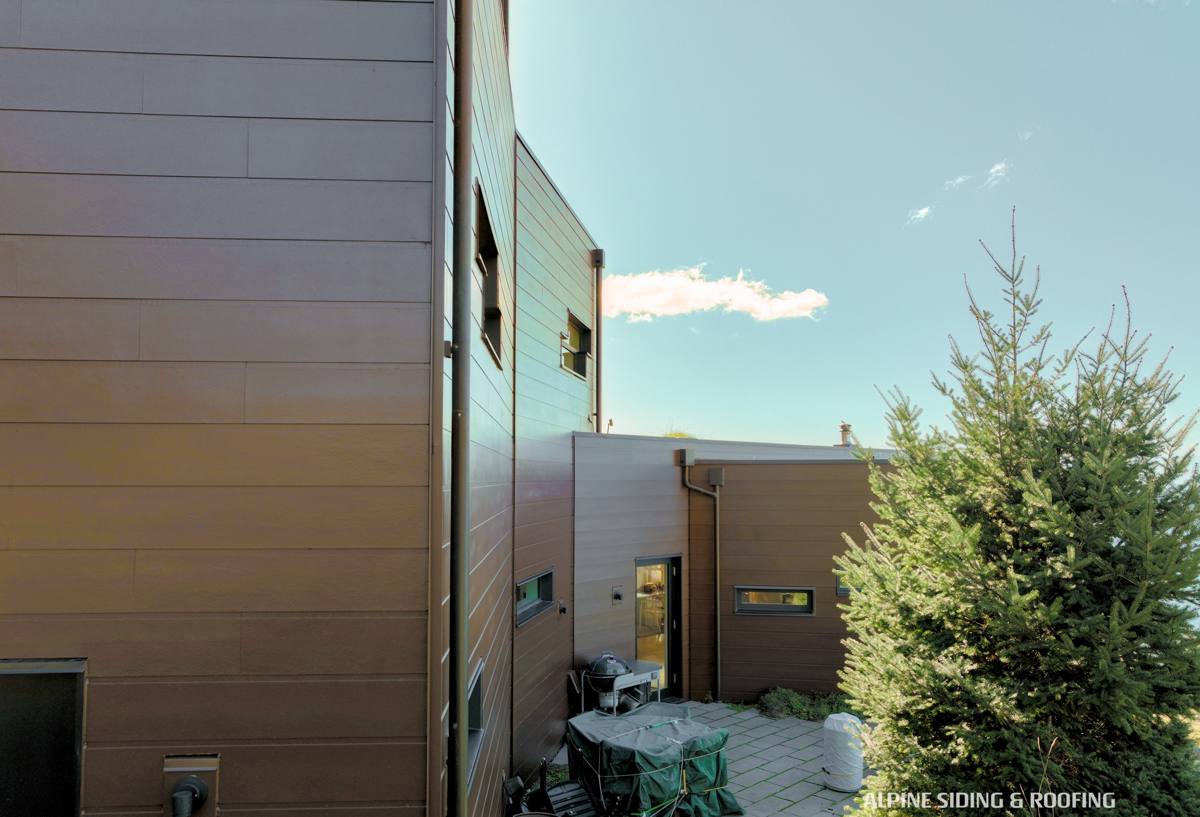
Signs Your Birchwood Roof Needs Repair — Not a Full Replacement
Most roofs don't fail all at once. They fail in sections, usually where water, moss, or wind damage has been allowed to sit unaddressed. Catching it early is almost always the difference between a repair bill and a replacement bill.
What we look for
- Cracked, curling, or missing shingles, especially after a windstorm
- Dark streaking or green/black growth concentrated on shaded or north-facing slopes
- Soft or spongy decking felt underfoot during inspection
- Rust or gaps at flashing around chimneys, vents, and skylights
- Water stains on interior ceilings or in the attic near exterior walls
- Granules collecting in gutters — a sign asphalt shingles are wearing thin
- Sagging along the ridge line or roof edges
If the damage is isolated — a section of flashing, a handful of shingles, a valley where debris has been trapping water — repair is usually the right call. If we're seeing soft decking in multiple spots or the roof is past its expected service life, we'll tell you that plainly instead of patching around a bigger problem.
Moss, Moisture, and Salt Air: The Whatcom County Roof Triangle
Moss
Moss doesn't just sit on top of shingles looking messy — its root structure lifts shingle edges and holds moisture against the roof deck underneath. In Birchwood's shadier lots, especially under mature conifers, moss can establish itself within a couple of seasons if it's never treated. By the time it's visible from the ground, it's often already working its way under shingle tabs.
Driving rain
Wind-driven rain off the Sound doesn't just fall straight down — it gets pushed sideways and upward under shingle edges, flashing laps, and roof-to-wall transitions. Repairs in this climate need to account for wind direction, not just water running downhill, which is why flashing detail and underlayment lap direction matter more here than in drier inland climates.
Salt air
Salt in the air accelerates corrosion on any exposed metal — nails, flashing, gutter fasteners, vent caps. A repair that reuses corroded fasteners or bare steel flashing is a repair that's already counting down to its next failure. We spec corrosion-resistant fasteners and flashing on every job here, not as an upsell, but because it's the only approach that holds up.
What a Correct Repair Actually Involves
A roof repair done right isn't just swapping the shingles you can see. It's diagnosing why that section failed and fixing the cause, not just the symptom.
Our repair checklist for every visit
- Inspect the affected area and the surrounding field of shingles, not just the visible damage
- Check decking condition underneath — soft or delaminated plywood gets replaced, not covered
- Assess flashing at all penetrations near the repair (vents, chimneys, skylights, wall transitions)
- Confirm underlayment condition and lap direction relative to prevailing wind and water flow
- Match shingle type, color, and exposure as closely as possible to the existing roof
- Use corrosion-resistant fasteners appropriate for coastal exposure
- Clear moss and debris from adjacent areas so the repair isn't undermined within a season
Skipping any one of these steps is how a "repaired" roof leaks again in the same spot the following winter.
Our Process for Birchwood Roof Repair Calls
We keep the process simple because homeowners usually want a straight answer, not a sales pitch.
1. On-site assessment
We inspect the roof in person — from the ground and, where safe, from the roof itself — and check the attic if accessible. We're looking at extent of damage, decking condition, age of the roofing material, and how the current issue fits into the roof's overall condition.
2. Honest scope and options
We tell you what's actually needed: a targeted repair, a larger section repair, or — if the roof is old enough or damaged enough that repair would just be a short-term patch — an honest conversation about replacement timing. We're not going to recommend replacing a roof that has good years left in it.
3. The work itself
Repairs are scheduled around weather windows, since roofing work in this climate depends on dry stretches. We match materials to the existing roof as closely as possible and follow the same detail standards — flashing, fasteners, underlayment — whether it's a small patch or a larger section.
4. Follow-up
We check our own work after the next significant rain when practical, particularly on repairs done near flashing or valleys, since that's where a marginal repair would show itself first.
Repair or Replace? Cost and Condition Factors
This is the question every homeowner actually wants answered. There's no single rule, but these factors consistently point one direction or the other.
| Factor | Points Toward Repair | Points Toward Replacement |
|---|---|---|
| Roof age | Under 15-20 years (asphalt) | Approaching or past expected service life |
| Extent of damage | Isolated to one section or slope | Spread across multiple slopes or the whole roof |
| Decking condition | Solid, no soft spots found | Soft or delaminated decking in multiple areas |
| Repair history | First or second repair on this roof | Repeated repairs to the same or nearby areas |
| Moss/moisture history | Recently treated, limited penetration | Long-term untreated moss with visible lifting |
| Upfront cost | Lower, targeted spend | Higher, but resets the clock on the whole roof |
If most of your situation lines up in the left column, repair is the sound financial decision. If it's clustered on the right, a repair is often just delaying an expense that will come back within a year or two — and we'll say so.
Materials We Use and Why
For repairs, matching the existing roof matters as much as the quality of the material itself — mismatched shingle color or profile stands out and can affect how well the repair seals into the surrounding field. Beyond matching, we hold a few standards regardless of what's already on the roof:
- Fasteners: corrosion-resistant, sized and spaced for coastal wind exposure
- Flashing: replaced rather than reused when there's any sign of rust or gapping
- Underlayment: synthetic or ice-and-water shield in valleys and eaves, laid to shed wind-driven rain rather than just straight-down flow
- Sealants: rated for sustained moisture exposure, not just general-purpose caulk
We're straightforward about trade-offs when a homeowner asks about alternatives — some lower-cost materials hold up fine in drier climates but need more frequent attention here because of how much moisture and moss pressure this region puts on a roof. That's a maintenance conversation, not a quality judgment, and we'd rather you know it going in.
Why Hiring a Crew That Already Works Birchwood Matters
Roof repair isn't generic work. A crew that already services homes in Birchwood and the surrounding Bellingham area knows which slopes in this neighborhood tend to hold moss longest, how local wind patterns drive rain up under eaves, and what roof ages and materials are common on homes built in different eras around here. That's not something you can fully replicate from a one-time out-of-town estimate.
It also matters for response time. A tarped repair after a storm, or a follow-up check after the first hard rain, is a lot more practical when the crew is already working in the area rather than driving in from out of county.
What to expect from a local crew
- Straight talk about whether it's a repair or a replacement situation
- Familiarity with permit and code requirements in Whatcom County
- Realistic scheduling around this region's rain patterns
- A crew that will still be around locally if a follow-up visit is needed
Maintenance Checklist: Protecting Your Repair Once It's Done
A good repair can be undone by neglect just as easily as by bad workmanship. These are the habits that keep a repaired roof performing through the next few Bellingham winters.
- Clean gutters at least twice a year, more often under conifers
- Treat or remove moss on shaded slopes before it establishes and lifts shingles
- Trim back branches that keep roof sections shaded and damp
- Have flashing and valleys visually checked after major windstorms
- Check the attic for signs of moisture after prolonged heavy rain
- Don't ignore small granule buildup in gutters — it's an early warning, not a cosmetic issue
Following this checklist won't prevent every issue, but it catches most problems while they're still repair-sized instead of letting them grow into replacement-sized ones.
If you're seeing signs of roof damage on your Birchwood home, or just want an honest read on whether a repair will hold up through another Bellingham winter, we're happy to take a look. The estimate is free, there's no pressure attached to it, and you'll get a straight answer about what your roof actually needs.