 Bellingham
 Why Blaine Homes Wear Out Siding Faster Than You'd Expect
Blaine sits at the far edge of Whatcom County, where the Strait of Georgia and Semiahmoo Bay put homes directly in the path of salt-laden air and wind-driven rain. That combination is harder on exterior siding than most homeowners realize. Salt air accelerates the breakdown of caulk, fastener coatings, and paint film, while wind-driven rain forces water sideways into laps and seams that would stay dry in a more sheltered inland location. Add in the long, damp shoulder seasons that let moss and algae colonize north-facing walls and anything shaded by trees, and you have a climate that specifically targets the weak points in older or lower-grade siding systems.
Homes closer to the water in Blaine tend to show siding failure years before comparable homes further inland in Bellingham. That's not a coincidence — it's the direct result of chloride exposure, near-constant moisture cycling, and biological growth working on the same wall surfaces year after year. A siding replacement in Blaine has to be planned around those specific stresses, not treated like a generic re-side.
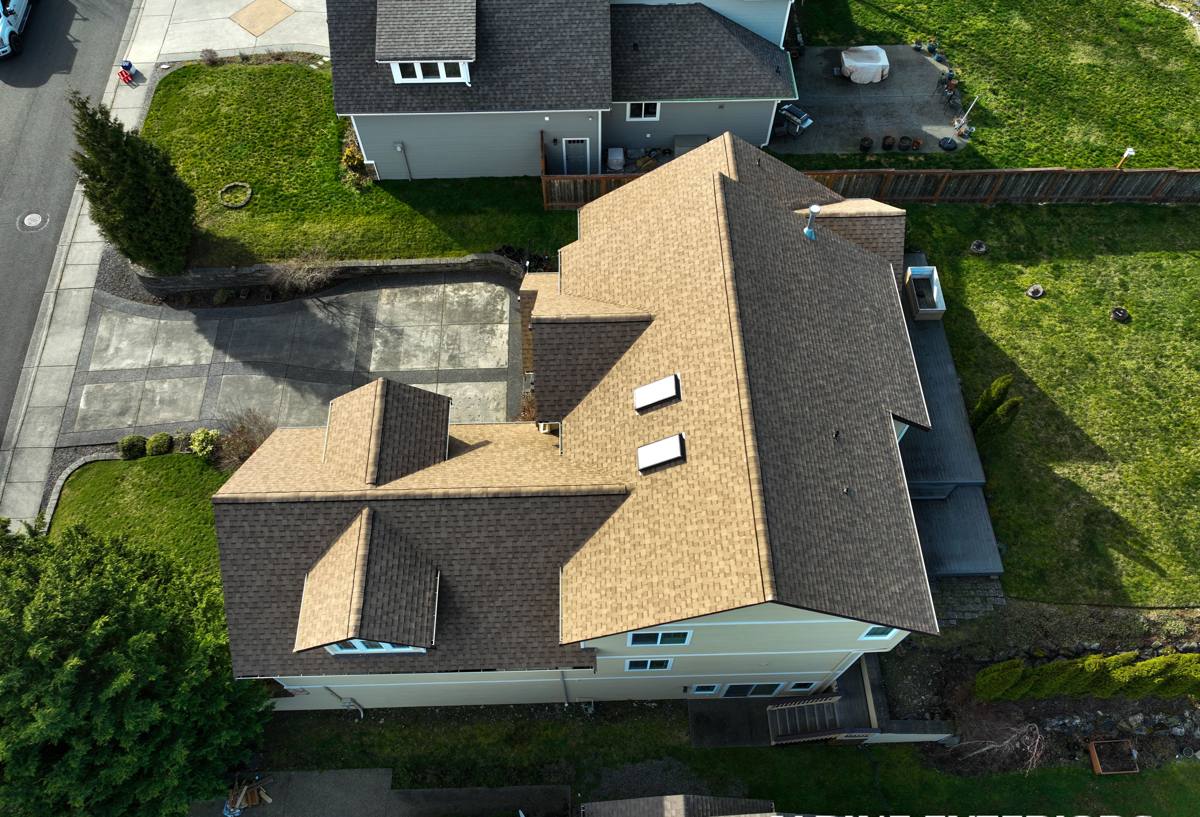
What "Correct" Looks Like for a Blaine Siding Replacement
A proper siding replacement is not just pulling off old material and nailing up new boards. In a coastal Whatcom County environment, the work that happens underneath the siding matters as much as the siding itself.
The Water-Management Layer
Every siding replacement should start with an inspection of the sheathing once the old siding is off. This is the only point in a project's life where the crew can actually see what years of exposure have done to the wall behind the cladding. On a Blaine job, we're specifically looking for:
- Soft or delaminated sheathing around windows, doors, and low corners where wind-driven rain collects
- Rusted or failing fasteners from the original installation
- Missing or degraded weather-resistive barrier (house wrap) at seams and penetrations
- Signs of past moss or algae growth that trapped moisture against the wall longer than it should have sat
Any damaged sheathing gets replaced before a single new board goes up. A new water-resistive barrier is installed with properly lapped and taped seams, and flashing is corrected at every window, door, and roof-to-wall intersection. Skipping this step is the single biggest reason siding jobs fail early in salt-air, high-rainfall areas — the new siding can be perfect and the wall will still rot behind it if the water management underneath is wrong.
The Siding Itself
Once the wall is sealed correctly, the siding goes on with attention to the details that matter most in this climate: proper lap exposure, correct fastener placement and depth, sealed butt joints, and clearance at grade so the bottom edge of the siding never sits in standing water or splash-back.
Why We Install James Hardie Fiber Cement — And Nothing Else
This company installs only James Hardie fiber cement siding. We don't install vinyl, LP SmartSide, cedar, primed spruce, or other fiber cement brands like Cemplank or Allura, and we're upfront about why: in a coastal, moss-prone climate like Blaine's, the material itself is often the deciding factor in how long a siding job actually lasts.
Vinyl siding can warp and become brittle with UV and temperature cycling, and its seams and J-channels give wind-driven rain more opportunities to work behind the panel over time. Wood-based products like cedar or primed spruce need consistent repainting and sealing to resist rot and moss, and that maintenance schedule is easy to fall behind on, especially on homes with tree cover or shaded north walls near the water. Engineered wood siding performs well when properly maintained but is more sensitive to prolonged moisture exposure at cut edges and seams than fiber cement.
James Hardie fiber cement is manufactured from cement, sand, and cellulose fiber, which makes it non-combustible and dimensionally stable — it doesn't expand, contract, or absorb moisture the way wood-based products do. That stability matters directly in Blaine's climate: fiber cement resists the swelling and softening that salt-laden moisture causes in organic siding materials, and it doesn't provide the same food source for the moss and algae that thrive in this region's damp shoulder seasons.
Hardie's ColorPlus factory-applied finish is baked on under controlled conditions rather than site-applied, giving it better fade and adhesion resistance than field-painted siding — a real advantage in an area where sun and salt spray both work against paint film. Hardie also manufactures climate-specific HZ product lines engineered for different moisture and freeze conditions, and backs its siding with a strong transferable warranty when installed to its specifications. That warranty is only meaningful when the installer follows Hardie's fastening, clearance, and flashing details exactly, which is why correct installation is as important as the material choice.
Comparing Siding Options for a Coastal Whatcom County Home
| Material | Moisture/Salt-Air Performance | Moss & Algae Resistance | Maintenance Burden |
|---|---|---|---|
| James Hardie Fiber Cement | Dimensionally stable, non-combustible, resists swelling | Doesn't feed biological growth the way organic materials do | Periodic washing; factory finish reduces repainting need |
| Vinyl | Can warp/crack with temperature swings; seams allow water intrusion over time | Moderate — surface growth still occurs, especially in shade | Low, but limited repair options if damaged |
| Cedar / Primed Spruce | Absorbs moisture; prone to swelling and rot without upkeep | Higher — organic material is a direct food source | High — regular sealing/painting required |
| Other Fiber Cement Brands | Similar base material, but finish systems and warranty terms vary | Comparable to Hardie when properly finished | Depends on factory finish quality |
What Drives Cost on a Blaine Siding Replacement
Every project is different, but the same factors tend to move the price up or down on siding replacements in this area:
| Factor | Why It Matters Here |
|---|---|
| Sheathing condition | Homes closer to the water more often need sheathing repair from past moisture intrusion |
| Wall complexity | Dormers, bump-outs, and multiple stories add flashing and cutting time |
| Siding profile | Lap width, board-and-batten, and shingle-style Hardie products carry different material and labor costs |
| Trim and accessory scope | Fascia, soffits, and trim boards are often replaced alongside siding for a consistent, sealed exterior |
| Access and site conditions | Waterfront lots and tree-covered properties can affect staging and scaffolding needs |
We give homeowners a real number after walking the specific house — not a rough guess based on square footage alone, since the condition of what's underneath the old siding is often the biggest variable.
Our Process for a Blaine Project
1. On-Site Assessment
We walk the exterior, look for visible signs of moss, staining, or soft spots, and talk through what you've noticed — drafts, paint failure, or areas that always seem damp.
2. Tear-Off and Sheathing Inspection
Old siding comes off in manageable sections so the crew can inspect and address sheathing issues as they're found, rather than discovering surprises after the whole wall is exposed and rushing repairs.
3. Water-Resistive Barrier and Flashing
New house wrap, properly lapped, with corrected flashing at every window, door, and penetration. This is the step that determines whether the new siding will actually last through Blaine's wet season after wet season.
4. Hardie Installation to Manufacturer Spec
Fastener spacing, clearance at grade and roof lines, and joint treatment are all installed per James Hardie's published instructions — the requirement for the warranty to remain valid and for the siding to perform as designed.
5. Final Walkthrough
We go over the finished exterior with you before calling the job complete.
Signs a Blaine Home Needs Siding Replacement (Not Just Repair)
- Soft or spongy areas when the siding is pressed, especially near the bottom courses
- Persistent moss or algae staining that returns shortly after cleaning
- Paint or finish that's failing across large sections rather than one isolated spot
- Visible warping, cupping, or separation at seams and corners
- Interior signs like musty smells or damp drywall on exterior walls
- Siding that's original to a home built more than 20-25 years ago
Why Hiring a Crew That Already Works Blaine Matters
A siding replacement done by a crew unfamiliar with this specific stretch of coastline can miss the details that matter most here. Flashing and clearance details that are adequate in a more sheltered part of Whatcom County aren't always enough right along the water, where wind-driven rain hits walls at angles that inland homes rarely see. A crew that regularly works in Blaine knows to check north- and west-facing walls more carefully for moss buildup, to pay closer attention to grade clearance near the water table, and to expect — and plan for — sheathing repair on homes that have gone a long time without attention to their exterior envelope.
That local familiarity also means fewer surprises during the project. We know what condition to expect when we open up a wall on an older Blaine home, and we price and schedule accordingly instead of discovering it mid-project.
Get a Straight Answer on Your Blaine Siding
If your siding is showing moss, soft spots, or failing paint, it's worth having someone look before it turns into a sheathing problem. We'll walk your home, tell you honestly whether you need a full replacement or targeted repair, and explain exactly what a James Hardie installation would involve for your specific walls. Request a free, no-pressure estimate using the form below.