 Bellingham
 Why Fairhaven Decks Wear Differently
Fairhaven sits close enough to Bellingham Bay that salt-laden air, wind-driven rain, and deep shade from mature trees all combine to put extra stress on outdoor wood and composite structures. A deck built the same way in a drier inland part of Whatcom County will often outlast one in Fairhaven by several years, simply because of what the deck is exposed to day after day. That doesn't mean a Fairhaven deck is destined to fail early — it means the repair and maintenance approach has to account for the environment it's actually sitting in, not a generic one.
We work on decks throughout Bellingham, but Fairhaven's mix of older homes, waterfront-adjacent lots, and heavy tree cover gives it a repair profile that's distinct from other neighborhoods. Understanding that profile is the first step to fixing a deck correctly instead of just patching what's visible.
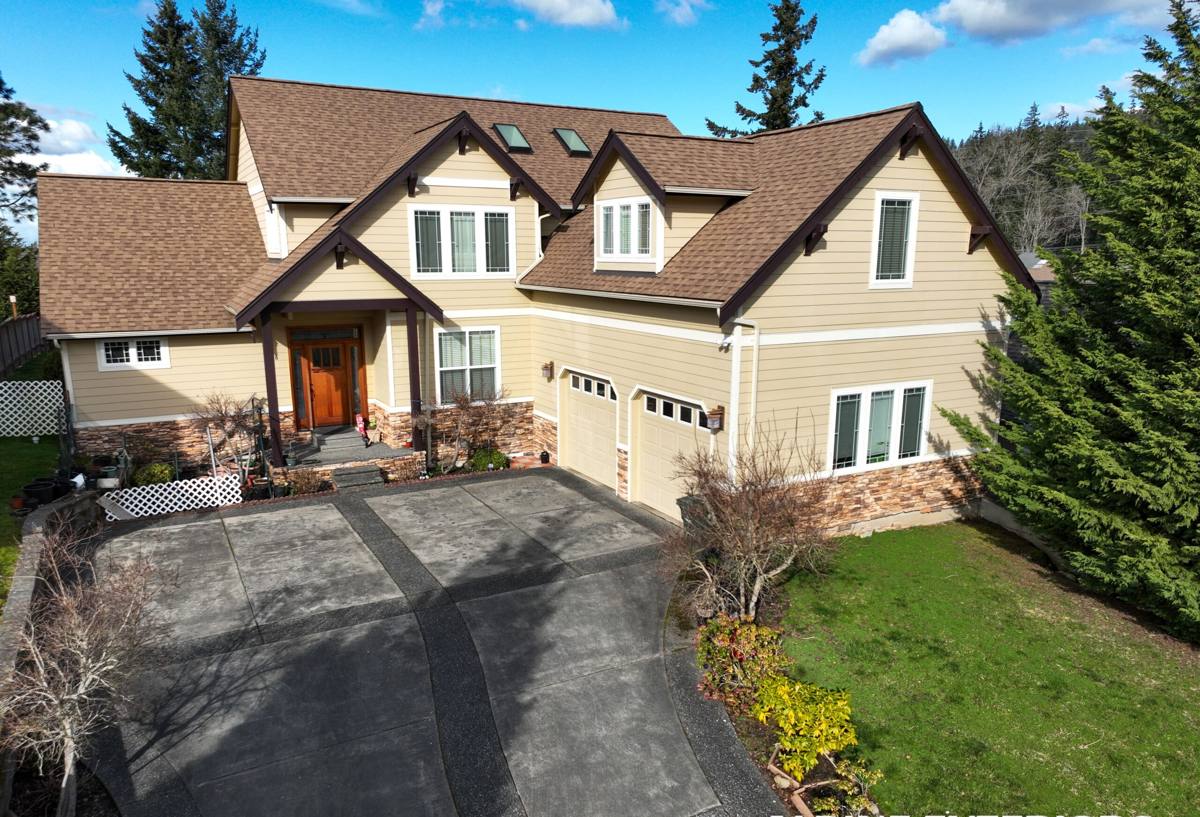
How Salt Air, Rain, and Moss Attack a Deck
Salt Air and Metal Fasteners
Proximity to the bay means airborne salt settles on every exterior surface, including your deck. Salt accelerates corrosion in nails, screws, joist hangers, and post bases — especially older galvanized hardware that wasn't rated for coastal exposure. Once a fastener starts to corrode, it loses holding strength long before it looks obviously bad, which is why squeaky boards or slightly loose railings are often an early warning sign rather than a cosmetic nuisance.
Driving Rain and Water Intrusion
Whatcom County's rain doesn't just fall straight down — wind off the water regularly drives it sideways, pushing moisture into joints, under flashing, and behind ledger boards that would stay dry in a calmer climate. Over time this shows up as soft spots near the house connection, staining on fascia boards, and rot that starts from the inside of a structural member before it's visible on the surface.
The Long Moss Season
Bellingham's moss season runs long — often eight months or more of conditions damp and shaded enough for moss and algae to take hold. On a deck, moss does more than look bad. It holds moisture against the wood surface, keeps boards from drying out between rain events, and creates a slick, unsafe walking surface. Left unaddressed, sustained moss growth softens the top layer of wood fibers and accelerates surface decay, particularly on boards that don't get much direct sun.
Common Deck Problems We Find in Fairhaven
- Ledger board rot — where the deck attaches to the house, often hidden until flashing is pulled back
- Corroded or failing fasteners — nails, screws, and joist hangers weakened by salt exposure
- Soft or spongy decking boards — a sign moisture has penetrated past the surface coating
- Loose or wobbly railings — a safety issue as often as a cosmetic one
- Moss and algae buildup — especially on shaded sides of the deck or under overhangs
- Undersized or rusted post bases — original construction hardware not rated for long-term coastal exposure
- Stair stringer wear — stairs take repeated foot traffic and drainage stress that flat deck areas don't
What a Correct Deck Repair Actually Involves
A lot of deck "repairs" amount to replacing the boards you can see and calling it done. That approach misses the point when the underlying problem is moisture intrusion or fastener failure — the new boards will fail the same way in a few years if the cause isn't addressed. Our process starts by identifying why a section failed, not just where.
Step 1: Structural Inspection
We check ledger board attachment, joist condition, post bases, and any area where water could be collecting instead of draining. This includes probing suspect wood with a screwdriver or awl to find soft spots that aren't visible from the surface.
Step 2: Isolate the Real Damage
Rot rarely stays exactly where it looks like it stops. We remove decking and, where necessary, framing back to solid, sound wood — not just back to the edge of visible discoloration.
Step 3: Address the Moisture Source
If rot or corrosion is tied to a flashing gap, poor drainage, or missing ledger flashing, we fix that source as part of the repair. Replacing boards without correcting drainage just resets the clock on the same failure.
Step 4: Rebuild with Coastal-Appropriate Materials
We use fasteners and hardware rated for coastal and high-moisture exposure, not standard-grade hardware that will corrode again in a few seasons. Matching materials — pressure-treated framing, appropriate flashing tape, and stainless or coated fasteners — matters more here than it would inland.
Step 5: Finish and Protect
Depending on the deck material, that means sealing, staining, or simply making sure new wood is protected from day one rather than left to weather unfinished through a wet season.
Repair vs. Replacement: How We Make the Call
Not every deck problem needs a full rebuild, and not every deck is worth patching indefinitely. We look at the extent of structural damage, the age and condition of the framing versus the decking surface, and whether the original construction has recurring design issues — like missing flashing — that will keep causing problems no matter how many boards get replaced.
| Factor | Favors Repair | Favors Replacement |
|---|---|---|
| Framing condition | Solid, dry joists and ledger | Widespread soft or rotted framing |
| Age of deck | Under 10-15 years | Original construction 20+ years old |
| Extent of damage | Isolated boards or one section | Damage spread across multiple areas |
| Hardware condition | Fasteners still holding, minor corrosion | Widespread rusted or failed hardware |
| Design issues | None — issue is wear, not design | Recurring drainage or flashing flaws |
We'll walk you through what we find and give you an honest recommendation, including when a targeted repair is genuinely the better financial and structural choice over a full replacement.
Decking Materials and How They Hold Up Locally
Pressure-Treated Wood
Still the most common decking material and, when properly maintained, holds up reasonably well in this climate. The tradeoff is that it requires regular cleaning and periodic sealing to resist moss growth and moisture absorption — skip that maintenance for a few seasons in a shaded Fairhaven yard and the surface can deteriorate faster than expected.
Cedar
Naturally rot- and insect-resistant, which is part of why it's a long-standing regional favorite, but it still needs finish maintenance to keep that resistance working in a wet, shaded environment. Unfinished cedar left exposed to constant moisture will gray and soften faster than a maintained one.
Composite Decking
Lower maintenance in terms of sealing and staining, but composite isn't maintenance-free — it still needs regular cleaning to prevent moss and algae from taking hold on the surface, and the substructure beneath it (joists, ledger, hardware) is just as vulnerable to moisture and corrosion as any wood deck. A composite surface on a rotting frame is still a failing deck.
Whatever material you have or choose for a repair, our recommendation is based on your specific deck's exposure, shade level, and how much upkeep you realistically want to commit to — not a one-size-fits-all pitch.
Maintenance That Actually Extends Deck Life Here
- Clean moss and algae off the deck surface at least once during the wet season, not just in spring
- Keep gutters and downspouts clear so runoff isn't draining directly onto or under the deck
- Check and reseal exposed wood surfaces on the manufacturer's recommended schedule, not "when it looks dry"
- Inspect railings and stair connections for looseness at least once a year
- Trim back overhanging branches to reduce shade and let the deck surface dry between rain events
- Have the ledger board and flashing checked periodically, since that's the area most prone to hidden rot
Why Local Experience with Fairhaven Homes Matters
A crew that mainly works drier, more sheltered areas of Whatcom County can still do competent carpentry, but they may not immediately recognize how much extra allowance to build in for corrosion resistance, drainage detailing, or moss-prone shaded sections that are routine considerations for us. Working regularly in Fairhaven and similar Bellingham neighborhoods means we've seen how decks here actually fail over time — not just how they're built on day one — and we plan repairs around that reality rather than a generic textbook approach.
That experience also means we can usually spot which parts of a deck are original construction issues versus normal wear, and explain the difference clearly instead of recommending a full rebuild by default.
Get a Straight Answer About Your Deck
If your Fairhaven deck has soft spots, loose railings, persistent moss, or you're just not sure whether it needs a repair or a full rebuild, we're happy to take a look. We'll give you a clear, honest assessment of what's actually going on and what it will take to fix it right — no pressure, no inflated scope. Reach out using the form below for a free estimate.