 Bellingham
 Happy Valley's Roofs Work Harder Than Most
Happy Valley sits in one of the more tree-shaded, hillside pockets of Bellingham, and that setting is a mixed blessing for roofs. The same mature tree canopy that makes the neighborhood pleasant also means constant shade on north- and east-facing roof planes, heavy leaf and needle drop in the fall, and slower drying times after every storm that rolls off Bellingham Bay. Add in Whatcom County's long, wet stretch from October through May, and you've got a roof that rarely gets a real chance to dry out completely between rain events.
We repair roofs all over Bellingham, but Happy Valley has its own pattern of problems, and knowing that pattern before we ever get on the ladder saves homeowners time and money. This page covers what we actually see on Happy Valley roofs, what a correct repair looks like, and how to tell a real fix from a patch that buys you six months.
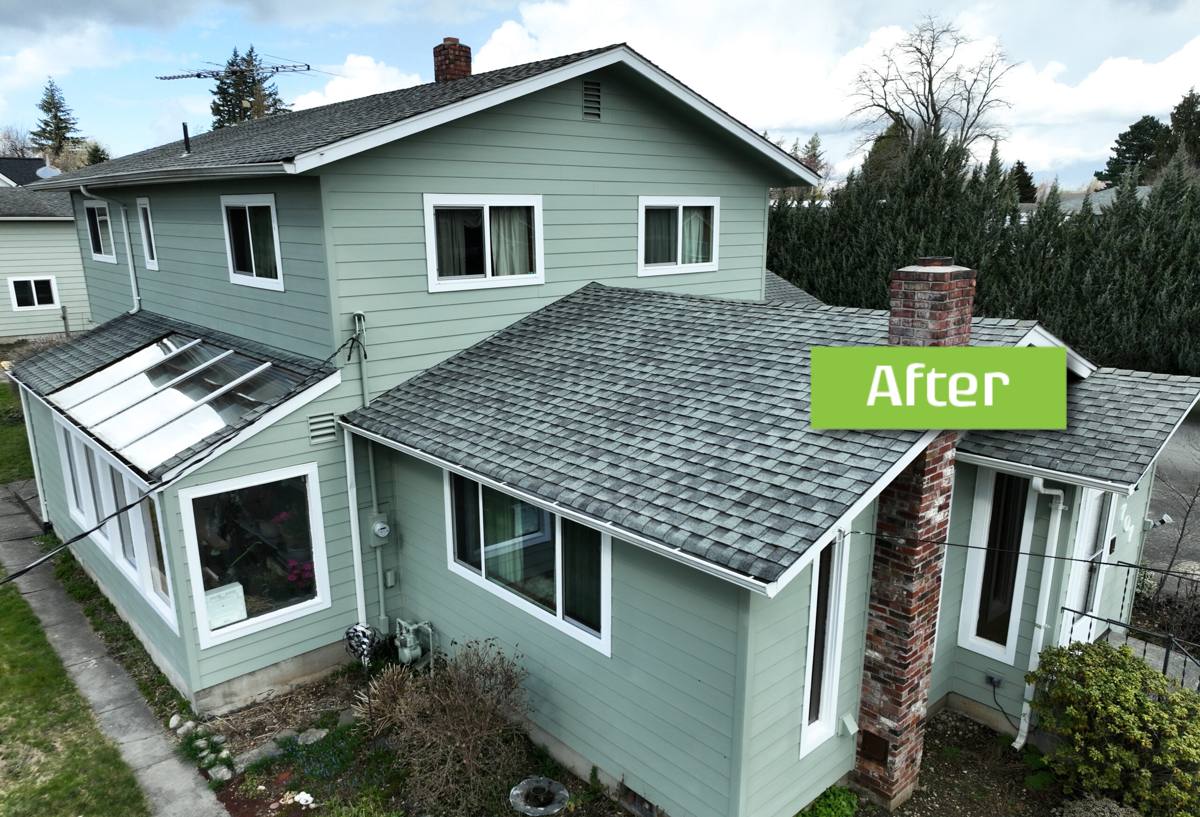
Why the Local Climate Is Hard on This Neighborhood Specifically
Three things stack up against roofs in this part of Bellingham:
- Salt-laden air. Proximity to the Bay means metal fasteners, flashing, and vent components corrode faster than they would further inland, especially on the west- and north-facing sides of a roof.
- Driving rain. Storms coming off the water don't just fall straight down — wind-driven rain gets pushed sideways under shingle tabs, around poorly sealed flashing, and into any gap that a calm-weather rain would never find.
- A long moss season. Shade, moisture, and mild temperatures are exactly what moss wants, and Happy Valley's tree cover gives it all three for most of the year. Moss isn't cosmetic — it holds water against the roofing material and lifts shingle edges as it grows.
None of these are unique to Happy Valley in isolation, but the combination — heavy shade plus bay-adjacent air plus wind-driven rain — is more concentrated here than in the sunnier, more open parts of the city.
Common Roof Repair Issues We Find in Happy Valley Homes
Moss and Organic Growth Damage
Moss growing along ridge lines and in shaded valleys traps moisture against the roofing surface. Over time it works shingle edges loose, and once water gets underneath, it doesn't need much more encouragement to reach the decking. We treat this as a repair issue, not just a cleaning issue — removing moss without addressing the granule loss or lifted shingles underneath just resets the clock.
Flashing Failure
Flashing around chimneys, skylights, and roof-to-wall transitions is the single most common source of active leaks we find. Salt air accelerates corrosion on older galvanized flashing, and once it's compromised, driving rain finds the gap fast.
Valley and Gutter Backups
Tree debris collects in roof valleys and gutters faster here than in more open neighborhoods. A clogged valley redirects water sideways under the roofing material instead of down and off the roof — this is one of the more preventable causes of interior leaks we get called out for.
Nail Pops and Fastener Corrosion
Temperature swings and moisture cycling work fasteners loose over years. Combined with salt-air corrosion, this shows up as raised shingle tabs, small holes where a nail head has backed out, or rust staining bleeding through the shingle surface.
What a Correct Roof Repair Actually Involves
A repair done right isn't just replacing what's visibly broken — it's confirming the damage hasn't traveled further than the surface. Here's the difference between a surface patch and a repair that actually holds:
| Step | What It Catches |
|---|---|
| Full roof inspection, not just the reported leak spot | Secondary damage — water travels sideways under roofing before it drips through the ceiling |
| Decking check at the repair area | Soft or delaminated plywood that needs replacing before new roofing goes down |
| Flashing inspection at nearby penetrations | A second failure point that will leak again within a season if left alone |
| Moss and debris clearing around the repair zone | Organic growth that will undermine the new work within a year or two |
| Matching materials and proper fastening pattern | Mismatched or under-fastened repairs that fail faster than the original roof did |
Skipping any of these steps is how a homeowner ends up paying for the same repair twice.
Repair or Replace? Honest Cost Factors
Not every leak means a new roof, and not every roof is worth another round of patches. We look at a handful of honest factors before recommending either path:
| Factor | Leans Toward Repair | Leans Toward Replacement |
|---|---|---|
| Roof age | Under roughly two-thirds of expected material lifespan | Nearing or past expected lifespan for the material |
| Number of past repairs | First or second repair in this area | Same section repaired multiple times already |
| Decking condition | Solid, dry decking under the damaged area | Soft, delaminated, or water-stained decking in multiple spots |
| Extent of moss/granule loss | Localized to one or two areas | Widespread across most roof planes |
| Flashing condition overall | Sound except at the repair site | Corroded or failing at multiple penetrations |
We'll always tell you honestly which side of that table your roof falls on. A repair that's likely to fail again within a year isn't a good use of anyone's money, and we'd rather say so upfront than send you a bill twice.
Materials We Work With
Most Happy Valley homes are roofed in composition (asphalt) shingle, with some cedar shake and standing-seam metal on older or higher-end properties. Each has its own repair considerations:
Composition Shingle
The most common material in the neighborhood. Repairs are straightforward when matching shingles are available, but color and granule wear can make an exact match tricky on older roofs — we'll walk you through realistic expectations before starting.
Cedar Shake
Beautiful material, but it holds moisture longer than composition shingle and needs more attentive moss management in a shaded, damp setting like this one. We're upfront that cedar demands a higher maintenance commitment here specifically because of the tree cover and moisture — that's a maintenance trade-off, not a defect in the product.
Standing-Seam Metal
Handles moss and moisture well, but fastener and flashing detailing matters even more with metal — a poorly sealed seam or penetration is a direct path for wind-driven rain.
Our Repair Process
- Inspection and assessment. We walk the full roof, not just the reported problem area, and check the attic or interior ceiling line where accessible for signs water has already traveled.
- Written scope and estimate. You get a clear explanation of what's damaged, what we recommend, and why — no pressure to upgrade to a full replacement unless the roof genuinely calls for it.
- Moss and debris clearing. Any repair area gets cleared of moss and organic buildup first, so the new work isn't sitting on top of the same problem that caused the damage.
- Decking repair as needed. Soft or water-damaged decking is replaced before new roofing goes down — covering bad decking with new shingles just hides the problem.
- Repair and flashing work. Shingles, flashing, or fasteners are replaced to match the surrounding roof as closely as possible, with attention to proper overlap and sealing given the wind-driven rain this area gets.
- Final walkthrough. We show you what was done and flag anything else on the roof worth keeping an eye on going forward.
Why a Crew That Already Works Happy Valley Matters
Roof repair isn't one-size-fits-all across a city like Bellingham. A crew that mostly works drier, more open neighborhoods can miss how aggressively moss and shade-driven moisture behave here, or underestimate how much wind-driven rain off the Bay can push under a roofline. Working this neighborhood regularly means we already know which roof orientations take the worst of it, which older flashing types are showing their age, and what a Happy Valley roof needs that a generic repair checklist won't tell you.
It also means we're not guessing at access — narrow driveways, mature landscaping, and hillside lots are common here, and planning for that ahead of time keeps the job efficient and keeps your property protected while we work.
Homeowner Checklist: Signs You Need a Roof Repair Now
- Visible moss buildup along ridges, valleys, or the shaded side of the roof
- Granules collecting in gutters or at downspout outlets
- Water stains on interior ceilings, especially after a windy rainstorm
- Curling, cracked, or missing shingle tabs
- Rust streaking near flashing, vents, or chimney edges
- Daylight visible through the roof deck from inside the attic
- A roof that's due for its first repair after 12-15+ years, or that's already had more than one patch in the same spot
If you're seeing more than one of these, it's worth having someone look before the next big storm off the Bay finds the gap for you.
Maintenance Between Repairs
A repair holds longer when the roof around it is kept up. In a neighborhood with this much tree cover, that mostly comes down to two things: keeping moss growth in check and keeping valleys and gutters clear of needle and leaf buildup, especially heading into the wet season. Neither task requires much beyond consistency, but they're the difference between a repair that lasts its expected life and one that's undone by the same conditions that caused the original damage.
If you're dealing with a leak, visible moss, or a roof that's just showing its age in Happy Valley, we're happy to take a look and give you a straight answer about what it actually needs. Reach out for a free, no-pressure estimate using the form below.