 Bellingham
 Siding That Has to Work in Lynden's Climate, Not Just Look Good on Day One
Lynden sits in the flat, fertile stretch of Whatcom County between Bellingham and the Canadian border, close enough to the Salish Sea to catch salt-tinged air on a west wind and far enough inland to hold onto fog and standing moisture longer than the coastline does. Add the Pacific Northwest's long, low-intensity rainy season and the shaded, damp conditions that let moss and algae take hold on north- and east-facing walls, and you get a climate that is quietly hard on exterior siding. It is not dramatic weather — no hailstorms, no extreme heat — but it is relentless, and relentless is what actually breaks siding down over twenty years.
Homes in Lynden and the surrounding Bellingham area need a siding system that can shed water fast, resist swelling and rot when it does stay wet, hold its paint or factory finish through repeated damp-dry cycles, and stand up to the mildew and moss growth that comes with shade and humidity. That is the specific problem this page is about, and it is why we install James Hardie fiber cement siding exclusively — not vinyl, not LP SmartSide, not cedar, not primed spruce.
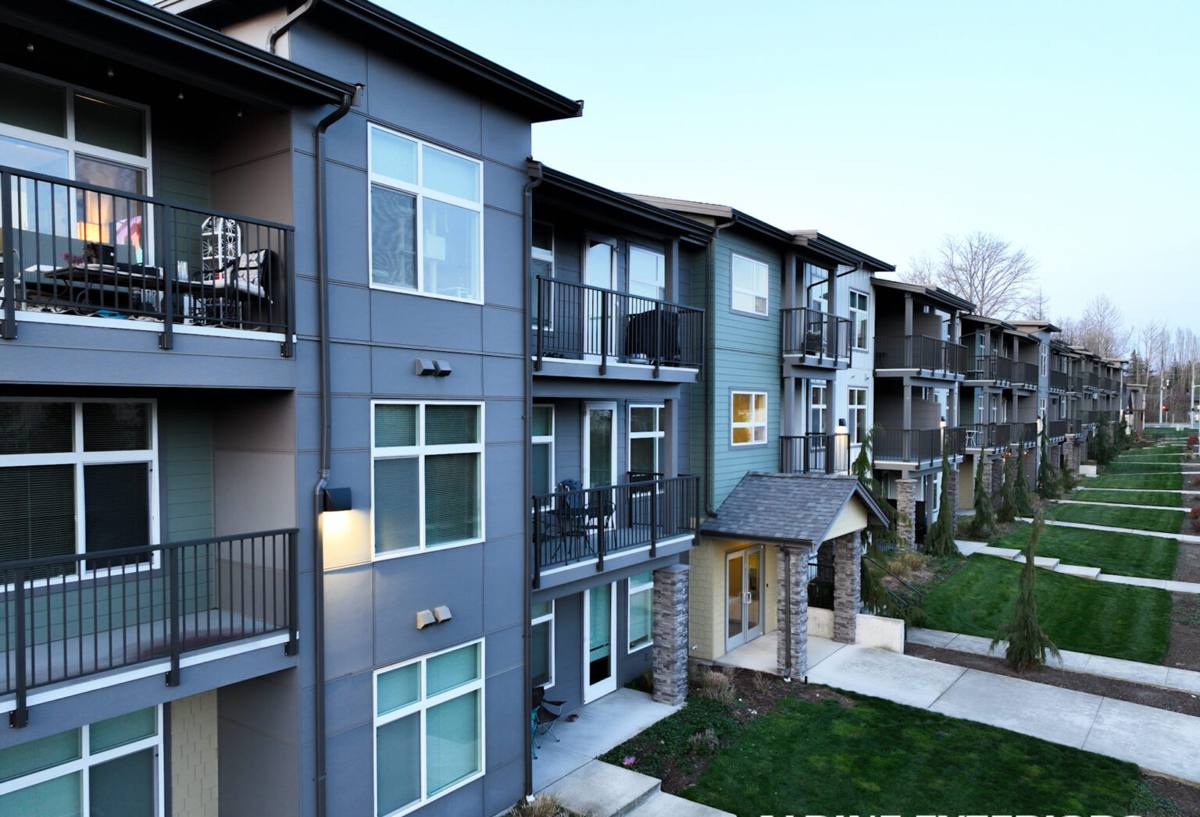
What Whatcom County Weather Actually Does to Siding Over Time
Salt Air
Even homes several miles inland from Bellingham Bay get intermittent exposure to salt-laden air, especially on west-facing walls. Salt accelerates corrosion of fasteners and metal trim, and it can degrade certain coatings and adhesives faster than a purely inland climate would. Materials and finishes matter more here than they do further from the water.
Driving Rain
Wind-driven rain doesn't just wet a wall — it pushes moisture up under laps, into seams, and behind poorly flashed penetrations. Over years, any siding product with weak seams, absorbent edges, or a finish that doesn't fully seal the material will start taking on water at exactly those points.
Long Moss and Algae Season
Shaded walls, fence lines, and north elevations in this region stay damp for extended stretches, which is ideal for moss, algae, and mildew growth. Siding that absorbs moisture at the surface gives that growth something to root into; siding with a factory-cured, moisture-resistant finish gives it a lot less to hold onto.
None of this is unique to Lynden specifically, but it is a defining feature of siding on this side of the Cascades, and it is the lens we use for every material decision we make on a job.
Why We Install James Hardie and Nothing Else
We standardized on James Hardie fiber cement siding because it is engineered around the exact failure modes that show up in this climate:
- Fiber cement doesn't swell, warp, or rot the way wood-based products can when they take on repeated moisture.
- James Hardie's ColorPlus finish is factory-baked and cured under controlled conditions, which gives it better long-term color retention and moisture resistance than field-applied paint on site-finished siding.
- Hardie's HZ5 product line is engineered for climates with more moisture and freeze-thaw cycling, which fits the Pacific Northwest better than a generic all-climate product.
- Fiber cement is non-combustible, which matters for wildfire-adjacent risk in drier summer months even in a generally wet region.
- The transferable limited warranty is backed by a manufacturer with a long track record specifically in fiber cement.
We get asked about vinyl siding often because it's inexpensive and low-maintenance in theory. In practice, vinyl can warp or crack in temperature swings, its seams are more visible over time, and it doesn't hold up as well against long-term UV and moisture exposure as a factory-finished fiber cement panel. LP SmartSide and other engineered wood products use a wood-strand core that, while treated, still relies on caulking, paint maintenance, and cut-edge sealing to keep moisture out — miss one of those maintenance steps in a wet climate like this one and you're inviting the exact rot problem the product is designed to resist. Cedar and primed spruce require the most ongoing maintenance of all and are the most exposed to moss, mildew, and moisture damage without a disciplined recoating schedule. We're not saying these products can't work anywhere — we're saying that after weighing the trade-offs against what this climate actually does to a wall over twenty years, James Hardie is the product we're willing to put our name behind.
What a Correct James Hardie Installation Involves
The siding material is only half the equation. A large share of siding failures we see on older homes in this area trace back to installation shortcuts, not the product itself. A correct Hardie install includes:
- A proper weather-resistive barrier installed and lapped correctly behind the siding, not just stapled up as an afterthought.
- Correct flashing at every window, door, and roofline intersection — this is where driving rain finds its way in if it's skipped or done poorly.
- Manufacturer-specified fastener patterns and clearances, including gaps at the bottom of the siding and around penetrations so water has somewhere to go instead of pooling.
- Proper joint treatment at butt seams, using Hardie's specified caulking or trim approach rather than gapping panels and hoping paint fills it.
- Correct nailing — hand-nailed or properly calibrated pneumatic tools, since overdriven fasteners crack the board and underdriven ones leave the panel loose.
- Ground clearance and drainage planning at grade level so the bottom course isn't sitting in splash-back moisture year-round.
James Hardie's own warranty coverage depends on the product being installed to their written specifications. A beautiful-looking job that skips flashing details or fastener spacing can still fail early — and can also void warranty protection the homeowner is counting on.
Our Process, Job by Job
1. On-Site Assessment
We walk the exterior, check the condition of the existing siding and sheathing, look at drainage and grade around the foundation, and identify any areas — window heads, roof-to-wall transitions, low-clearance sections — that need extra attention given the local rain and moss exposure.
2. Product and Line Selection
We help you choose the right Hardie product line, panel profile (lap, shingle, or panel style), and ColorPlus finish for the home and the neighborhood context, with the region's moisture and salt exposure factored into the recommendation.
3. Tear-Off and Substrate Check
We remove the old siding and inspect the sheathing underneath for hidden rot or moisture damage — a common finding on older homes in this area with wood or engineered siding that's been holding water longer than it looked like from the outside.
4. Weather Barrier and Flashing
This is the step that determines whether the siding actually keeps water out for the next several decades. We install and lap the weather-resistive barrier correctly and flash every penetration before a single piece of Hardie board goes up.
5. Installation to Manufacturer Spec
Panels go up following James Hardie's fastening, clearance, and joint-treatment requirements, which keeps the installation warranty-eligible and gives the siding its full expected service life.
6. Final Walkthrough
We review the finished job with you, cover basic care and what to watch for, and answer any questions about maintenance in this climate.
Comparing the Options: How They Hold Up in This Climate
| Factor | James Hardie Fiber Cement | Vinyl | LP SmartSide / Engineered Wood | Cedar / Primed Spruce |
|---|---|---|---|---|
| Moisture resistance | Strong — non-organic core, factory finish | Good until seams/warping develop | Moderate — depends on sealed edges & maintenance | Weak without regular recoating |
| Moss/algae resistance | Strong factory finish resists surface growth | Moderate | Moderate, wood-strand core is vulnerable if breached | Weak, porous surface |
| Salt air durability | Strong | Moderate, can chalk/fade | Moderate | Weak to moderate |
| Maintenance burden | Low | Low | Moderate (caulk & cut edges) | High (recoating cycle) |
| Fire resistance | Non-combustible | Combustible | Combustible | Combustible |
Why It Matters That the Crew Already Works in This Area
Every part of the process above — flashing detail, clearance at grade, product line selection — depends on understanding how a specific climate behaves on a specific wall. A crew that installs siding across a wide range of climates has to relearn those details every time they cross into a new region. A crew that works Lynden, Bellingham, and the rest of Whatcom County regularly already knows which elevations take the worst of the driving rain, where moss tends to establish first, and what grade and drainage conditions are common on homes in this area. That familiarity shows up in the small decisions — an extra flashing detail here, a different clearance there — that don't show up on a spec sheet but make the difference between siding that looks right for five years and siding that performs right for twenty-five.
What to Ask Before Hiring Anyone for Siding Work
- Are they a certified or factory-trained installer for the specific product they're proposing?
- Will they show you the flashing and weather-barrier plan before panels go up, not just after?
- Do they install to the manufacturer's written specifications, and can they explain what that involves?
- What does the workmanship warranty cover, separate from the manufacturer's material warranty?
- Have they worked on homes in your specific area, and do they understand the local climate exposure your walls face?
If your Lynden or Bellingham-area home needs new siding, or you're just trying to figure out whether it's time, we're happy to take a look and give you a straight answer. Reach out for a free, no-pressure estimate using the form below.