 Bellingham
 Metal Roofing Built for Birchwood's Weather, Not Just the Catalog
Birchwood sits close enough to the water and the surrounding tree cover that its roofs take a different kind of beating than roofs a few miles inland. Salt-laden air moves through on the wind off Bellingham Bay, rain comes in sideways during fall and winter storms, and the shade from mature trees keeps moss and moisture active on north-facing slopes for most of the year. A metal roof that's specified and installed correctly can shrug off all three of those things for decades. One that's installed with shortcuts will show it early — chalking finishes, rust bleeding at cut edges, or moss creeping under panel laps where it shouldn't be able to reach.
We install metal roofing across Whatcom County, and Birchwood comes with its own short list of things we check every time: how exposed the roof is to wind-driven rain, how much tree canopy shades each slope, and whether the existing roof deck has any hidden moisture damage from years of moss holding water against it. None of that changes the basic product, but it changes the details — flashing choices, fastener spacing, and how much attention the roof needs after installation.
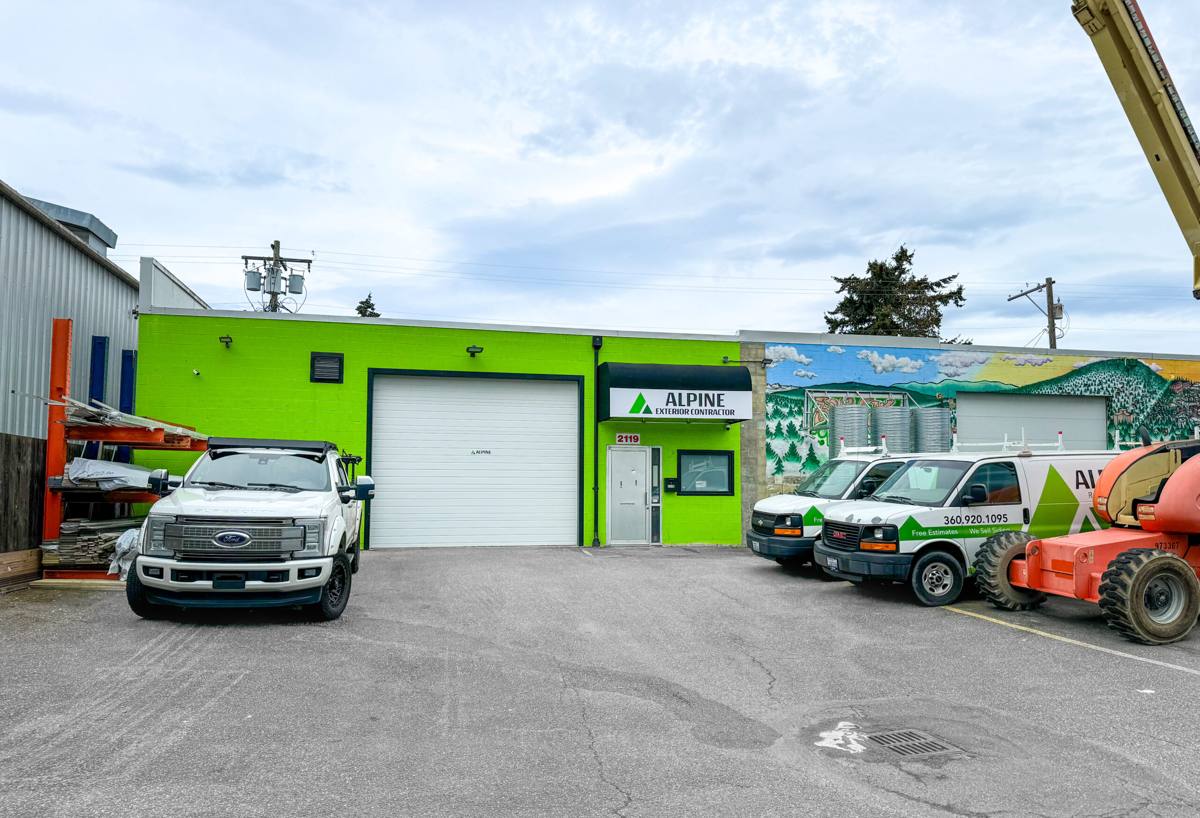
What Salt Air, Rain, and Moss Actually Do to a Roof
Salt Air
Airborne salt accelerates corrosion on any metal surface that isn't properly coated or isn't the right alloy for a coastal-influenced environment. This shows up first at cut edges, screw heads, and any spot where the factory finish has been scratched during handling or installation. It's a slow process, which is exactly why it's easy to under-spec a roof for it — the mistake doesn't show up until years later.
Driving Rain
Wind off the water can push rain sideways and even slightly uphill under normal circumstances. Standard lap coverage that works fine in a calm rain event can fail during a wind-driven one if flashing details and panel overlaps weren't built with that in mind. Valleys, wall-to-roof transitions, and penetrations (vents, chimneys, skylights) are where this almost always shows up first.
Moss and Organic Growth
Bellingham's damp, mild climate and Birchwood's tree cover are a good combination for moss, especially on north- and east-facing slopes that don't get much direct sun. Moss holds moisture against roofing material far longer than open exposure would, and on the wrong substrate it can work into laps and fastener penetrations. Metal roofing resists moss far better than shingles or wood shakes because there's no organic material for it to root into, but moss and debris can still accumulate in valleys and at panel laps if the roof isn't detailed and maintained correctly.
What a Correct Metal Roofing Job Actually Involves
"Metal roof" covers a wide range of quality, and the difference between a roof that performs for 40-plus years and one that causes problems in five usually comes down to details that aren't visible once the job is done. A correct installation includes:
- A roof deck inspection and repair of any rot or delamination before anything new goes down — covering up a bad deck is the single most common cause of early failure
- A synthetic underlayment or self-adhered membrane rated for the exposure, not just whatever was on hand
- Proper fastener type, coating, and spacing matched to the panel profile and local wind exposure
- Closed-cell or vented closures at ridges and eaves to keep wind-driven rain and pests out while still allowing the roof to breathe
- Correctly lapped and sealed flashing at every valley, wall intersection, chimney, and roof penetration
- Panel and trim materials matched in alloy and finish so galvanic reaction isn't introduced at fastener points or trim seams
Skipping any one of these doesn't necessarily cause an immediate problem — that's what makes shortcuts tempting for a crew trying to move fast. It shows up two, five, or ten years later as a leak that's hard to trace back to its real cause.
Panel Types We Install — and How to Choose Between Them
Not every metal roofing system is the same product wearing a different name. The three most common options for homes in this area differ in appearance, installation method, and long-term maintenance needs.
| Panel Type | Appearance | Best Fit For | Maintenance Notes |
|---|---|---|---|
| Standing Seam | Clean vertical lines, concealed fasteners | Most roof pitches; best wind and rain resistance | Lowest long-term maintenance; fasteners aren't exposed to weather |
| Exposed Fastener Panel | Ribbed profile, visible screws | Budget-conscious projects, outbuildings, simpler roof lines | Fasteners and washers need periodic inspection and eventual replacement |
| Stone-Coated Steel | Mimics shingle or tile profiles | Homeowners who want a traditional look with metal's durability | Coating and granule adhesion should be checked periodically |
For most homes in Birchwood, we lean toward standing seam because the concealed fastener system removes one of the main long-term weak points — exposed screws that can loosen or corrode over time. Exposed fastener panels are a legitimate option for simpler structures or tighter budgets, but they come with a maintenance commitment that homeowners should understand going in, not discover later.
A Note on Product Choice
We're selective about which panel systems, coatings, and flashing components we install, and we're upfront about why. Some lower-cost systems use thinner gauge steel, minimal warranty coverage, or coatings not well suited to marine-influenced air. We'd rather have that conversation honestly during the estimate than install something that doesn't hold up and have to explain that later.
Ventilation: The Detail Most Roofs Get Wrong
Metal roofs need a ventilated space between the panels and the deck (or a properly designed vented assembly) to manage condensation. Without it, warm moist air from inside the attic can condense on the underside of cold metal panels during our wetter months, which soaks insulation and rots decking from the inside — a problem that has nothing to do with the roof's outer surface and everything to do with what's underneath it. We check existing attic ventilation on every reroof and correct it when it's inadequate, rather than installing new panels over a system that was never venting properly in the first place.
Our Process, Start to Finish
- On-site assessment: We look at the whole roof system — deck condition, existing ventilation, tree exposure, and how rain and wind actually hit the house, not just the roof's age or surface appearance.
- Written estimate: Panel type, underlayment, flashing details, and ventilation plan spelled out — no vague line items.
- Tear-off and deck inspection: Old roofing removed, deck inspected board by board, and any rot or soft spots repaired before anything new is installed.
- Underlayment and flashing: Weather barrier installed first, followed by flashing at every valley, wall, and penetration — this is where most future leaks are prevented or created.
- Panel installation: Panels installed to the fastener spacing and technique specified for the profile and local wind exposure, with attention to consistent alignment and sealed seams.
- Final walkthrough: We review the finished roof with the homeowner and cover basic maintenance expectations before we consider the job done.
Living With a Metal Roof in Birchwood: A Maintenance Checklist
Metal roofing is genuinely low-maintenance compared to shingles, but "low-maintenance" isn't "no-maintenance," especially under tree cover. A short annual routine keeps a good roof performing like one for its full lifespan:
- Clear leaves, needles, and debris from valleys and around penetrations, especially after fall storms
- Check for moss or algae buildup on shaded slopes and remove it gently — pressure washing can damage finishes and shouldn't be used
- Inspect flashing at chimneys, vents, and wall transitions for gaps or sealant that's aged out
- Look at fastener heads on exposed-fastener panels for early signs of loosening or corrosion
- Confirm gutters are clear so water isn't backing up under eave flashing
What Drives the Cost of a Metal Roof
Every roof is different, so a real number only comes from an on-site look, but the main factors that move the price are consistent:
| Factor | Why It Matters |
|---|---|
| Panel type | Standing seam typically costs more than exposed-fastener panels due to material and labor differences |
| Roof complexity | More valleys, dormers, and penetrations mean more flashing labor and material |
| Deck condition | Rot or damage found during tear-off adds repair cost, but skipping repairs costs far more later |
| Ventilation upgrades | Correcting inadequate attic ventilation adds upfront cost but prevents condensation damage |
| Access and pitch | Steep or hard-to-access roofs take longer and require more safety equipment |
We'd rather walk a homeowner through these factors honestly during an estimate than quote a number that doesn't hold up once we're actually on the roof.
Why a Crew That Already Works Birchwood Matters
A lot of roofing problems in this area aren't caused by bad materials — they're caused by installation details that weren't adjusted for local conditions. A crew that regularly works in Birchwood and the surrounding Bellingham neighborhoods already knows which slopes tend to hold moss, how much wind-driven rain a given orientation actually sees, and which older homes in the area are more likely to have deck issues under the existing roofing. That local knowledge shows up in the estimate and in the final job — fewer surprises during tear-off, and fewer callbacks after a storm. It also means we're a known, reachable local business if anything ever needs attention down the road, not a crew that came through once from out of the area.
Get a Straight Answer for Your Roof
If you're weighing a metal roof for your Birchwood home, we're happy to take a look, walk you through what your specific roof needs, and give you a straightforward written estimate — no pressure, no upsell on things you don't need. Use the form below to get started.