 Bellingham
 Metal Roofing Built for the Puget Area's Weather
Homes in the Puget area of Whatcom County sit in a tough spot for a roof: close enough to the water to catch salt-laden air, exposed to long stretches of driving rain off the Sound, and shaded by the kind of tree cover that keeps moss and moisture around long after a storm passes. A roof here isn't just shedding water a few times a year — it's managing near-constant moisture cycles for most of the fall, winter, and spring. Metal roofing, installed correctly, handles that combination better than most other options. Installed poorly, it can trap moisture, corrode at the fasteners, or fail at the seams exactly where this climate is hardest on a roof.
This page is about metal roofing specifically for Puget-area homes — what the climate demands, what a correct installation actually involves, and how we approach the job when we're up on your roof.
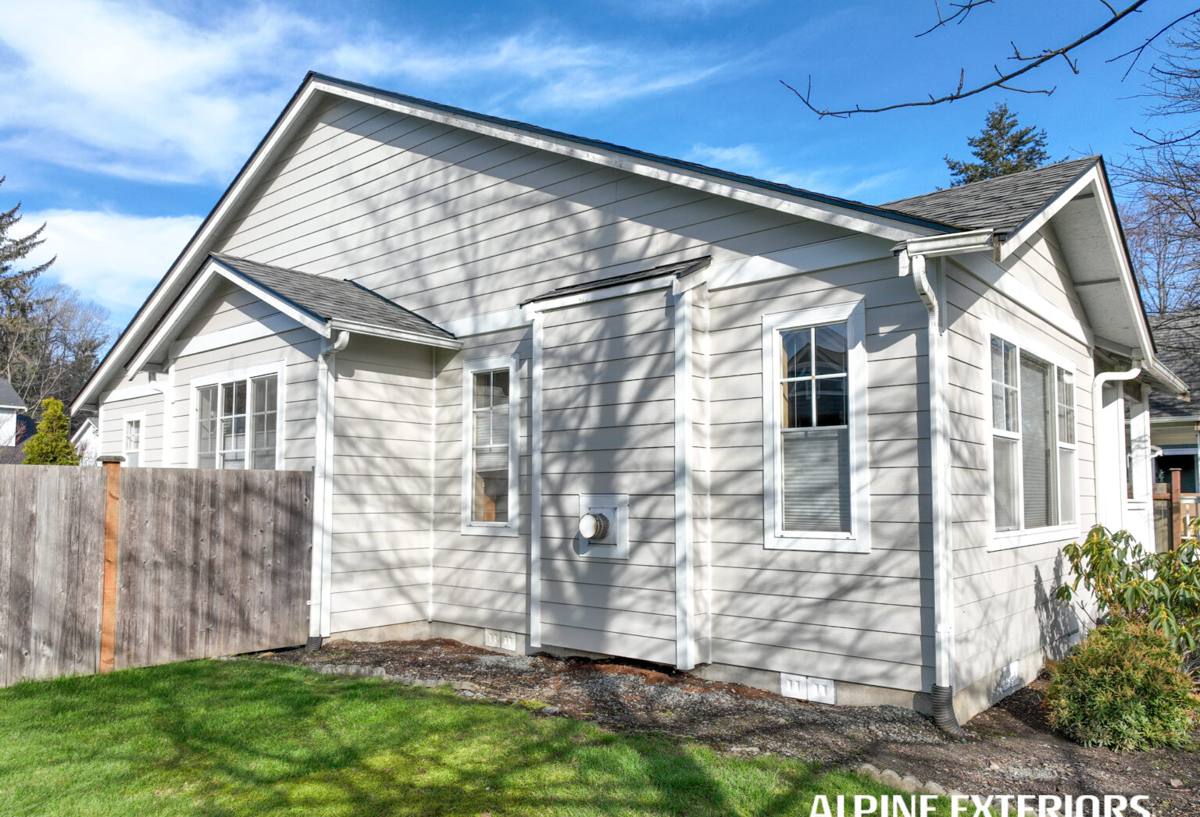
Why Salt Air, Rain, and Moss Change the Job
Salt Air and Corrosion
Proximity to Bellingham Bay and the broader Puget Sound means airborne salt settles on exposed metal over time. Bare or poorly coated fasteners, exposed cut edges, and mismatched metals (where two dissimilar metals touch and accelerate corrosion through galvanic reaction) are the weak points. The panel material itself usually isn't the problem — the details around it are.
Driving Rain
Wind-driven rain doesn't just fall straight down onto a roof; it gets pushed sideways and upward under laps, around penetrations, and into any gap that wasn't sealed or lapped correctly. A metal roof depends on its seams, flashing, and underlayment working together as a system. One weak seam under normal rain might never show a problem. Under driving rain, it will.
Moss Season
Whatcom County's damp, shaded conditions support moss and lichen growth for much of the year, especially on north-facing slopes and areas under tree cover. Moss holds moisture against roofing material and, on the wrong substrate, can work into seams and fastener penetrations over time. Metal roofing resists moss far better than composition shingle or wood, but it isn't immune — panel orientation, slope, and surface finish all affect how much moss actually takes hold.
What a Correct Metal Roof Installation Involves Here
A metal roof is only as good as the assembly underneath it. For Puget-area homes, we pay particular attention to:
- Underlayment: A high-temperature, self-adhering or synthetic underlayment rated for the moisture exposure this area sees, not a bare-minimum felt layer.
- Fastener selection: Fasteners matched to the panel metal to avoid galvanic corrosion, with proper washers and torque so they seal without over-compressing.
- Flashing at every penetration: Vents, chimneys, skylights, and wall transitions are where driving rain finds its way in — these get custom-formed flashing, not generic trim stretched to fit.
- Panel overlap and seam direction: Oriented to shed wind-driven rain based on your roof's actual exposure, not just laid out for speed.
- Ventilation: Proper intake and exhaust airflow so condensation doesn't build up on the underside of the panels in our damp winters.
- Ice and water protection at eaves and valleys: Extra protection where water concentrates and lingers.
Skipping any one of these doesn't usually cause an immediate problem. It causes a slow one — a leak that shows up two winters later, corrosion that starts at year six instead of year twenty, or moss that gets a foothold because a seam wasn't tight enough to shed water cleanly.
Choosing the Right Metal System
Not all metal roofing is the same product wearing different colors. The panel type and finish both matter for how the roof performs in salt air and constant moisture.
| System | Best For | Trade-offs in This Climate |
|---|---|---|
| Standing seam steel | Most Puget-area homes; strong wind and rain performance | Higher upfront cost; requires precise seaming to perform |
| Standing seam aluminum | Homes closest to the water or with heavy salt exposure | Naturally corrosion-resistant but softer, needs careful handling during install |
| Exposed-fastener steel panels | Budget-conscious projects, outbuildings, shops | More fastener penetrations to maintain over the roof's life; needs re-torquing eventually |
| Stone-coated steel | Homes wanting a shake or tile look with metal durability | More surface texture can hold moss longer if slope or shading is a problem |
For most homes in this area, we lean toward standing seam systems because the concealed fastener design removes the biggest long-term maintenance item — exposed screws that eventually need attention. That's a professional judgment based on how this climate treats a roof over decades, not a claim that other systems are poor products.
Coatings and Finishes
The paint or coating system on a metal panel does real work in salt air. A quality baked-on finish resists chalking and fading and gives the underlying metal an extra layer of protection at cut edges and fastener points. We factor coating quality into every material recommendation, not just panel gauge or profile.
Our Process for a Puget Metal Roofing Project
- On-site assessment: We look at slope, exposure to prevailing wind and rain, tree cover and moss history, existing ventilation, and the condition of the decking underneath.
- Material recommendation: Based on that assessment, we recommend a panel type, gauge, and finish suited to your specific exposure — a home tucked under trees gets a different conversation than one with open water views.
- Written estimate: Clear scope, materials, and pricing before anything is scheduled.
- Tear-off and deck inspection: We check the decking for rot or soft spots once the old roofing is off — this is often where hidden moisture damage shows up.
- Underlayment and flashing installation: The moisture-management layer goes in correctly before a single panel is laid.
- Panel installation: Seamed or fastened to spec, with attention to alignment and weathertightness at every penetration.
- Final walkthrough: We review the finished roof with you, including what routine maintenance to expect.
Maintenance in Moss Season
A well-installed metal roof needs far less upkeep than shingle, but "far less" isn't "none." In Whatcom County's climate, a simple annual check pays off:
- Clear debris and needles from valleys and around penetrations before fall rains set in.
- Check gutters and downspouts for buildup that can back water up under eave flashing.
- Look for early moss or algae growth on shaded slopes and address it before it spreads.
- Confirm fastener heads (on exposed-fastener systems) are still sealed and not backing out.
- Watch for any staining on interior ceilings near roof penetrations — an early sign worth checking, not ignoring.
Signs Your Current Roof Needs Attention
Whether you have an aging metal roof or are considering replacing shingles, these are worth a look:
- Visible rust streaking at fastener heads or panel edges
- Moss buildup that's thick enough to hold standing moisture
- Panels that have started to oil-can (visible waviness) more than they did originally
- Loose or lifted flashing around chimneys, vents, or skylights
- Any interior water stains, even faint ones, after a heavy rain
- Fasteners that look backed out or have lost their washer seal
Cost Factors to Expect
| Factor | Why It Moves the Price |
|---|---|
| Roof complexity | More valleys, dormers, and penetrations mean more flashing and labor |
| Panel type | Standing seam runs higher than exposed-fastener panels, largely due to labor and seaming equipment |
| Tear-off vs. overlay | Full tear-off costs more upfront but lets us inspect and address deck condition |
| Access and pitch | Steeper roofs or difficult access add labor time and safety equipment needs |
| Ventilation upgrades | Older homes often need intake or exhaust vent additions to perform well under a new roof |
We don't quote a job without seeing it. Roof condition and layout vary enough house to house that a broad price range isn't much use to you — a real on-site estimate is.
Why It Matters That We Already Work in Puget
A metal roofing crew that regularly works this specific area already knows how the wind comes off the water, which slopes hold moss longest, and how local building conditions affect flashing and ventilation decisions. That's not a substitute for a careful on-site look at your particular roof, but it does mean fewer surprises and fewer generic assumptions carried over from a completely different climate. We're a Bellingham-based crew, and Whatcom County's weather is what we build for every day.
If you're weighing a metal roof for your Puget-area home, we're glad to take a look and walk you through what your specific roof needs — no pressure, no hard sell. Use the form below to request a free estimate.