 Bellingham
 Why South Hill Homes Need a Roof Built for This Climate
South Hill sits up on elevation with open exposure to the weather systems that roll in off Bellingham Bay, and that combination of height and wind exposure puts real stress on a roof that flatter, more sheltered neighborhoods don't deal with in the same way. Homes here take driving rain at an angle, not just straight down, which means water gets pushed sideways into laps, fasteners, and flashing details that a lazier installation would never test. Add in salt-laden air moving in off the water and a moss season that can run most of the year in Whatcom County's damp climate, and you've got a roofing environment that rewards good work and punishes shortcuts.
Metal roofing, done correctly, handles all three of those stressors better than most alternatives — but "done correctly" is doing a lot of work in that sentence. A metal roof is only as good as its flashing, fastening, and ventilation details. We've been called out to fix metal roofs that looked fine from the street but were failing at the seams because whoever installed them didn't account for what this specific location does to a roof over time.
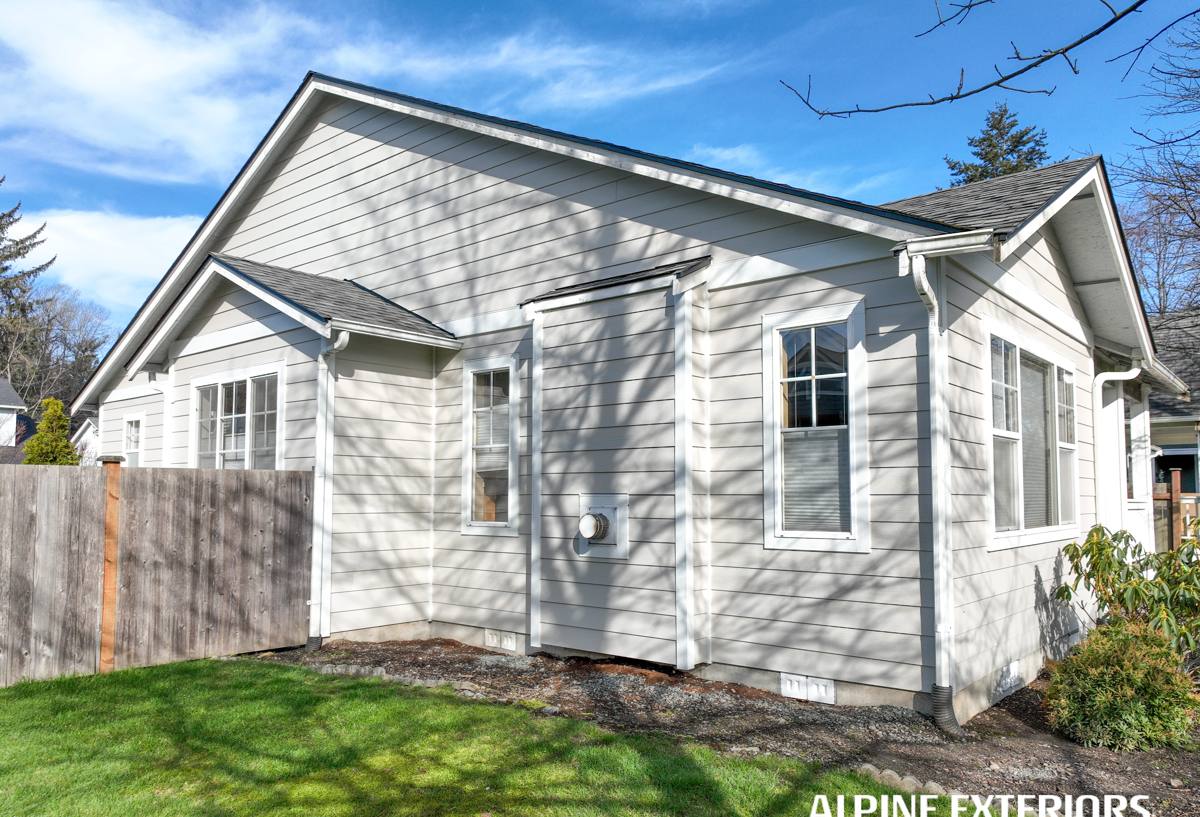
What Driving Rain and Wind Exposure Do to a Roof
Elevated, exposed lots like the ones common around South Hill see wind-driven rain that doesn't behave like a normal straight-down storm. Water gets forced up under laps and around penetrations instead of just running off. On a standing seam metal roof, this is exactly the condition the seam design is meant to resist — but only if the panels are run with the correct lap direction relative to prevailing wind, and only if the seams are actually engaged properly, not just laid together and screwed down.
Where Wind-Driven Rain Finds Weak Points
- Ridge caps that aren't properly vented and sealed against wind-blown moisture
- Valleys where two roof planes meet and water volume concentrates
- Panel end laps that weren't sealed or overlapped with enough coverage
- Fastener penetrations that rely on a washer alone instead of proper placement in the flat of the panel
- Wall-to-roof transitions and skylight curbs where flashing has to do the real work
None of these are exotic problems. They're the same handful of details that separate a roof that performs for decades from one that starts leaking in year three. Getting them right the first time is cheaper than fixing them later, and it's a lot less disruptive than dealing with water damage inside the house.
Salt Air and Metal Roofing: What Actually Matters
Proximity to Bellingham Bay means airborne salt is a real factor for exterior materials on this side of Whatcom County, even a few miles inland. Salt exposure accelerates corrosion on unprotected or poorly coated metal, and it's harder on fasteners than on the panels themselves — a roof can have great panels and still fail early because the screws holding it down weren't rated for the environment.
What We Look At for Salt Exposure
Metal roofing panels come in a range of substrates and coatings, and not all of them are a good match for a coastal-influenced climate. We factor in the finish system, the fastener material and coating, and how cut edges and drill points are treated during installation, since any exposed raw metal becomes the first place corrosion starts.
| Component | Coastal Consideration | Why It Matters |
|---|---|---|
| Panel coating | Higher-grade paint systems resist salt-driven fade and coating breakdown | Protects the steel or aluminum substrate underneath long-term |
| Fasteners | Corrosion-resistant screws matched to the panel metal | Mismatched or bargain fasteners are usually the first failure point |
| Cut edges | Factory-cut edges preferred over excessive field cutting | Exposed raw edges lose their protective coating and corrode first |
| Flashing metal | Compatible metal types to avoid galvanic reaction | Mixing incompatible metals accelerates corrosion at contact points |
None of this means metal roofing is a poor fit for this area — it's actually one of the more resilient options available when it's specified and installed correctly. It just means the details matter more here than they would somewhere drier and further from the water.
Moss, Debris, and the Long Wet Season
Whatcom County's moss season isn't a two-week nuisance — on shaded or north-facing sections of roof, it can be a near-constant presence given how much of the year stays damp here. Metal roofing has a real advantage over shingles when it comes to moss: the smooth, hard surface gives moss spores far less to grip onto compared to the porous texture of asphalt shingles or the organic surface of cedar. That doesn't make a metal roof moss-proof, especially in shaded valleys or against overhanging branches, but it dramatically reduces how much of a maintenance problem it becomes.
Why This Matters for Long-Term Roof Health
Moss and debris buildup isn't just cosmetic. Trapped organic material holds moisture against the roof surface and against flashing, which is exactly the condition that accelerates coating breakdown and, eventually, corrosion. A roof that sheds debris well stays drier, and a drier roof lasts longer — that's the whole equation. Panel profile matters here too: ribbed or standing seam profiles tend to shed needles and debris better than roofs with a lot of flat, low-slope area where material can sit and accumulate.
What a Correct Metal Roof Installation Looks Like
A metal roof is a system, not just a stack of panels. Every layer underneath and around the panels has a job, and skipping or cheapening any one of them shows up as a problem eventually — usually after the workmanship warranty on a rushed job has already expired.
The Layers That Actually Do the Work
- Deck inspection and prep — checking the existing roof deck for soft spots, rot, or prior water damage before anything new goes down
- Underlayment — a synthetic or self-adhered underlayment appropriate for metal, giving you a real secondary water barrier if anything gets past the panels
- Ice and water shield at vulnerable areas — valleys, eaves, and penetrations get extra protection where water concentrates
- Ventilation — proper intake and exhaust airflow so moisture doesn't build up in the attic space under the metal
- Panel installation — correct lap direction relative to prevailing wind and water flow, correct fastener spacing and placement
- Flashing and trim — custom-formed flashing at every transition, valley, and penetration rather than generic stock pieces forced to fit
Skipping any one of these doesn't usually cause an immediate failure — it causes a failure in year five or eight instead of year thirty, which is worse in a lot of ways because by then the damage has often spread into the decking or the interior of the home.
Our Process for South Hill Metal Roofing Projects
We approach every metal roof the same methodical way, adjusted for what your specific roof, slope, and exposure actually need.
Step by Step
- On-site assessment — we walk the roof, check the deck condition, note valleys, shaded areas, and wind exposure specific to your lot
- Material selection — panel profile, gauge, and coating chosen for this climate and your home's design, not a one-size answer
- Written estimate — clear scope, materials, and timeline before anything is scheduled
- Tear-off and deck repair — old roofing removed, deck inspected and repaired as needed before a single panel goes down
- Installation — underlayment, flashing, panels, and trim installed in the correct sequence with attention to every transition
- Final walkthrough — we review the finished roof with you, including care and maintenance basics for this climate
We don't skip the deck inspection step to save time, and we don't substitute stock flashing where a custom-bent piece is what the transition actually calls for. Those are the two most common shortcuts we see on failed metal roofs, and they're both invisible from the ground until something goes wrong.
Cost Factors for a South Hill Metal Roof
Every roof is different, but a few factors consistently move the price on a metal roofing project in this area more than others.
| Factor | How It Affects Cost |
|---|---|
| Roof complexity | More valleys, dormers, and penetrations mean more custom flashing labor |
| Panel type and gauge | Heavier gauge and premium coatings cost more upfront but hold up longer against salt and weather exposure |
| Existing deck condition | Rot or soft decking found during tear-off adds repair cost before panels can go on |
| Roof pitch and access | Steeper or harder-to-access roofs take longer and require more safety setup |
| Ventilation needs | Adding or correcting attic ventilation as part of the project affects labor and materials |
We're upfront that metal roofing typically costs more than asphalt shingles at the outset. The trade-off is a roof that, installed correctly, is built to outlast several shingle roof replacements and handles this area's rain, wind, and moss season with far less ongoing maintenance.
Why a Crew That Already Works This Neighborhood Matters
Roofing crews who haven't worked exposed, elevated properties around Bellingham before tend to underestimate two things: how much wind-driven rain actually tests flashing details, and how quickly untreated cut edges and mismatched fasteners start showing corrosion in salt-influenced air. Neither mistake shows up on install day. Both show up two or three years later as leaks or rust streaks, usually right around when the crew that installed it has moved on to other regions and stopped answering calls.
We work in Bellingham and Whatcom County regularly, which means we're not guessing about how this local climate treats a roof over time — we're basing material choices and installation details on what we've actually seen hold up and what we've seen fail. That's the difference between a roof that's built for a spec sheet and one that's built for South Hill specifically.
Maintenance: What South Hill Homeowners Should Actually Do
Metal roofing is low-maintenance compared to most alternatives, but low-maintenance isn't no-maintenance, especially in a climate this wet.
- Clear overhanging branches that keep sections of roof shaded and damp longer than the rest
- Do a visual check after major windstorms for lifted trim or debris caught in valleys
- Keep gutters clear so water isn't backing up against the roof edge
- Watch shaded valleys and north-facing slopes for early moss growth and address it before it spreads
- Have flashing and penetrations checked periodically rather than waiting for a visible leak
None of this requires climbing on the roof yourself or a big time investment — it's mostly about not ignoring the roof for years at a stretch, which is honestly the biggest factor in how long any roof, metal or otherwise, actually lasts in this climate.
Get a Free, No-Pressure Estimate
If you're weighing a metal roof for your South Hill home, or you've got questions about how your current roof is holding up against the rain, wind, and moss this area throws at it, we're glad to take a look. Fill out the form below for a free estimate — no pressure, just an honest assessment of what your roof actually needs.