 Bellingham
 Roofing in Sunnyland: A Different Set of Demands
Sunnyland sits close enough to Bellingham Bay that salt-laden air is a regular part of the weather, and that changes what a roof has to withstand compared to a home twenty miles inland. Add the driving rain that comes off the water in fall and winter storms, plus a moss season that can stretch from October well into spring, and you have a roofing environment that punishes shortcuts. A roof that would hold up fine in a dry climate can fail early here if it wasn't designed and installed with these specific stresses in mind.
This page covers what a correct new roof installation looks like for a Sunnyland home: the materials that actually perform in this microclimate, the parts of the job that get skipped by crews in a hurry, and why local experience matters more than it might seem.
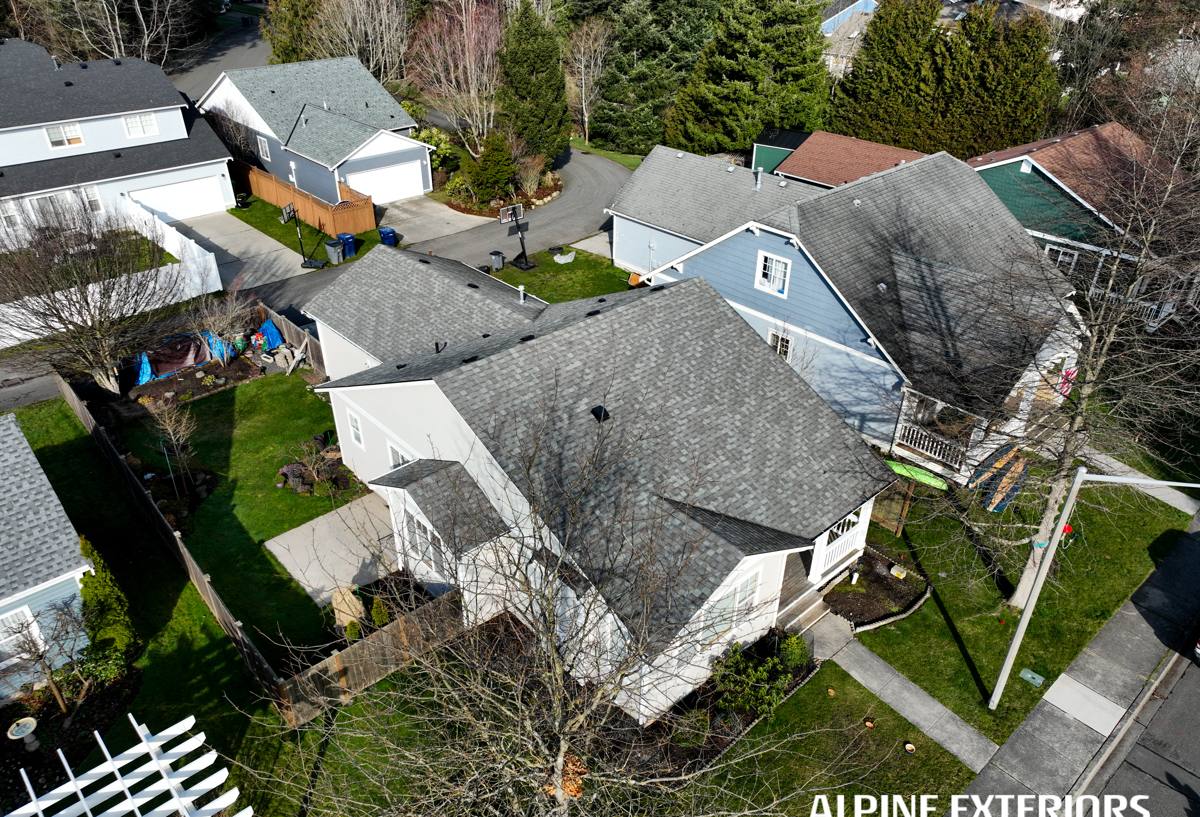
What Whatcom County's Coastal Climate Does to a Roof
Three things drive most of the roofing problems we see in Sunnyland and the surrounding Bellingham neighborhoods:
Salt Air and Metal Fatigue
Airborne salt accelerates corrosion on any exposed metal — nails, flashing, vents, gutters. On a roof installed with builder-grade or mismatched metal components, this shows up as rust streaks and premature flashing failure well before the shingles themselves are worn out. The fix isn't complicated, but it does require choosing corrosion-resistant fasteners and flashing metals from the start rather than swapping them in later after they've failed.
Driving Rain and Wind-Driven Water
Bellingham's storms often come with enough wind to push rain sideways and up under roof edges, rather than letting it simply run off. That means water can find its way into spots a roof in a calmer climate would never test — up under shingle tabs, along low-slope transitions, and around any penetration that isn't sealed correctly. Underlayment quality and fastening pattern matter more here than in drier regions.
Extended Moss and Moisture Season
Cool, damp, shaded conditions for much of the year are ideal for moss and algae growth, especially on north-facing slopes and under tree cover that's common in older Sunnyland lots. Moss isn't just cosmetic — it holds moisture against the roofing material, lifts shingle edges as it grows, and can shorten the life of an otherwise sound roof by years if it's never addressed.
What a Correct New Roof Installation Includes
A roof is a system, not a single product. Skipping or downgrading any one layer weakens the whole thing, and in a coastal climate like this, weak points get found fast.
- Tear-off and deck inspection: Old roofing removed down to the deck, with any water-damaged or soft sheathing identified and replaced before anything new goes down.
- Ice and water shield at vulnerable points: Self-adhering waterproof membrane at eaves, valleys, and around penetrations — the areas most exposed to wind-driven rain.
- Synthetic underlayment across the field: A durable, water-resistant layer under the whole roof, not just the high-risk zones.
- Corrosion-resistant flashing and fasteners: Chosen specifically for a salt-air environment rather than the cheapest available stock.
- Proper ventilation: Balanced intake and exhaust venting so moisture doesn't get trapped in the attic, which contributes to premature deck rot and interior condensation.
- Manufacturer-spec fastening: Nail placement and pattern matched to the shingle or panel manufacturer's requirements — this is what keeps a roof intact in high wind, and it's also what warranty coverage depends on.
- Algae-resistant roofing material where appropriate: Many shingle lines now include copper or zinc granules specifically to slow moss and algae growth in wet, shaded climates like ours.
Choosing the Right Roofing Material for Sunnyland
There's no single "best" roofing material for every home — the right choice depends on your roof's slope, tree coverage, budget, and how long you plan to stay in the house. Here's how the common options compare for this specific climate:
| Material | Performance in Salt Air/Rain | Moss Resistance | Typical Lifespan |
|---|---|---|---|
| Architectural asphalt shingle (algae-resistant) | Good, with proper flashing and fasteners | Good with AR granules; still needs periodic cleaning | 25-30 years |
| Standard 3-tab asphalt shingle | Fair; more sensitive to wind uplift | Fair; more prone to moss without treated granules | 15-20 years |
| Metal (standing seam or panel) | Excellent when using coastal-rated coatings and fasteners | Excellent; moss struggles to hold on smooth metal | 40-60 years |
| Cedar shake | Requires diligent maintenance in wet, salty conditions | Poor without regular treatment; moss-prone | 20-30 years with upkeep |
For most Sunnyland homes, a quality architectural shingle with algae-resistant granules hits the right balance of cost, appearance, and performance. Metal roofing costs more upfront but shrugs off both moss and salt air with the least ongoing maintenance, which is worth considering if you're planning to stay in the home long-term.
Why We Don't Recommend Every Product on the Market
Some roofing materials that work well in drier, inland climates are a poor match for a coastal Whatcom County lot. Untreated cedar shake, for example, needs regular maintenance to resist moss and rot here — that's not a knock on the product, it's just a maintenance commitment that not every homeowner wants to take on. Similarly, we're selective about which underlayments and flashing metals we use, because the ones that cut corners on water resistance or corrosion resistance tend to show their weaknesses fastest in exactly this kind of weather. Our standard is to spec materials and details that hold up to the conditions your roof will actually face, not just the ones that look fine on a sunny installation day.
Our Installation Process
1. On-Site Assessment
We walk the roof and attic, check the deck condition, look at ventilation, note tree coverage and shading, and talk through what's realistic for your budget and timeline.
2. Written Estimate and Material Selection
You get a clear scope of work and pricing before anything is scheduled, with material options explained in plain terms — no pressure toward the most expensive option.
3. Tear-Off and Deck Repair
Old roofing comes off, the deck gets inspected board by board, and any compromised sheathing is replaced before new roofing goes down — this step gets skipped by rushed crews and it's where hidden problems usually live.
4. Underlayment, Flashing, and Ventilation Install
Waterproofing layers go down first, followed by flashing at every vulnerable point, then ventilation components — all before the finish roofing material is installed.
5. Roofing Material Installation
Installed to manufacturer spec for fastening pattern and exposure, which protects both wind performance and warranty coverage.
6. Final Walkthrough and Cleanup
We walk the finished roof and the property with you, answer questions, and make sure the site is cleared of debris and nails before we consider the job done.
Signs Your Sunnyland Roof May Need Replacement, Not Repair
- Granule loss heavy enough that you're finding sand-like debris in gutters or downspouts
- Multiple past repairs in different areas of the roof rather than one isolated issue
- Soft or spongy spots on the roof deck when walked
- Persistent moss growth that returns quickly after cleaning
- Daylight visible through the attic roof boards
- Shingles curling, cracking, or losing their seal at the edges
- Roof age approaching or past 20-25 years, especially with limited past maintenance
If you're only seeing one or two of these and the roof is under 15 years old, a targeted repair may be the more sensible move. A full inspection is the only way to know for sure which situation you're in.
Maintenance After Installation
A well-installed roof still benefits from some seasonal attention in a climate like ours. Keeping gutters clear so water isn't backing up under the roof edge, having moss growth addressed before it spreads rather than after, and getting an occasional visual check after major windstorms will all extend the life of the investment. None of this needs to be complicated or frequent — it's mostly about catching small issues while they're still small.
Why Local Experience on Sunnyland Roofs Matters
A crew that regularly works Bellingham roofs already knows which flashing details fail first in this climate, which slopes on which lot orientations hold moss the longest, and how local wind patterns off the bay tend to find weak points in a roof edge. That knowledge shows up in the small decisions made on the job — fastener choice, underlayment coverage, where extra flashing goes — long before it would ever show up as a line item on an estimate. It's the difference between a roof that's built to a generic spec and one that's built for the specific conditions it has to survive.
If your Sunnyland roof is showing its age or you're planning ahead for a replacement, we're happy to take a look and give you a straightforward, no-pressure estimate. Use the form below to get started.